
Water Stain on the Ceiling: What It Means and What to Do
A water stain on the ceiling is the visible end of a problem that started somewhere you cannot see. The ring itself is harmless. What matters is why it appeared, whether it is still getting wet, and how quickly it needs sorting.
Most people spot the mark, tell themselves they will keep an eye on it, and move on. The trouble is that a stain only forms once water has already soaked through the plasterboard. By the time you can see it, moisture has usually been travelling through the roof or the ceiling void for a while. This guide explains exactly what the stain is telling you and what to do about it, in plain English.
Key takeaways
- A brown or yellow ring is dried mineral staining left behind when water soaks through plasterboard. It confirms moisture has got in above that spot.
- The entry point is almost never directly above the stain. Water tracks along timber and insulation before breaking through.
- Work out whether it is active or old, then whether it is the roof, plumbing or condensation. That decides who you call.
- Treat it as urgent if the ceiling is bulging, the stain is near a light fitting, or it grows during rain.
What a brown or yellow water stain actually means
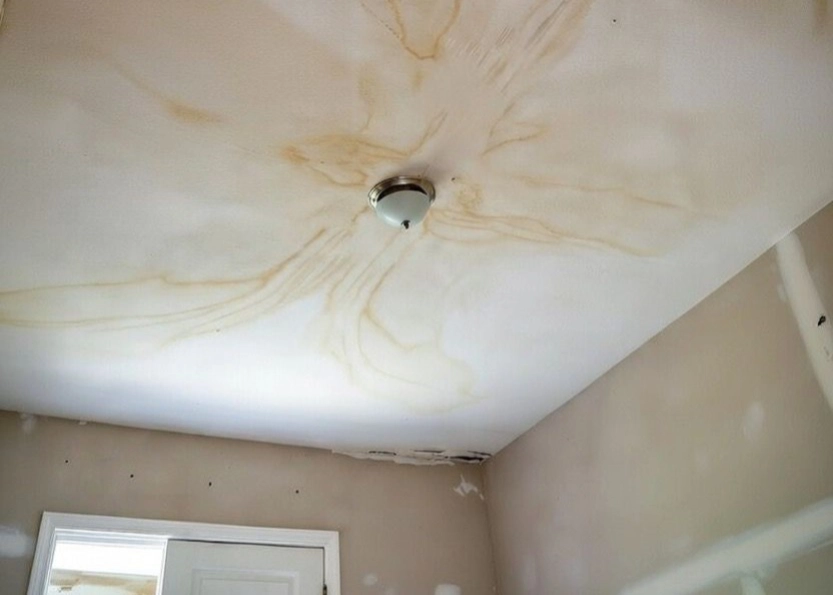
When water passes through plasterboard and then dries, it leaves behind the minerals and dirt it carried with it. That residue is the ring you can see. The colour tells you a little about the source. A yellow or tan stain is usually clean rainwater or condensation that has picked up dust on the way through. A darker brown ring often means the water has passed through timber, old adhesive or a dirtier route, which points more towards a long-standing roof leak.
The shape matters too. A clear ring with a defined edge usually means the area got wet, then dried, then got wet again, building up layers like a tide mark. A soft, spreading patch with no hard edge is more likely to be still active or very recent. Either way, the mark sits where the water finally broke through the ceiling, which is rarely where it got in. Water runs along the underside of the roof and across ceiling joists before it finds the easiest way down, so the real source is often several feet away and higher up. Our full guide to ceiling leaks after rain walks through how water travels if you want the detail.
Is the stain active or old?
Before you panic or relax, find out whether the area is still getting wet. An active leak needs action now. An old, dry stain from a fault that has already been fixed is cosmetic. Here is how to tell them apart.
Signs it is still active
- The stain feels damp or cool to the touch, or leaves moisture on your fingers
- It grows or darkens after rain
- The plasterboard is soft, bulging or sagging
- You can see fresh water trails in the loft above it
Signs it is probably old
- The mark is bone dry and has not changed for weeks, through wet and dry weather
- The edges are hard and well defined with no spreading
- You know the cause was dealt with, for example a burst pipe or a roof repair
A simple test: draw a light pencil line around the edge of the stain and note the date. If it spreads past the line after the next downpour, it is live and needs tracing. If you cannot tell, do not sit on it, because a stain that keeps rewetting is quietly damaging the timber and plaster behind it.
Roof, plumbing or condensation?
Three things cause almost every ceiling stain. Narrowing it down tells you who to call and how quickly.
Roof leak
The most common cause, especially on upstairs ceilings and near external walls, chimneys or the loft. A roof leak usually tracks with the weather: it appears or worsens during rain, and gets worse in driving wind. Slipped tiles, tired flashing around a chimney, a blocked gutter overflowing or a failed valley are the usual culprits. If the stain behaves like this, it is a roofing job.
Plumbing leak
If the stain sits under a bathroom, an airing cupboard, a radiator or a water tank, and it appears even in dry weather, suspect plumbing. Confusingly, a plumbing leak can look identical to a roof leak from below. If the ceiling is leaking with no rain at all, our guide on a ceiling leaking but it hasn't rained explains how to separate a slow roof leak from a pipe.
Condensation
Not every stain is a leak. Poor loft ventilation lets warm, moist air condense on cold surfaces and drip back down, leaving patchy staining rather than a single ring. It is often worse in winter and shows up over bathrooms and kitchens. The fix is ventilation and insulation, not a patch on the roof, so it is worth ruling in or out before spending money.
When a ceiling stain is urgent
Most stains are not an emergency, but some are. Treat it as urgent, and do not wait for the next dry spell, if any of these are true:
- The ceiling is bulging or sagging, which means water is pooling above the plasterboard and it could give way
- The stain is right next to a light fitting or you can see water near electrics
- The mark is spreading fast during rain
- There is a musty smell, which is an early sign of mould
If you are in that position, switch off the power to that circuit, put a bucket under any drip, and get help the same day. Our emergency steps for water coming through a ceiling run through exactly what to do in the right order, and an emergency roof repair can stop an active leak before it brings the ceiling down.
What to do about a water stain
For a stain that is not an emergency, the sensible order is:
- Confirm whether it is active using the pencil-line test above.
- Check the loft in daylight for wet insulation, water trails on the rafters, or daylight showing through the roof.
- Do not paint over it yet. Covering a live stain just traps moisture and it will bleed back through.
- Get the source traced before you redecorate, so you only make good once.
Once the cause is fixed and the area has dried out fully, a coat of stain-block primer followed by matching emulsion will hide the mark for good. If the leak turns out to be roof-related, the repair cost depends entirely on what failed. We have set out realistic figures in our guide to the cost to fix a ceiling leak from the roof, and a full breakdown on our roofing costs page.
How Alliance Roofing traces it properly
Guessing at a ceiling stain wastes money, because the visible mark almost never sits below the fault. We inspect the loft and the roof, follow the water back to the real entry point, and tell you plainly what failed and what it needs. There is no call-out charge and the inspection is free, so you are not paying just to find out what is wrong.
Every job is backed by our 10-year workmanship guarantee and we carry £1m public liability cover, and we are rated 9.96 out of 10 on Checkatrade across 103 reviews. If a stain is worrying you, book a free roof repair inspection and we will usually get to you the same day. Not sure who the right trade is? Our guide on who to call for a ceiling leak helps you avoid paying the wrong person twice.