
Ceiling Leaking but It Hasn't Rained? Here's What's Going On
A leak that appears without a drop of rain is confusing, because it breaks the obvious rule that roof leaks follow the weather. The good news is that the timing itself is a clue, and it usually narrows the cause down to one of four things.
When a roof leaks after rain, the cause is fairly clear. When the ceiling is wet in dry weather, people assume the roof is fine and start looking at pipes, or they assume it must still be the roof and ignore a plumbing problem. Both mistakes cost money. Below are the four real causes, how to tell which one you have, and what to check before you call anyone out.
Key takeaways
- Four causes cover almost every dry-weather ceiling leak: condensation, a plumbing leak, a roof leak drying slowly, and water pooling in a valley or behind flashing.
- Condensation is patchy and seasonal. Plumbing tracks with water use. A slow roof leak lags days behind the last rain.
- Check the loft in daylight, note when the water appears, and feel whether the damp is warm or cold.
- If you cannot separate a pipe from the roof, get it traced rather than guessing, because a wet ceiling only gets worse.
Cause 1: Condensation, not a leak at all
This is the one people miss most often. Warm, moist air from cooking, showering and drying clothes rises into a cold, poorly ventilated loft. When it hits cold surfaces such as the underside of the roof or the felt, it condenses into water and drips back down onto the ceiling. It looks exactly like a leak, but there is no hole in the roof.
Condensation gives itself away in a few ways. It is usually worse in winter and in cold snaps, it shows up over bathrooms and kitchens, and the staining tends to be patchy and spread out rather than a single defined drip point. You may also see beads of water or black mould on the loft timbers. The fix is ventilation and insulation, sometimes roof or soffit vents, not a patch on the tiles. It is always worth ruling this in or out first, because no amount of roof repair will stop a condensation problem.
Cause 2: A plumbing leak
A slow plumbing leak drips whenever the system is under pressure or in use, which has nothing to do with the weather. If the damp patch sits under a bathroom, an en-suite, an airing cupboard, a boiler, a radiator or a water tank, plumbing moves to the top of the list.
The tell-tale sign is that the leak tracks with water use. Run the shower or flush the toilet upstairs and watch whether the drip picks up. A mains or heating leak can drip constantly, day and night, in perfectly dry weather. Plumbing is not our trade, but knowing it is a pipe rather than the roof saves you calling the wrong person. Our guide on who to call for a ceiling leak spells out which trade owns which type of leak.
Cause 3: A roof leak drying out slowly
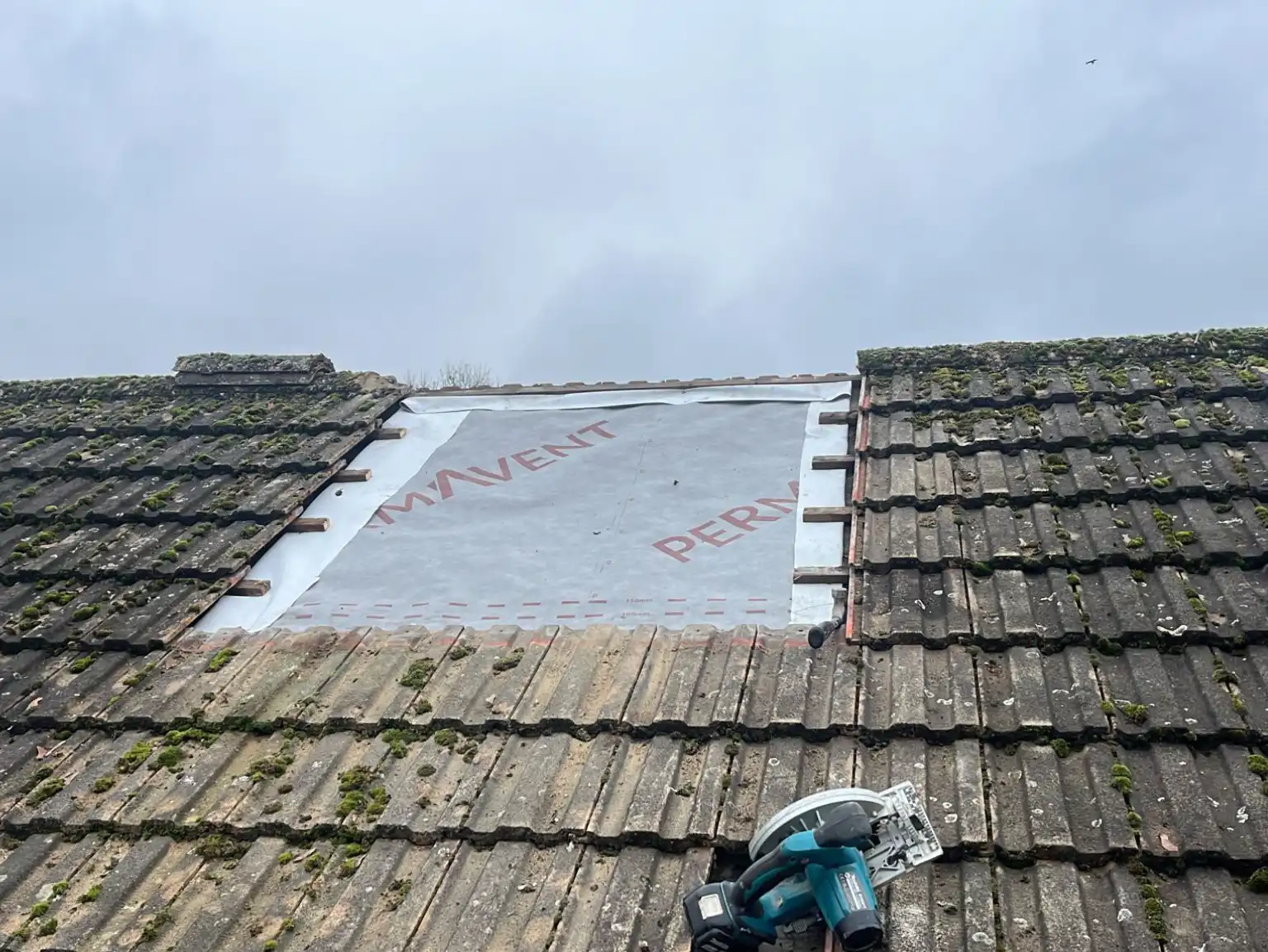
Here is the twist that catches everyone out. A roof leak does not always show up straight away, and it does not always stop when the rain does. During heavy rain, water can soak deep into insulation, felt and timber. That saturated material then releases the water slowly over the following days, so the ceiling carries on dripping in bright, dry weather while everything above it drains out.
The clue is the lag. If the leak appears a day or two after the last proper downpour and then fades as things dry, you are almost certainly looking at a roof leak with a delayed release rather than a plumbing fault. This is genuinely common and very easy to misdiagnose. For the full picture of how water moves through a roof before it reaches you, see our pillar guide on water leaking through the ceiling after rain.
Cause 4: Pooling in a valley or behind flashing
Some roof faults hold water rather than letting it run straight off. A blocked or badly formed valley, a flat-roof section with a dip, or lifted flashing around a chimney can trap standing water. That reservoir then seeps through slowly, well after the rain has passed, so the leak looks disconnected from the weather.
Melting is another version of this. After snow or a hard frost, water can sit and thaw gradually, feeding a leak on a clear, dry day. If your dry-weather leak follows snowfall or a freeze rather than rain, suspect pooling or thaw. Either way it is a roofing defect and the standing water needs clearing and the detail putting right.
How to tell them apart
You can get a long way before anyone comes out by answering three questions:
- When does the water appear? With water use points to plumbing. A day or two after rain points to a slow roof leak. Cold mornings in winter point to condensation. After snow or frost points to pooling or thaw.
- Where is it? Under a bathroom or tank leans plumbing. Near an external wall, chimney or the loft leans roof. Spread out over a wet room leans condensation.
- Is the damp warm or cold, wet or misty? A steady, clean drip suggests a pipe or a roof leak. A cold, patchy, misty dampness with mould suggests condensation.
What to check yourself, safely
- Go into the loft in daylight. Look for water trails on the rafters, wet insulation, daylight through the roof, or beads of moisture and black spotting on the timbers, which signals condensation.
- Do the water-use test. Run taps and flush toilets upstairs and see whether the drip responds.
- Note the timing on a calendar. A few days of jotting when the drip appears will often reveal the pattern on its own.
- Do not paint over the stain and do not climb onto the roof yourself. Damage control inside is fine, guesswork on the roof is not.
Still leaking with no clear stain to work from? Our companion guide on a water stain on the ceiling helps you read what the mark is telling you.
When to get it traced properly
If you cannot confidently separate a plumbing leak from a slow roof leak, or the damp is spreading, get it traced rather than gambling on a fix. Water sitting in a ceiling void does not improve with time, it rots timber, ruins insulation and grows mould, and a slow leak ignored through the summer becomes a much bigger job by winter.
Alliance Roofing inspects both the loft and the roof, follows the water back to the actual source, and tells you plainly whether it is ours to fix or a job for a plumber. There is no call-out charge, the inspection is free, and we are rated 9.96 out of 10 on Checkatrade across 103 reviews. Every repair carries our 10-year workmanship guarantee and we are fully insured with £1m public liability cover. If it does turn out to be the roof, our roof repair team can usually get to you the same day and put it right first time. Wondering what a repair like this typically costs? We have set realistic figures out in our guide to the cost to fix a ceiling leak from the roof.