
Who to call for a ceiling leak: roofer, plumber or builder?
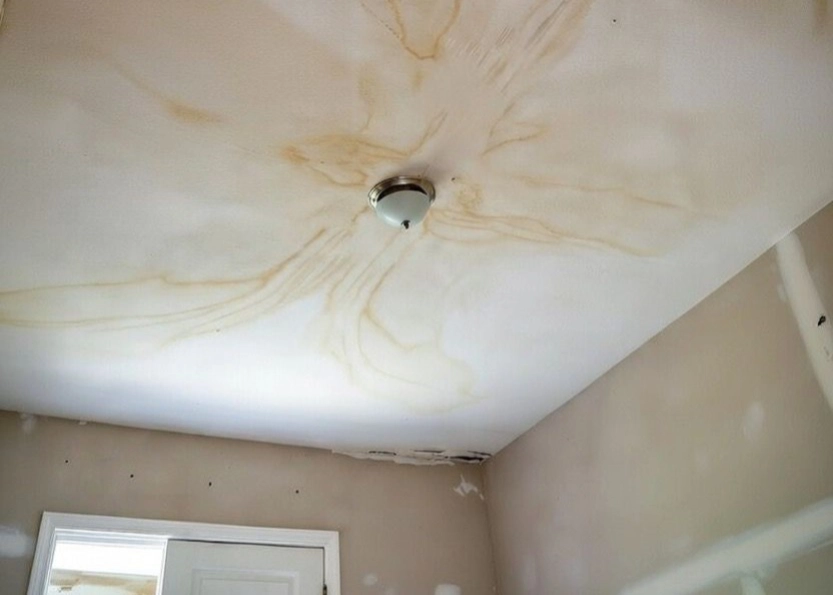
A brown patch spreads across the ceiling, maybe a drip starts, and the first question is always the same: who do I actually ring?
It is a fair question, because calling the wrong trade wastes a day you do not have. A plumber cannot fix a slipped tile, and a general builder is not the person to trace a hidden roof leak in the rain. Get the right trade out first time and the problem gets found and stopped. Get the wrong one and you pay a call-out for someone to tell you to phone somebody else.
This guide walks through how to decide, what a roofer will actually do when they arrive, what to have ready, and why a proper leak trace matters more than a quick patch. If the water is coming through right now, skip ahead and follow our emergency steps for water coming through the ceiling first, then come back to this.
Key takeaways
- If the leak tracks with rain or wind, it is a roof problem and you want a roofer, not a plumber.
- If it leaks when it is dry, or sits under a bathroom or pipe run, start with a plumber.
- A general builder is fine for the aftermath, but not for tracing a live roof leak.
- Only involve insurance once the source is found, and always for sudden, storm or accidental damage rather than gradual wear.
- The real skill is the leak trace, because water rarely enters where the stain appears.
Roofer, plumber, builder or insurer: a quick decision
Most ceiling leaks fall into one of four camps. Work out which one you are looking at before you dial.
Call a roofer if the leak is weather-driven
This is the most common cause by a wide margin. Ring a roofer if:
- The leak appears or worsens during or right after rain
- It gets worse in wind-driven rain from a particular direction
- The stain is on an upstairs ceiling, near an external wall, chimney or skylight
- You have spotted a slipped tile, debris in the garden, or a blocked gutter overflowing
These all point to water getting in through the roof covering or a failed detail like flashing. That is roofing work, and it is what our roof repair team deals with every day.
Call a plumber if the leak ignores the weather
Start with a plumber if:
- It leaks even when it has been dry for days
- The stain sits under a bathroom, shower, toilet, radiator or water tank
- It drips when someone runs water or flushes upstairs
- The mark follows a straight line, which often traces a pipe run
A leak with no rainfall is the classic sign of an internal problem. We cover this in detail in our guide on a ceiling leaking but no rain, which is worth a read if the weather is not the trigger.
Call a builder for the mess, not the diagnosis
A general builder or plasterer is the right call once the leak is stopped and you need the ceiling itself put right, replacing damaged plasterboard, re-skimming, redecorating. What a builder is not set up to do is climb up in bad weather and trace exactly where water is entering a roof. Fix the cause first, then bring a builder in for the cosmetic repair.
When to involve your insurer
Home insurance usually covers sudden and accidental damage, for example a storm lifting tiles or an escape of water, but not gradual wear and tear like a roof that has slowly worn out. A few sensible rules:
- Take photos of the ceiling and any outside damage before anyone touches it.
- Get the leak traced and stopped first, because insurers expect you to prevent further damage.
- Keep the roofer's written report and quote, as it supports any claim.
You do not have to decide on a claim before you call a roofer. Get the source found, get it made safe, then decide with the facts in front of you. If you want a plain-English breakdown of the numbers, our guide on the cost to fix a ceiling leak from the roof sets out what to expect.
What a roofer will actually do
A good roofer does not just glance at the roof and slap sealant on the nearest tile. When we come out to a ceiling leak, the visit usually runs like this:
1) Questions to narrow the cause
When did it start, does it only happen in rain, does wind direction change it, has any roof work been done recently? These answers often point straight to the likely entry point before anyone climbs a ladder.
2) An internal check
A look in the loft for wet insulation, water trails down the rafters, staining, or daylight showing through the covering. This is also where we rule out condensation, because not every "leak" is rain getting in.
3) An external inspection
Tiles, ridges, hips and valleys, chimney and wall flashing, gutter overflow points, and any pipe or vent going through the roof. These details are where the vast majority of leaks start.
4) A clear explanation and a written quote
Not vague guesswork. You should be told what failed, why it failed, what needs doing now, and what can safely wait. With Alliance that comes with no call-out charge, an honest written quote, and our work backed by a 10-year workmanship guarantee.
What to have ready before you call
You will get a faster, more accurate answer if you have a few things to hand:
- Photos of the ceiling stain, any dripping, and any visible roof damage taken safely from the ground.
- When it happens, in rain only, in wind, or regardless of weather. This one detail often decides roofer versus plumber.
- How long it has been going on and whether it is spreading.
- Any recent work on the roof, loft or plumbing.
- Your postcode, so we can confirm we cover you and give a realistic arrival time.
If you are still not certain what the mark on the ceiling is telling you, our guide to a water stain on the ceiling explains how to read the shape, colour and location.
Why a proper leak trace matters
Here is the part most people underestimate. Water does not fall straight down. It enters through a gap in the roof, runs along the underside of the deck or the rafters, soaks the insulation, then breaks through the ceiling at the easiest point, which can be several feet away from where it actually got in.
That is why a cheap patch so often fails. Someone seals the tile directly above the stain, the stain is not below the leak, and it carries on getting in with the next spell of driving rain. A proper trace finds the true entry point, which is the difference between a repair that lasts and one you pay for twice. Our full guide to water leaking through the ceiling after rain shows exactly how that hidden path works.
When it is an emergency
Some ceiling leaks cannot wait for a booking next week. Treat it as urgent, and reach for emergency roof repair, if:
- The ceiling is sagging or bulging with trapped water
- Water is dripping near lights or electrics
- The stain is growing fast during rain
- A storm has clearly lifted tiles or left a hole
In those cases, make the inside safe, switch off the affected circuit, and get a roofer out the same day rather than waiting for the next dry spell.
Speak to Alliance Roofing & Building
If you have a ceiling leak and you are not sure who to call, start with us. We will tell you honestly whether it is a roof problem or one for a plumber, and if it is the roof, we will trace the real source and fix it properly.
You get a same-day response, a free inspection with no call-out charge, £1m public liability cover, a 9.96/10 Checkatrade rating from 103 reviews, and every repair backed by our 10-year workmanship guarantee. We cover homes across Buckinghamshire, Berkshire and the wider South East.
Use the form at the bottom of this page or call us direct. Send a quick note on when the leak happens plus any photos, and we will tell you what is most likely, what is urgent, and what the next step is.