
Winter doesn’t just pass over your roof, it works it.
Across London, Surrey, Berkshire, Buckinghamshire, Oxfordshire and Hampshire, months of rain, frost and wind slowly wear things down. By the time spring arrives, small problems are already there, you just haven’t spotted them yet. Catching them early is far cheaper than waiting for a leak, and our roof repair team can sort anything you find on the checklist below.
Spring is the best time to catch those issues early, before they turn into leaks, damp, or expensive repairs.
Key takeaways
- Winter damage is usually already there by spring, you just haven't spotted it yet. Catching it early is far cheaper.
- Work through the checklist: tiles, internal leak signs, gutters, flashing, flat roofs, moss, overhanging branches and pests.
- Don't climb on the roof, pressure wash tiles, or try to fix leaks from inside. Shortcuts make things worse.
- Call a roofer once you spot more than one issue. It then needs a proper inspection before it spreads.
This guide breaks down exactly what to check, what matters, and when to bring in a roofer.
Why spring roof maintenance matters
Most roof problems don’t start big.
They usually begin with something minor, like a slipped tile, a blocked gutter, or a small gap in flashing. Winter speeds all of that up. Water gets in, freezes, expands, and slowly makes the damage worse.
Then spring rain hits, and suddenly you are dealing with water coming through the ceiling instead of a small external fix.
A quick check now can prevent:
- Leaks and internal damage
- Rot in roof timbers
- Mould in loft spaces
- Emergency repair costs
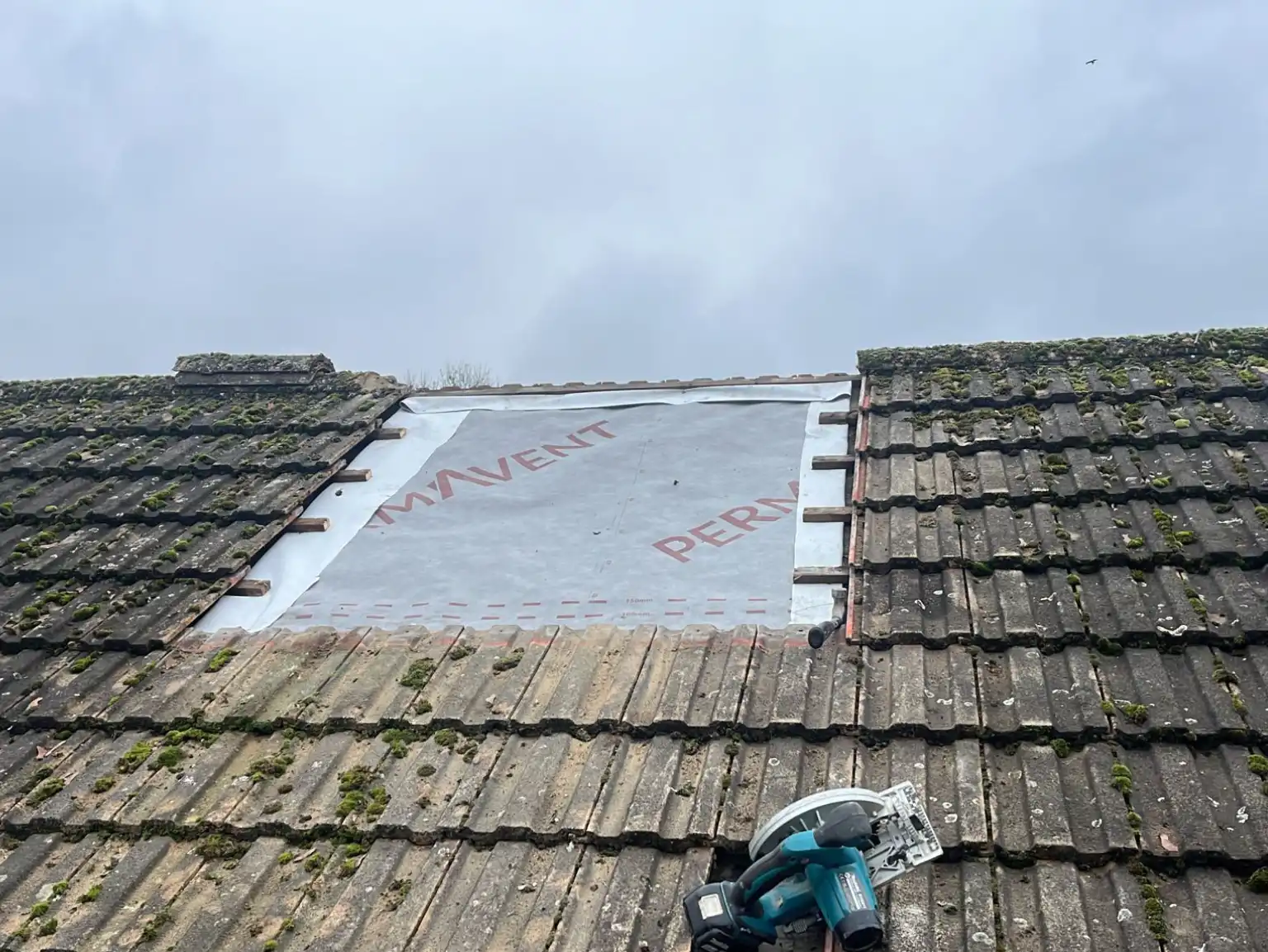
Spring roof maintenance checklist
Check for missing or damaged tiles
Start from the ground and take a proper look up at the roof line.
You are looking for missing tiles, cracked sections, or anything that looks out of line. Even a small gap can let water in, especially with the kind of wind-driven rain you get across the South East.
If something looks off, it usually is. Roofs rarely fix themselves.
Look for signs of leaks inside
Go into your loft or check the ceilings upstairs.
Look for damp patches, stains, or a musty smell that was not there before. Water does not always drip straight down, it often travels along timber before it shows up inside the house.
If you are already seeing signs, it is worth understanding what to do when your roof is leaking.
Clear out gutters and downpipes
This is one of the most common causes of roof issues.
Over winter, gutters fill up with leaves, moss and debris. When that builds up, water cannot drain properly and starts backing up under the roof edge.
That is how you end up with damp walls, rot in the fascia, and leaks that seem to come from nowhere.
In areas like Buckinghamshire and Oxfordshire, where trees are common, this is something you will need to stay on top of every year.
Check flashing around chimneys and roof joints
Flashing is what seals the weak points in your roof.
Check around chimneys, skylights, vents and valleys. If you see gaps, cracks or lifting edges, water can get in straight away and you will not always notice until it shows inside.
This is one of those issues that looks small from the outside but causes bigger problems if ignored.
Inspect flat roofs properly
Flat roofs need a bit more attention because they hold water rather than shedding it, so it pays to keep on top of flat roof care and repairs.
Look for standing water, cracks, bubbling or soft areas. These are all early signs that the surface is starting to fail.
A lot of flat roof issues in London and the South East come down to small faults being left too long.
If you want a realistic idea of repair costs before it gets worse, see our roof repair cost guide.
Also worth noting, spring is often when people discover issues linked to spray foam insulation. If your loft has spray foam and you are seeing moisture or ventilation problems, it is not something to ignore.
Check for moss and algae build-up
Moss might look harmless, but it holds moisture against the roof.
Over time, that moisture can weaken tiles, lift edges and cause water to sit where it should not. Once it starts falling into gutters, it creates a second problem with blockages.
If the build-up is heavy, it needs removing properly rather than being blasted off.
Our roof moss removal service clears it safely without damaging the tiles.
Trim overhanging branches
Branches brushing against your roof might not seem like a big deal, but over time they wear down tiles and drop debris into gutters.
They also create shade, which keeps the roof damp and encourages moss growth.
Cutting them back reduces all of those risks in one go.
Check for pest activity
Winter is when animals get in. Spring is when they stay.
Birds, squirrels and mice can all cause damage once they settle in. If you hear movement in the loft or see nesting material, it is worth dealing with early before it becomes a bigger problem.
Not sure what you are looking at?
Most people are not.
Not sure if something is damage or just normal wear? Get in touch and we will come and take a look. We cover London, Surrey, Berkshire, Buckinghamshire, Oxfordshire and Hampshire, so it is easy to get a second opinion before things get worse.
What not to do
This is where people usually make things worse:
- Do not climb onto the roof without proper safety
- Do not pressure wash tiles, it can damage them
- Do not ignore small issues
- Do not try to fix leaks from inside
Shortcuts on roofs tend to backfire.
When to call a roofer
If you are seeing more than one issue, it is time.
That includes damaged tiles, signs of water inside, flashing problems, flat roof wear, or heavy moss build-up.
At that point, it is no longer a quick check. It needs a proper inspection before it spreads.
How long does spring roof maintenance take?
A basic inspection can be done in under an hour.
Clearing gutters takes longer depending on how blocked they are, and repairs depend entirely on what is found.
The important thing is timing. Doing it early in spring gives you a chance to fix problems before heavier rain exposes them.
Quick summary checklist
- Check tiles for damage or movement
- Look for signs of leaks inside
- Clear gutters and downpipes
- Inspect flashing around roof joints
- Check flat roofs for cracks or pooling
- Remove heavy moss build-up
- Trim nearby branches
- Watch for pest activity
FAQs
How often should you check your roof?
Twice a year is a good rule, once in spring and once before winter. Spring checks matter because they catch damage caused by cold weather before it turns into leaks. Leaving it longer usually means small issues go unnoticed.
What does spring roof maintenance include?
It includes checking tiles, clearing gutters, inspecting flashing, and looking for signs of water getting in. It is less about repairing and more about spotting problems early. If you catch them at this stage, the fix is usually straightforward.
How much does a roof inspection cost?
Some companies offer inspections for free, especially if you are in their service area. Paid inspections usually range from £100 to £250 depending on the size of the property and access. Either way, it is cheaper than dealing with hidden damage later.
Is moss on a roof a problem?
A small amount is normal, but heavy moss can hold water against the roof and cause long-term damage. It can also block gutters once it starts falling away. If it is thick or spreading, it is worth dealing with it properly rather than leaving it.
Can I do roof maintenance myself?
You can carry out basic checks from the ground and clear gutters if it is safe to do so. Anything involving height, repairs or cleaning methods like pressure washing should be left to a professional. Most damage happens when people try to fix things they cannot properly see.
Spring roof maintenance is simple, but skipping it is what causes problems.
A quick check now can stop a small issue turning into a leak, a blocked gutter turning into rot, or a loose tile turning into structural work.
If everything looks fine, leave it.
If it does not, deal with it early.
That is what keeps a small job from turning into a big one.