
Removing moss from a roof in the UK costs between £400 and £1,500 depending on property size, method and location. In London and the South East prices run around 15 to 20 percent higher than the national average. Hand scraping with a biocide treatment is the safest and longest lasting option for most homes. Light moss on a sound roof does not always need immediate treatment, but heavy build-up that is blocking gutters is worth dealing with before it causes bigger problems.
Key takeaways
- UK moss removal costs £400 to £1,500, with London and the South East 15 to 20 percent higher.
- Hand scraping with biocide is the safest method and lasts two to three years.
- Pressure washing is cheapest but riskiest, and results often last only 6 to 12 months.
- Light moss on a sound roof can be monitored; heavy build-up clogging gutters is worth treating.
If you have noticed green patches spreading across your roof tiles, you are probably wondering whether it actually needs sorting and what it is going to cost. This guide gives you real prices for moss removal in the UK, explains what method is right for your roof, and helps you decide whether it is worth doing at all. If you would rather not get up there yourself, our roof moss removal and treatment service handles the lot safely from scaffold or ladder.
Does moss on a roof actually need removing?
This is the question most guides avoid answering honestly.
The short answer is: it depends on how bad it is.
A light covering of moss on an otherwise sound roof is not going to cause immediate problems. Moss has been growing on British roofs for centuries and plenty of homes with mossy roofs are completely watertight.
Where it becomes a problem is when moss builds up heavily enough to:
- Trap moisture against the tiles for extended periods
- Work its way under tile edges and lift them
- Block gutters with debris as it dies off and falls
- Corrode the nails holding tiles in place on older roofs
In the South East particularly, the combination of wet winters, shade from trees and mild temperatures creates ideal conditions for moss to spread faster than it would in drier parts of the country.
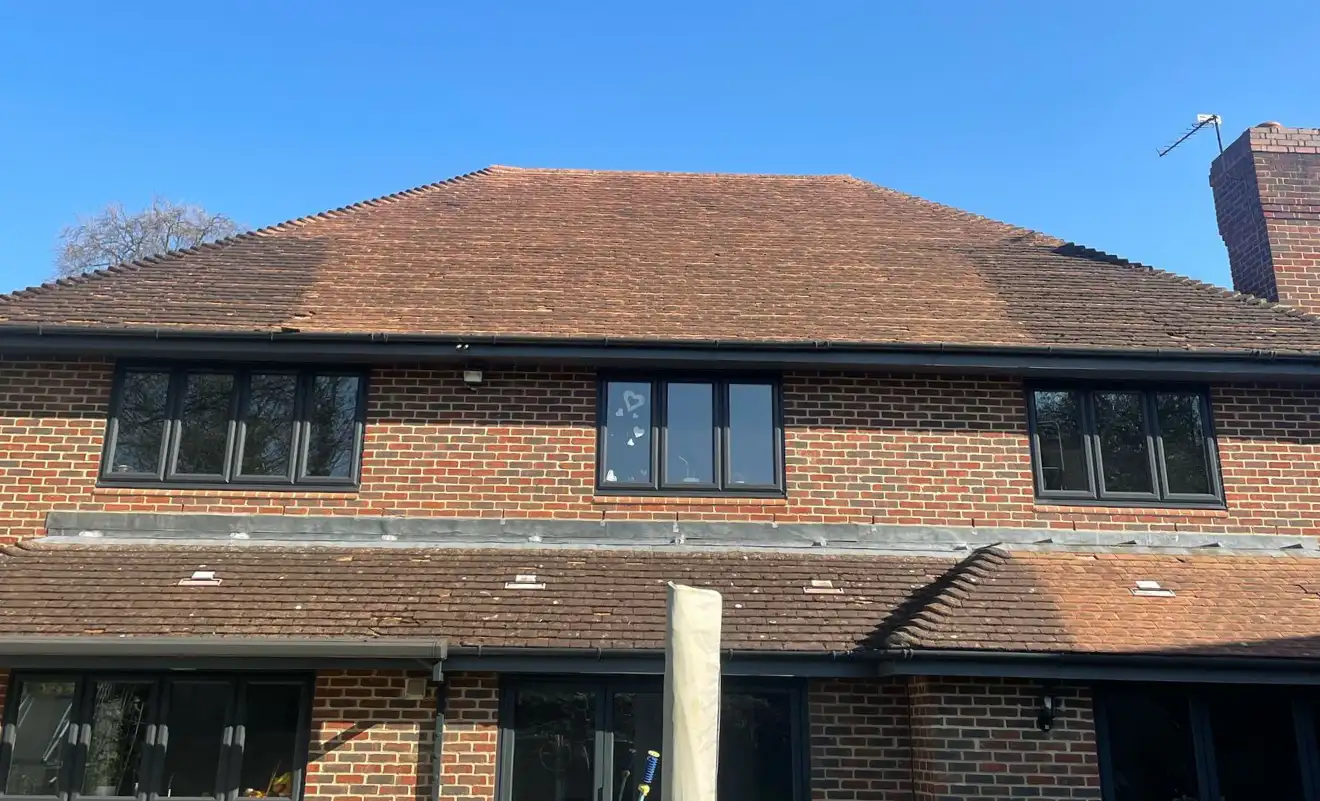
If your moss is thick, covering more than a third of the roof, or you can see it building up in gutters regularly, it is worth getting it dealt with. If it is a light covering and the roof is in good condition, keeping the gutters clear may be all you need to do.
How much does moss removal cost in the UK?
Moss removal costs depend on the size of your roof, the method used and where you are in the country. In London and the South East expect to pay 15 to 20 percent more than UK averages due to higher labour rates.
| Method | Cost per m² (UK) | Cost per m² (South East) | Lasts |
|---|---|---|---|
| Hand scraping + biocide | £8 – £15 | £10 – £17 | 2 – 3 years |
| Soft washing | £12 – £16 | £14 – £19 | 2 – 3 years |
| Pressure washing | £5 – £12 | £6 – £14 | 6 – 12 months |
| Steam cleaning | £9 – £13 | £11 – £16 | 2 – 3 years |
Moss removal methods and what they cost
Hand scraping with biocide treatment
This is the most common and most recommended method for UK roofs. The moss is scraped off by hand and a biocide solution is applied to slow regrowth.
Cost: £8 to £15 per m²
It costs more than pressure washing but the results last longer because the biocide treatment keeps treating the surface for weeks after the job is done. The main advantage is that it does not risk damaging the tiles.
Soft washing
Soft washing uses low pressure water mixed with a cleaning solution. It is gentler than pressure washing and more effective at killing the underlying growth rather than just removing what you can see.
Cost: £12 to £16 per m²
Good for most tile types including older or more fragile roofs. Often recommended alongside a biocide treatment for longer lasting results.
Pressure washing
Pressure washing is the cheapest method but also the riskiest for your tiles.
Cost: £5 to £12 per m²
High pressure water can dislodge or crack tiles, remove the protective surface layer from concrete tiles, and lift pointing on ridge tiles. Without a follow-up biocide treatment, moss tends to come back faster because the spores are still present.
We generally do not recommend pressure washing as the first choice for moss removal. For hard-wearing roofs in good condition it can work fine, but on older properties the risk usually outweighs the saving.
Steam cleaning
Uses heat rather than high pressure to remove moss and organic growth. Gentler than pressure washing and avoids harsh chemicals.
Cost: £9 to £13 per m²
A good option for heritage properties or unusual tile types where chemical treatments are not appropriate.
How much does moss removal cost by property type?
| Property type | Hand scraping + biocide | Soft washing | Pressure washing |
|---|---|---|---|
| Terraced house | £400 – £650 | £500 – £750 | £280 – £500 |
| Semi-detached | £550 – £900 | £650 – £1,050 | £380 – £700 |
| Detached house | £700 – £1,200 | £850 – £1,400 | £500 – £900 |
| Large detached | £900 – £1,500 | £1,100 – £1,800 | £650 – £1,200 |
What affects the price of moss removal?
How bad the moss is: Light moss takes less time to remove than thick growth that has been building up for years. Heavily infested roofs may cost more per square metre because of the extra labour involved.
Scaffolding: Most two-storey properties require scaffolding for safe roof work. This is often quoted separately. Budget £600 to £1,200 for a standard semi-detached. Always ask upfront whether it is included.
Gutter clearing: Moss removal sends debris into the gutters. Most reputable companies will clear gutters as part of the job, but not all include it in the quote. Check before booking.
Biocide treatment: Essential if you want results that last more than a year. Some companies include it, others charge it as an extra. It typically adds £150 to £300 to the total cost but extends the time before moss returns significantly.
Roof condition: If a roofer finds damaged, slipped, or loose tiles while they are up there, these will need attention too. A good contractor will flag this before starting additional work.
Access: Roofs that are difficult to reach, on a steep pitch, or surrounded by trees add time and complexity to the job.
Prices across our coverage areas
Labour rates vary across the areas Alliance Roofing covers. Here are realistic price ranges for hand scraping and biocide treatment on a standard semi-detached:
| Location | Estimated cost (semi-detached) |
|---|---|
| Central London | £750 – £1,100 |
| Outer London (Harrow, Ealing, Wimbledon) | £650 – £950 |
| Surrey (Guildford, Woking, Weybridge) | £600 – £900 |
| Berkshire (Reading, Windsor, Bracknell) | £550 – £850 |
| Buckinghamshire (High Wycombe, Chesham) | £500 – £800 |
| Oxfordshire (Oxford, Bicester, Didcot) | £500 – £800 |
| Hampshire (Winchester, Basingstoke) | £480 – £780 |
How long does moss removal take?
| Property type | Typical duration |
|---|---|
| Terraced house | 2 – 4 hours |
| Semi-detached | 4 – 6 hours |
| Detached house | 6 – 8 hours |
| Large detached | 1 – 2 days |
Heavy moss coverage, scaffolding setup, or additional tile repairs will extend these times.
Will the moss just come back?
Yes, eventually. Moss spores are in the air and will always find their way back onto a roof given the right conditions.
The biocide treatment applied after cleaning works by continuing to kill spores for several weeks after the job is done. This means the roof stays cleaner for longer, but it is not a permanent fix.
Most roofs that are treated properly will stay reasonably clean for two to three years. After that, a maintenance treatment is usually enough rather than a full clean.
Things that help slow regrowth:
- Keeping gutters clear so water does not back up onto the roof
- Trimming branches that overhang the roof and create shade
- Annual gutter clears to remove moss debris before it breaks down
- A biocide spray every two years as a top-up treatment
Should you do it yourself?
Some homeowners try to tackle roof moss themselves with a long brush or a bought biocide spray. For a bungalow or a single-storey extension this can work. For anything above ground floor height, it is not a job to attempt without proper equipment and safety gear.
Working at height is one of the leading causes of serious DIY injuries in the UK. A professional roofer has the right access equipment, insurance, and experience to do the job safely without causing damage to tiles in the process.
If you do want to apply a biocide treatment yourself, these are widely available and can slow moss growth between professional cleans. Do not use a pressure washer on your roof tiles unless you are confident they can handle it.
What a good quote should include
Before agreeing to any moss removal work, make sure the quote covers:
- Which cleaning method is being used and why
- Whether biocide treatment is included or charged separately
- Whether scaffolding is included or an extra
- Whether gutter clearing is included
- Waste removal
- A workmanship guarantee
Walk away from anyone who quotes verbally without putting anything in writing, or who pressures you to commit on the day. Cold callers who knock on the door offering to clean your roof are almost never a good choice.
Moss removal vs full roof replacement
If a roofer tells you during a moss removal quote that you actually need a full new roof, get a second opinion before committing to anything.
Moss on its own does not usually mean a roof needs replacing. What matters is the condition of the tiles, felt, and underlying structure. A roof with heavy moss but sound tiles and dry timbers may only need cleaning and treatment. A roof with relatively little moss but cracked tiles, failing felt, or rotten timbers may genuinely need professional roof repairs.
Get the assessment and any recommendation for larger work in writing. A trustworthy roofer will explain exactly what they found and why they are recommending what they are recommending.
Moss left to corrode tile nails and lift edges can shorten the life of a tiled covering, so if your slopes need more than a clean it is worth understanding what pitched roof repair and re-tiling involves before you commit to anything bigger.
Frequently asked questions
How much does it cost to remove moss from a roof in the UK? For an average semi-detached home, expect to pay £500 to £900 for hand scraping and biocide treatment in the South East. Smaller properties start from around £400 and larger detached homes can reach £1,200 or more.
Is moss removal worth it? If the moss is thick and building up in gutters, yes. Light coverage on an otherwise sound roof may not need immediate treatment, but it is worth monitoring. Regular gutter clearing is the most important thing regardless.
How long does moss take to come back after removal? With a proper biocide treatment applied after cleaning, most roofs stay reasonably clean for two to three years. Without treatment, moss can start returning within months.
Will pressure washing damage my roof? It can, particularly on older tiles or roofs with loose mortar. Pressure washing removes the surface layer from concrete tiles over time and can dislodge ridge tile pointing. Hand scraping with a biocide treatment is a safer option for most UK homes.
Does moss removal include gutter cleaning? Not always. Some companies include it and others charge separately. Always confirm before the job starts as moss removal sends a lot of debris into gutters.
Is moss on a roof covered by home insurance? No. Moss is considered wear and tear and is not covered by standard buildings insurance. Storm damage that results in moss being dislodged and causing a blockage may be a different matter, but you would need to check your specific policy.
Get a free quote for moss removal from Alliance Roofing
Alliance Roofing carries out roof moss removal and cleaning across London, Surrey, Berkshire, Buckinghamshire, Oxfordshire and Hampshire.
We use hand scraping and biocide treatment as standard because it is safer for your tiles and produces longer lasting results than pressure washing alone.
If you would like a free, no-obligation quote, fill in the form below and we will be in touch to arrange a convenient time to take a look.