
What to do first when your roof starts leaking
The priority is damage control, not repair.
Key takeaways
- Contain the water and protect valuables first, then call a roofer. Repair comes second.
- The leak you see inside is rarely directly below the fault. Water travels before it shows.
- Most leaking roof repairs cost between £150 and £600 depending on the cause.
- Treat it as an emergency if water is pouring in, the ceiling is sagging, or tiles are missing after a storm.
Start here:
- Move furniture and valuables out of the affected area
- Place a bucket or container under the leak
- Protect flooring with towels or plastic
- Turn off electrics in the area if water is nearby and it is safe to do so
- Take photos for insurance and to show your roofer
If the ceiling is bulging, stay clear. That is trapped water and it can collapse without warning.
Is a leaking roof an emergency?
Not every leak is urgent, but some are.
It becomes an emergency when:
- Water is actively dripping or pouring in
- The ceiling is sagging or swollen
- Tiles or sections of the roof are missing after a storm
- Water is close to electrics
If any of those apply, you need a roofer immediately. Our professional roof leak repairs team can trace the source and stop water getting in before it spreads.
If it is just a stain or damp patch, it is not urgent, but it still needs sorting before it spreads.
What causes a leaking roof?
Most leaks come down to a few common issues:
- Slipped or broken tiles after wind or storms
- Damaged flashing around chimneys or roof joins
- Blocked gutters forcing water back under the roofline
- Worn or failed felt and membranes
- Cracked seals around vents or skylights
The key thing to understand is this: The leak you see inside is rarely where the problem actually is. Water can travel before it shows.
How to detect a roof leak safely
You do not need to climb on the roof to get useful information.
Check ceilings and walls
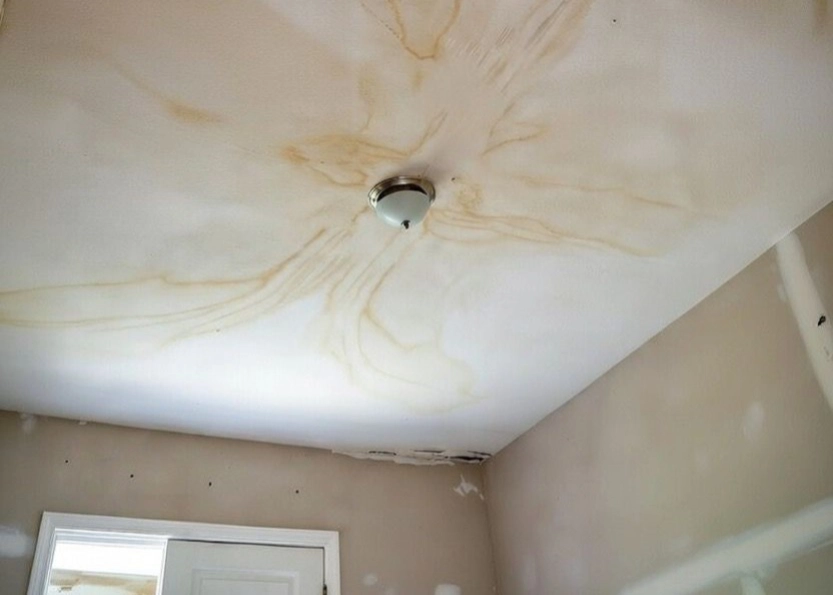
Look for stains, damp patches, or peeling paint that gets worse after rain.
Look in the loft (if safe)
Use a torch and check for wet insulation, dark patches, or visible drips.
Check from outside
From the ground, look for missing tiles, sagging areas, or overflowing gutters.
This gives a roofer enough to work with without risking injury.
4 signs your roof is leaking
- Water stains on ceilings or walls
- Damp or dripping after rainfall
- Musty smells or mould upstairs
- Wet patches in the loft
If you see any of these, it is not a maybe. It is a leak.
Flat roof leaks: why they are harder to fix
Flat roofs cause more confusion than pitched roofs because the leak is rarely where you think it is.
Water does not drop straight through. It can sit on the surface, travel across layers, and then show up metres away from the entry point. That makes tracing the source harder and often leads to incorrect fixes.
Common issues with flat roofs include:
- Ponding water that sits for long periods
- Small cracks or splits in the membrane
- Weak joints around edges, outlets, or skylights
- Soft spots where the structure underneath has started to fail
You might notice dark ceiling patches, dips in the roof, or areas that feel soft. These are signs water has been sitting there for a while.
The mistake most people make is trying to seal the visible leak without understanding the full path of the water. That is why flat roof leaks often come back.
Flat roofs usually need a proper inspection. In some cases a repair works, in others sections need replacing to stop the problem properly.
Conservatory roof leaks: common problem areas
Conservatory roofs are one of the most common leak points, especially in older builds.
The weak spots are usually:
- The join between the conservatory and the main house
- Seals around roof panels
- Flashing where it meets brickwork
These areas take constant exposure from weather and temperature changes, which slowly break down seals over time.
If your conservatory is leaking, check if it is still under warranty before doing anything. Most issues come down to sealing or flashing rather than the whole roof failing.
What if you have spray foam insulation and a leak?
This is where things get more complicated.
Spray foam can trap moisture inside the roof structure. If water gets in, it cannot dry out properly, which can lead to hidden rot and long-term damage.
It also makes leaks harder to trace because you cannot see what is happening underneath.
If your roof has spray foam and is leaking, it needs proper inspection. In many cases, the foam has to be removed before repairs can be done properly.
If this applies to you, our spray foam removal service can strip the foam back so repairs can be done properly, before you attempt any fix.
What not to do when your roof is leaking
Avoid these mistakes:
- Climbing onto the roof in bad weather
- Trying to seal the leak from inside
- Ignoring small issues
- Relying on quick fixes as a long-term solution
These usually make the problem worse or harder to fix later.
Who to call about a roof leak
Start with a roofer.
They will:
- Find the actual entry point
- Check surrounding areas for hidden damage
- Carry out repairs that stop the leak returning
If there is internal damage after, then you bring in other trades.
What a roofer will do to fix it
Repairs depend on the cause, but usually involve:
- Replacing or securing tiles
- Repairing flashing
- Fixing guttering issues
- Repairing flat roof membranes
- Sealing weak points around joins
A proper repair always focuses on the source, not just what you can see.
How much does it cost to fix a leaking roof?
Most leaking roof repairs cost between £150 and £600.
- A couple of broken or slipped tiles will usually sit at the lower end
- Flashing repairs around a chimney, vent, or skylight tend to fall in the middle
- If the felt, membrane, or underlying structure has failed, costs will be higher
Emergency call-outs, access issues, or larger damaged areas can push the price up further.
For a full breakdown by repair type, materials, and labour, take a look at our roof repair cost guide.
Is a leaking roof covered by insurance?
It depends on the cause.
Insurance usually covers sudden damage, such as storms. It does not usually cover wear and tear or lack of maintenance.
Take photos, check your policy, and speak to your provider before assuming anything.
Leaking roof checklist
- Check if it is an emergency
- Contain the water
- Move valuables
- Take photos
- Avoid climbing onto the roof
- Contact a roofer
Simple, but this is what actually limits damage.
FAQs
How urgent is a small roof leak?
A small roof leak is not usually an emergency, but it still needs attention quickly. Even a slow drip can lead to damp, mould, and damage to insulation or timber over time. What looks minor now can turn into a much bigger repair if it is left.
Can a roof leak stop on its own?
No, a roof leak will not fix itself. It might appear to stop during dry weather, but the underlying issue is still there. Once rain returns, the leak usually comes back worse than before.
What’s the most common cause of roof leaks?
The most common causes are damaged tiles, failed flashing, and blocked gutters. These areas are exposed to constant weather, so they tend to wear out first and create entry points for water.
Should I go into the loft if my roof is leaking?
You can check the loft if it is safe, dry, and well lit. Use a torch and avoid stepping on insulation or touching electrics. If there is any risk, it is better to leave it and let a roofer inspect it.
Should I call a roofer or a general builder?
You should always start with a roofer. They are trained to find the source of the leak and fix it properly. A general builder may deal with the visible damage but miss the underlying cause.
Get your roof leak sorted before it gets worse
A leaking roof does not stay the same. It either gets fixed, or it spreads.
What starts as a small drip can quickly turn into damaged ceilings, ruined insulation, and costly structural repairs if it is left too long.
If you have noticed signs of a leak, the best step is to get it checked properly now, before it becomes a bigger job. Our roofers across Buckinghamshire trace the source and stop water getting in the same day.
Get in touch today for a professional inspection and clear advice on what needs to be done next.