
Flat roofs are common across Hertfordshire, especially on extensions, garages, and older properties. Most problems don’t start with dramatic leaks, they start quietly with drainage issues, ageing materials, or poor installation. This guide explains how flat roofs typically fail in Hertfordshire homes, which materials actually last, and when it’s time to speak to a flat roofing specialist before repairs turn expensive.
Key takeaways
- Flat roof failures rarely start with dramatic leaks, they begin quietly with drainage and ageing materials.
- Rear extensions, garages and older felt systems are the most common problem roofs in Hertfordshire.
- Standing water and repeated patch repairs are the clearest signs a roof is heading for replacement.
- Acting before water gets inside keeps the job a repair rather than a costly full replacement.
Why flat roofing issues are so common in Hertfordshire
Hertfordshire has a mix of older housing stock, post-war builds, and modern extensions, and our roofers in Hertfordshire see them all. Flat roofs are often added later, rather than designed as part of the original structure, which is where problems begin.
The most common issues we see locally come from:
- Flat roofs on rear extensions and kitchens
- Garage roofs built with older felt systems
- Poor drainage causing standing water
- Roofs that were patched repeatedly instead of properly repaired
- Ageing membranes reaching the end of their lifespan
A flat roof can look fine for years, then fail quickly once water starts sitting where it shouldn’t.
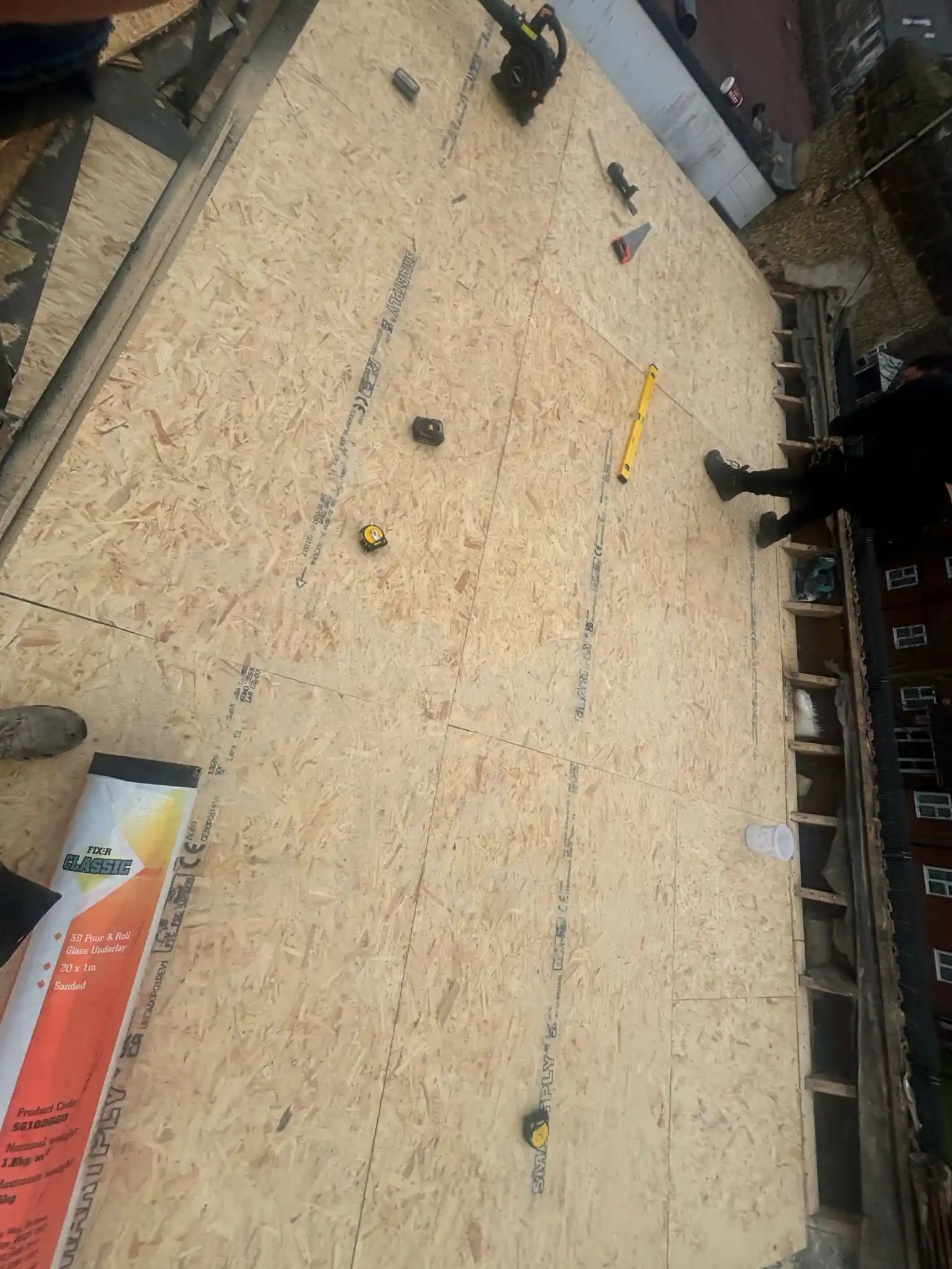
Common flat roof problems homeowners don’t spot early
Most flat roof failures don’t announce themselves straight away.
Ponding water
Water that sits on a flat roof for more than 48 hours after rain slowly weakens seams and joints. Over time, it finds a way in.
Cracks and splits in the membrane
Older felt roofs and poorly installed membranes can crack due to UV exposure, temperature changes, and general wear.
Failed joints and edges
Edges, trims, and upstands are weak points. Small gaps here often cause leaks that travel inside before showing up on the ceiling.
Blocked outlets and gutters
Leaves and debris stop water draining properly, which increases pressure on the roof surface.
Poor installation
Incorrect falls, rushed detailing, or cheap materials lead to repeat issues. These problems usually don’t show up until heavy rain hits.
Flat roofing materials used in Hertfordshire homes
Not all flat roofing systems perform the same in real-world conditions.
Felt roofing
Common on older garages and extensions. It can work well when installed properly, but cheaper felt systems tend to fail earlier, especially after repeated repairs.
EPDM rubber roofing
Popular for newer installations. It’s flexible, handles temperature changes well, and has fewer joints, which reduces leak risk.
GRP (fibreglass) roofing
A solid option for smaller roofs. When installed correctly, it provides a durable, seamless finish, but poor workmanship can lead to cracking.
Liquid-applied systems
Often used for repairs or overlays. They can be effective in the right situation, but they are not always a long-term fix if the structure underneath is failing.
Choosing the right material depends on roof size, usage, drainage, and how long you want the solution to last.
When flat roof repairs are enough and when they’re not
This is where many homeowners waste money.
Repairs usually make sense when:
- The issue is localised
- The membrane is still in good condition overall
- The roof is relatively new
- Drainage issues can be corrected
Replacement is often the better option when:
- The roof is over 20 years old
- Leaks keep returning in different areas
- Ponding water is widespread
- The underlying structure is compromised
- Multiple patch repairs have already failed
A proper inspection should tell you which side of that line you’re on.
What you can safely check before calling a flat roofer
You don’t need to climb onto the roof to gather useful information.
- Check ceilings below the flat roof for staining or bubbling
- Note whether leaks appear only after heavy or prolonged rain
- Look for overflowing gutters or downpipes during rainfall
- Check inside the roof void, if accessible, for damp insulation or water trails
- Take photos of visible issues from the ground
This helps a roofer diagnose the problem faster and more accurately.
Why using an experienced flat roofer matters
Flat roofing is less forgiving than pitched roofing. Small mistakes lead to repeat failures.
A good flat roofer will:
- Assess drainage, not just surface damage
- Check the condition of the deck and insulation
- Recommend materials based on use and lifespan, not just price
- Explain whether repair or replacement makes more sense
- Provide clear options rather than a one-size-fits-all answer
This is especially important in Hertfordshire, where many flat roofs were added to properties decades after the main build.
When to get your flat roof inspected
Don’t wait until water is dripping inside.
It’s time to book an inspection if:
- You see staining or damp patches below the roof
- Water sits on the roof long after rain stops
- The roof has been repaired multiple times
- You’re planning to sell or renovate the property
- The roof is approaching the end of its expected lifespan
Early inspections almost always cost less than emergency repairs.
Flat roofing help in Hertfordshire
If you’re dealing with ongoing flat roof issues, or you’re unsure whether your roof needs repair or replacement, getting it looked at properly is the smartest next step.
Alliance Roofing & Building provide flat roofing inspections, repairs, and replacements across Hertfordshire.
Use the contact form to arrange an inspection or discuss the condition of your flat roof before small problems turn into expensive ones.