
Flat roofs are common across Hertfordshire and work well when the right system is chosen and installed properly by a flat roofing specialist. Modern materials like EPDM rubber, GRP fibreglass, and high-performance felt can last for decades if drainage, insulation, and detailing are done correctly. Early inspections and timely repairs help avoid leaks, water damage, and costly replacements.
Key takeaways
- Flat roofs are never truly flat, they need a slight fall so rainwater drains rather than pools.
- EPDM rubber, GRP fibreglass and high-performance felt can all last decades when installed properly.
- Drainage, insulation and detailing decide whether a flat roof reaches its expected lifespan.
- Catching problems early lets you repair rather than face a full, costly replacement.
Flat roofs are everywhere across Hertfordshire, and our roofers in Hertfordshire see them on rear extensions, garages, dormers, bay windows, and commercial buildings. When they’re done properly, a flat roof can last for decades. When they’re rushed or poorly installed, they become a constant source of leaks and stress.
This guide explains how flat roofing really works, the materials used in Hertfordshire homes, common problems we see, and how to decide whether a flat roof needs repairing or replacing.
What Is a Flat Roof?
Despite the name, flat roofs are never completely flat. They are built with a slight fall so rainwater drains away rather than sitting on the surface. When drainage is poor or materials fail, water starts to pool, which is where most flat roof problems begin.
Flat roofs are popular because they:
- Work well for extensions and garages
- Are quicker to install than pitched roofs
- Can be cost-effective when designed correctly
- Allow for modern insulation upgrades
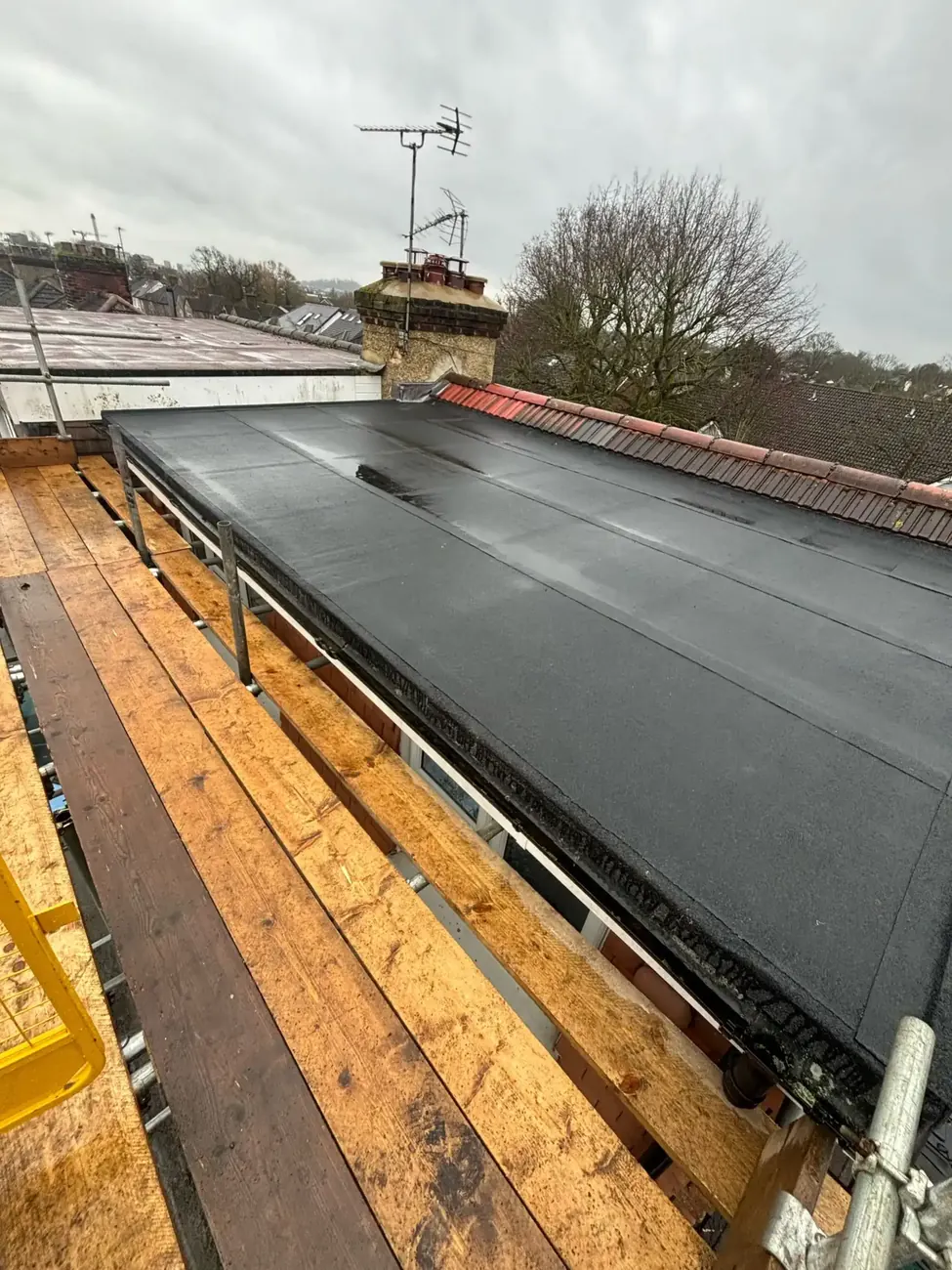
Flat Roofing Materials Used in Hertfordshire
Choosing the right material is one of the biggest factors in how long a flat roof will last. Different properties suit different systems.
EPDM Rubber Roofing
EPDM is one of the most common flat roofing systems used today.
It is:
- Installed in large sheets with minimal joins
- Highly resistant to weather and UV exposure
- Flexible, which helps prevent cracking
- Suitable for most domestic flat roofs
EPDM works especially well on extensions and garages where long-term reliability matters more than appearance.
GRP Fibreglass Roofing
GRP, also known as fibreglass roofing, creates a seamless, rigid surface.
It is:
- Fully bonded with no seams
- Very durable when installed correctly
- Ideal for complex roof shapes and details
- Low maintenance once cured
GRP needs correct preparation and dry conditions during installation. When rushed or poorly laid, problems can appear later, which is why experience matters.
High-Performance Felt Roofing
Modern felt systems are very different from older felt roofs.
They:
- Use multiple layers for strength
- Are reinforced to prevent tearing
- Can be suitable for budget-conscious repairs
- Work well on smaller flat roofs
Felt can be a solid option when installed properly, but shortcuts during installation are a common cause of early failure.
Common Flat Roof Problems We See in Hertfordshire
Flat roof issues rarely appear overnight. Most problems start small and get worse over time.
Leaks and Water Ingress
Usually caused by:
- Failed joints or seams
- Poor drainage
- Cracked or aged membranes
Even small leaks can damage insulation and roof decking if ignored.
Ponding Water
Standing water puts constant pressure on the roofing system and speeds up material breakdown.
Blistering and Cracking
Often linked to:
- Trapped moisture
- Poor ventilation
- Low-quality materials
Failing Edges and Flashings
Roof edges and upstands are the most common failure points, especially around doors, walls, and skylights.
Flat Roof Repairs vs Replacement
Not every flat roof needs replacing. The right choice depends on age, condition, and previous repair history.
When a Repair Makes Sense
- The roof is structurally sound
- Damage is localised
- The membrane is still in good condition
- No widespread water damage underneath
Repairs can extend the life of a roof if done early and properly.
When Replacement Is the Better Option
- The roof has multiple recurring leaks
- The membrane is brittle or cracked throughout
- Insulation is saturated
- The roof is near the end of its lifespan
Replacing a failing flat roof is often cheaper long-term than constant patch repairs.
Flat Roof Maintenance and Inspections
Regular inspections help prevent emergency repairs.
We usually recommend:
- Annual inspections
- Checks after storms
- Clearing debris from outlets
- Watching for early signs of pooling
Small issues caught early are far easier to fix than major failures.
Flat Roofing for Domestic and Commercial Properties
Flat roofing systems are used on:
- Home extensions
- Garages and porches
- Apartment buildings
- Shops and offices
Each property type has different demands, which is why flat roofing is never one-size-fits-all.
Why Experience Matters With Flat Roofing
Flat roofing fails most often due to:
- Poor surface preparation
- Incorrect falls
- Rushed installation
- Incompatible materials
A well-installed flat roof is about planning, not speed.
When to Get a Flat Roof Checked
You should arrange an inspection if:
- You notice damp patches inside
- Water sits on the roof after rain
- The roof covering looks cracked or lifted
- Repairs have been done repeatedly
Ignoring early signs almost always leads to higher costs later.
Final Advice for Hertfordshire Homeowners
Flat roofs are not a weak option when they’re designed and installed properly. The key is choosing the right material, ensuring correct preparation, and dealing with problems early.
If you are unsure whether your flat roof needs repair or replacement, a proper inspection is the best place to start.
Concerned about your flat roof? Get it checked before small issues turn into major damage. Speak to a local roofing specialist and get clear, honest advice on the right next step for your property.