
Most flat roofs in the UK last 15–40+ years depending on the material, flat roof installation quality, and maintenance. Felt usually lasts 15–25 years, GRP 20–30, EPDM 25–40, and PVC single-ply 30–40+. Drainage and detailing decide whether you get the lifespan you paid for.
Key takeaways
- UK flat roofs typically last 15 to 40+ years depending on the material chosen.
- Felt lasts 15-25 years, GRP 20-30, EPDM 25-40 and PVC single-ply 30-40+ years.
- Installation quality, drainage and detailing matter as much as the material itself.
- A simple maintenance routine, clearing outlets and checking details, adds years to a roof's life.
If you are paying for a flat roof, you want a straight answer on lifespan, not vague “it depends” fluff.
A flat roof in the UK typically lasts 15 to 40 years, depending on the system you choose, how well it’s installed, and how well it’s looked after. Cheap systems fail early. Good systems last, especially when drainage is right and maintenance is not ignored.
Below is what you can realistically expect from the main flat roofing options in the UK, plus how to spot when yours is nearing the end.
Some Notes On Maintenance
Flat roofs do not usually “suddenly fail”. They slowly get worse, and most owners only notice once water is already inside.
A simple maintenance routine adds years to a roof’s life:
- Keep outlets and gutters clear. Standing water is a roof killer.
- Remove moss, silt, and leaves. Debris holds moisture, which speeds up wear.
- Check details around upstands, skylights, pipe penetrations, and edges. Most leaks start here.
- Avoid unnecessary foot traffic. Flat roofs are not patios unless designed as one.
- Get an inspection after storms. Wind-lift and torn edges are common in the UK.
If you do one thing, do this: make sure water can leave the roof quickly. If it ponds, you are shortening the lifespan, no matter what the membrane is.
What About The Manufacturer’s Guarantee?
Manufacturer warranties are useful, but people misunderstand them.
- Most warranties cover materials, not the full cost of putting things right.
- Some warranties only apply if the roof is installed by an approved installer and the system is installed exactly to spec.
- Many require proof of maintenance or periodic inspections.
- Warranties often exclude damage caused by standing water, foot traffic, or third-party work (like a random contractor drilling through the roof for cables).
So yes, look at the warranty, but treat it as a back-up, not your whole plan.
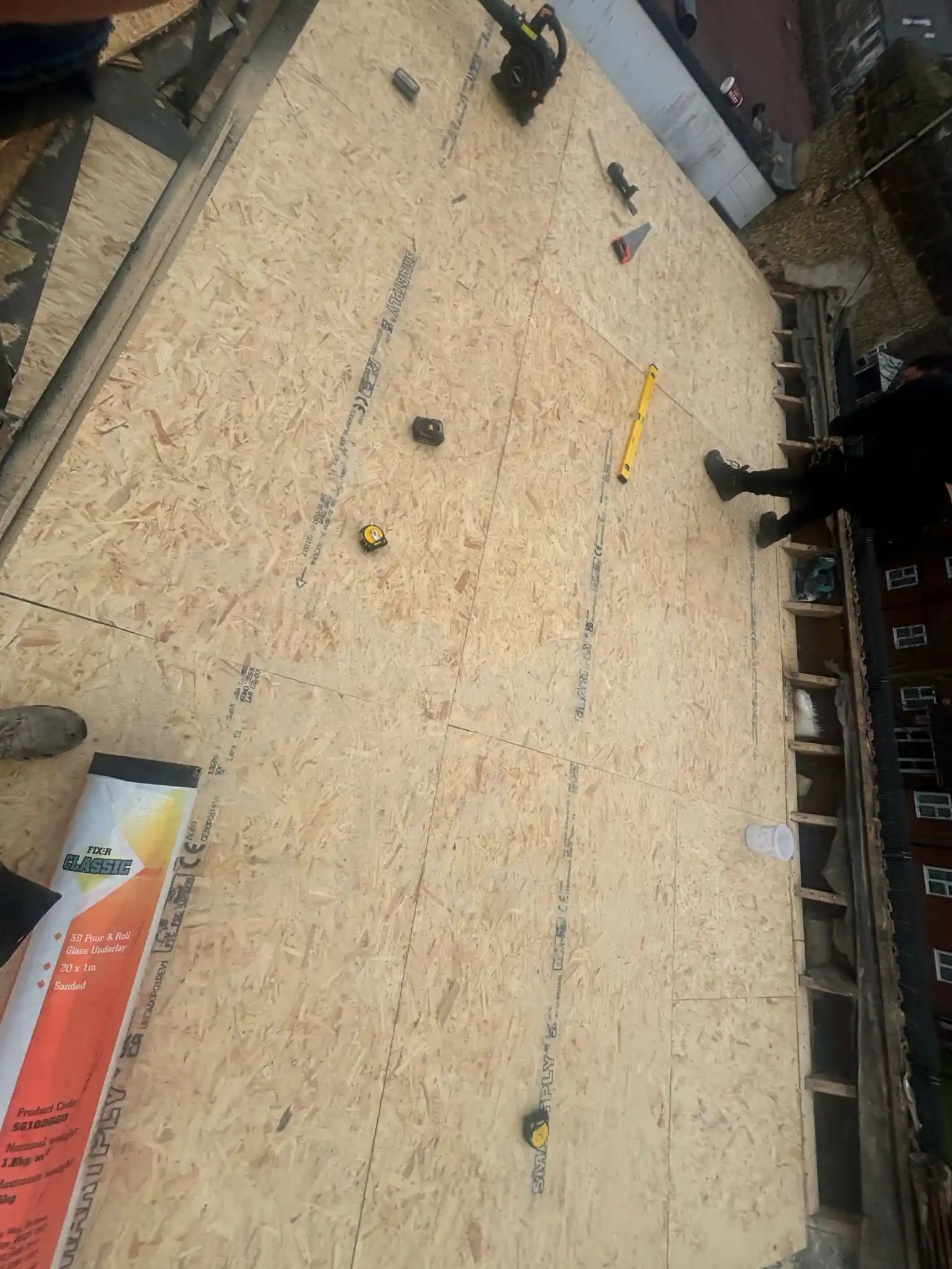
How Long Does A Felt Flat Roof Last?
Typical UK lifespan: 15 to 25 years (modern high-performance felt)
Older or low-grade felt systems can be closer to 10 to 15 years.
Felt is still common in the UK because it is cost-effective and works well when installed properly.
What makes felt fail early:
- Poor detailing at edges and outlets
- Weak overlaps and joints
- Heat damage during installation
- Persistent ponding water
- Patch repairs stacked on top of each other instead of fixing the real cause
When felt is a solid choice:
- You want a proven system at a sensible price
- The roof has simple geometry and good drainage
- It’s installed as a proper multi-layer system, not a rushed job
How Long Does A Glass Reinforced Polymer Fibreglass (GRP) Flat Roof Last?
Typical UK lifespan: 20 to 30 years
GRP can last well, but it is less forgiving if the install is sloppy.
GRP is popular on smaller domestic roofs like extensions and garages. Done right, it’s tough. Done badly, it cracks and you get a leak that keeps coming back.
What makes GRP fail early:
- Movement in the deck or structure, GRP does not like flex
- Poor preparation, moisture in the deck, or rushed curing
- Weak detailing around trims and upstands
- Hairline cracks that get ignored until they become real problems
When GRP is a good choice:
- Smaller roofs with limited movement
- Install conditions are right, dry deck, correct temperature range
- You want a hard surface finish
How Long Does An EPDM Flat Roof Last?
Typical UK lifespan: 25 to 40 years
You will see bigger claims online. Real-world lifespan depends heavily on workmanship and detailing.
EPDM is a rubber membrane. It can last a long time and it handles UK temperature swings well. The weak point is usually not the sheet itself, it’s the details: edges, outlets, and any seams.
What makes EPDM fail early:
- Bad bonding or incorrect adhesive use
- Poor edge restraint in windy areas
- Weak detailing around penetrations
- Damage from foot traffic or sharp debris
When EPDM makes sense:
- Large roof areas where fewer joins are a benefit
- You want a system with a long track record
- You are prioritising longevity over a “pretty” finish
How Long Does A Vanguard PVC Single-Ply Flat Roof Last?
Typical UK lifespan: 30 to 40+ years
Single-ply systems are often the longest-lasting option when installed correctly.
PVC single-ply is commonly used on larger roofs and commercial buildings because seams are heat-welded, it can be detailed cleanly, and it performs well long term.
Why it lasts:
- Welded seams can be extremely durable
- The membrane is stable and handles movement well
- It copes with standing water better than many systems, though drainage still matters
- Maintenance is usually simpler
Trade-offs:
- Higher upfront cost than basic felt
- Installation must be done properly by trained installers
If you want the best shot at a flat roof that is still doing its job decades from now, this category is usually where you end up.
The Long and Short Of Flat Roofs
Here’s the honest summary:
- Felt: 15–25 years if it’s modern, multi-layer, and installed well
- GRP: 20–30 years, good on smaller roofs, less forgiving of movement
- EPDM: 25–40 years, great membrane, details matter
- PVC single-ply: 30–40+ years, often the best long-term performer
A flat roof’s lifespan is not just the material. It’s mostly:
- installation quality, 2) drainage design, 3) maintenance.
If any of those are poor, you can turn a “30-year roof” into a “10-year headache”.
What Shortens A Flat Roof’s Life In The UK?
A few UK-specific realities:
- Freeze-thaw cycles open up small weaknesses in laps, edges, and trims
- Storm wind uplift attacks perimeters and weak fixings
- Ponding water is common on older roofs with sagging decks
- Moss and debris trap moisture and hide damage
- Trades drilling through the roof for vents, cables, solar, HVAC, this happens all the time
If your roof is on a building with plant equipment, regular access, or lots of penetrations, it needs a system designed for that, not a basic domestic spec.
Signs Your Flat Roof Is Nearing The End
You do not need to guess. Watch for:
- Recurring leaks in different spots
- Blisters, splits, or cracking on the surface
- Deteriorated edge trims or lifting at the perimeter
- Soft spots underfoot
- Water staining internally that keeps returning after “repairs”
- Ponding that is getting worse year by year
If you are paying for repeated patch repairs, you are probably wasting money.
If you want a clear answer on how much life your flat roof has left, book a proper inspection and get it assessed before the next leak does the talking. Our flat roof installation and repair team works with homeowners across Berkshire and Buckinghamshire and will give you a straight answer on repair versus replacement.
Call us today to book a roof check and get a straight quote.