
Most people searching this have spotted a damp patch, noticed a missing tile, or had water coming in after a storm. This guide covers what roof repairs actually cost in 2026, what drives the price up, and how to avoid paying more than you should. If the covering is failing across large areas rather than in one spot, our roof replacement cost guide prices a full re-roof instead. If you already know you need work done, our professional roof repair service covers everything below with a free, no-obligation inspection.
Key takeaways
- Most UK roof repairs cost between £150 and £2,500, with London and the South East around 15 to 20 percent higher.
- Scaffolding, call-out fees, waste disposal and hidden damage found on inspection are the extras that catch people out.
- Repair makes sense for isolated damage on a sound roof. Replace once repairs are repeated or more than 25 to 30 percent of the covering is failing.
How much does a roof repair cost?
Most roof repairs in the UK cost between £150 and £2,500. The range is wide because a cracked tile is a completely different job to failed flashing around a chimney or a flat roof that needs resurfacing. To see how repairs sit against re-roofs and other work, our roofing cost guide lays out the full picture.
In London and the South East, expect to pay around 15 to 20 percent more than these figures due to higher labour rates.
Here are typical costs for the most common repair jobs:
| Type of repair | Typical cost | | -------------------------------------- | --------------- | | Replace 1 to 3 broken or missing tiles | £150 – £300 | | Replace up to 6 tiles | £200 – £400 | | Replace ridge tiles (up to 6) | £200 – £450 | | Repair or replace lead flashing | £200 – £600 | | Chimney repointing | £300 – £900 | | Valley repair or replacement | £300 – £800 | | Flat roof patch repair | £150 – £400 | | Flat roof full resurfacing (per m²) | £50 – £100 | | Gutter repair or replacement | £100 – £400 | | Fascia and soffit replacement | £1,000 – £3,000 | | Skylight resealing | £100 – £300 |
These are starting points. The final price depends on how easy the roof is to access, whether scaffolding is needed, and what else is found once a roofer gets up there.
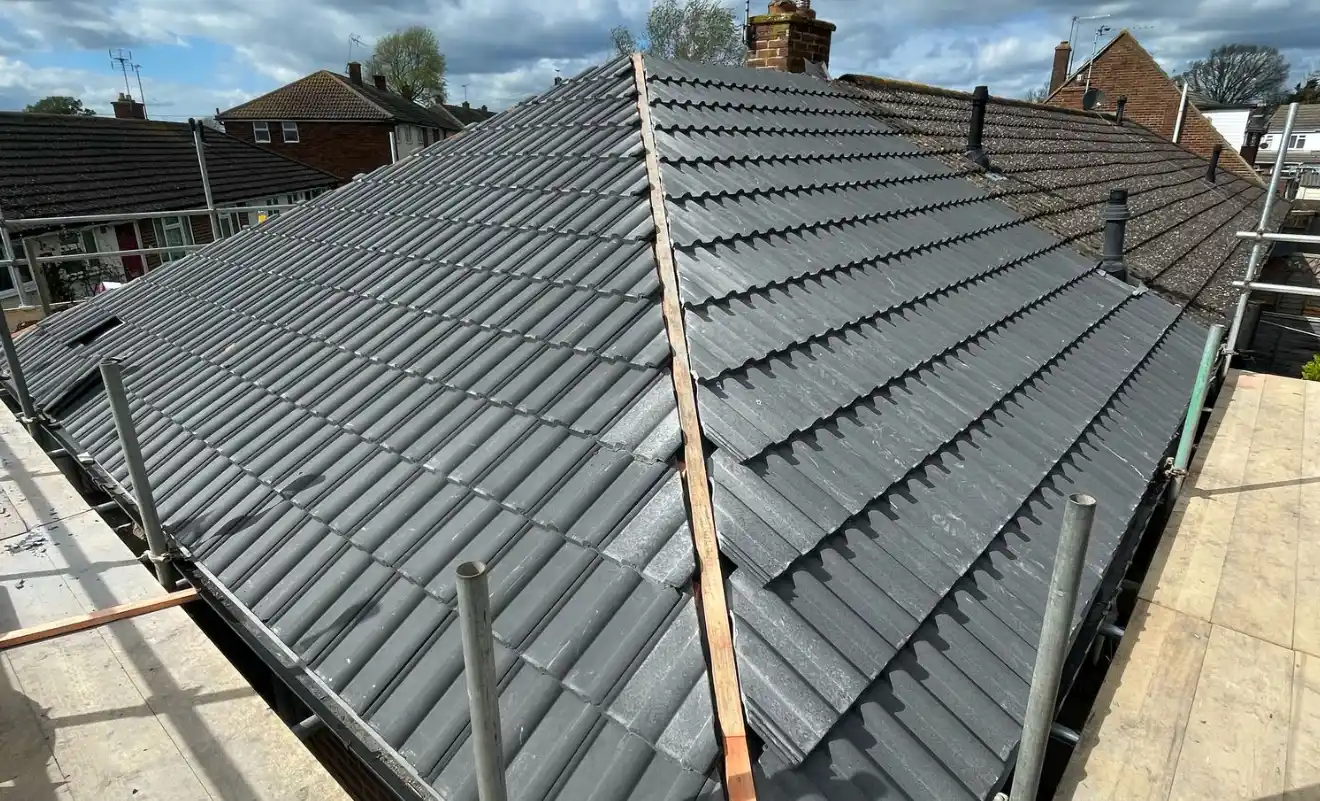
Roof repair cost per square metre
For larger repair areas, roofers often quote per square metre. Here is what to expect by roof type:
| Roof type | Repair cost per m² | | ------------------------ | ------------------ | | Concrete tiles | £100 – £130 | | Clay tiles | £120 – £180 | | Natural slate | £160 – £240 | | Felt (bitumen) | £100 – £150 | | GRP fibreglass flat roof | £140 – £200 | | EPDM rubber flat roof | £130 – £180 |
What extra costs should you expect?
The repair itself is only part of the bill. These are the extras that regularly catch homeowners out:
Scaffolding: For most two-storey properties, scaffolding is required by law for roof work. A standard scaffold for a semi-detached costs £600 to £1,200 and is often quoted separately. Always ask upfront whether it is included.
Call-out fee: Some roofers charge a call-out fee of £50 to £150 just to attend and assess the job. Others include this in the quote. Ask before anyone turns up.
Waste disposal: Removing old tiles, felt or flashing creates waste that needs disposing of properly. Budget £100 to £300 depending on the volume.
Additional damage found on inspection: Once a roofer is up there they may find problems that were not visible from the ground. Rotten timber, damaged felt or failing underlay can add significantly to the final bill. It is worth asking for a condition report before work starts.
Why is your roof leaking?
Understanding the cause helps you ask the right questions and avoid being oversold on repairs you do not need.
Broken or missing tiles: The most common cause of a roof leak. Tiles crack from age, frost or impact. A single missing tile after a storm can let water in fast. Straightforward to fix if caught early.
Failed flashing: The lead or aluminium strips that seal around chimneys, skylights and where the roof meets a wall. Flashing fails through age, movement in the structure, or poor original installation. When it goes, water gets in quickly and the damage spreads.
Blocked or broken gutters: Not a roof problem in itself but a blocked gutter causes water to back up under the roof edge and into the fascia. Left long enough it causes rot and leaks that look like roof damage.
Deteriorating felt or underlay: The felt beneath the tiles is the secondary line of defence. It degrades over time, particularly on older properties. If your tiles are fine but you are still getting leaks, the felt may be the issue.
Flat roof problems: Flat roofs are more prone to leaking than pitched roofs because water sits on them rather than running off. Blistering, cracking or ponding water are the main warning signs.
Chimney issues: Chimney stacks are exposed on all four sides and take a hammering from the weather. Cracked pointing, failed flashing or a damaged chimney pot can all cause leaks that appear in the ceiling well away from where the water is actually getting in.
Cost to repair different types of roof
Pitched tile roofs
Replacing a handful of broken or missing tiles is one of the cheaper repairs. A roofer can usually replace up to six tiles in a few hours. Expect to pay £150 to £400 for a small tile repair.
If the felt underneath is damaged, that needs to come off along with the tiles to fix it properly. This adds time and cost, but skipping it means the leak will come back.
Slate roofs
Slate repairs cost more than concrete tile repairs because the material is more expensive and the work requires more care. Natural slate can be matched on older roofs but sourcing the right size and colour adds time.
A small slate repair typically costs £200 to £500. If the slates are old and becoming brittle across a large area, it is worth getting a full condition report to decide whether repairs or a full re-roof makes more financial sense.
Flat roofs
Flat roof repairs range from a straightforward patch to a full surface replacement depending on how far the damage has spread. A small repair to a GRP or EPDM flat roof costs £150 to £400. If water has been sitting on the roof and penetrating for some time, the repair area is usually larger than it first appears.
If a felt flat roof is leaking repeatedly, replacing the whole surface with GRP or EPDM is usually better value than continual patching.
Lead flashing repairs
Flashing repairs are often what is actually needed when a roof appears to be leaking around a chimney or skylight. Repointing or replacing a section of flashing costs £200 to £600 depending on the length and location.
Do not ignore failed flashing. Water tracking in behind it can cause significant damage to rafters and ceilings before it becomes visible inside.
Where do roof leaks usually start?
Leaks rarely appear directly below the point where water is getting in. Water travels along rafters, felt and ceiling joists before dripping through. These are the most common entry points:
Chimney stack: The flashing and pointing around a chimney is exposed to constant movement and weathering. It is one of the most common leak sources on older UK homes.
Valleys: Where two roof slopes meet, a valley is formed and lined with lead or a specialist valley tile. When this fails, water channels straight in. Valley repairs typically cost £300 to £800.
Around skylights: The seal and flashing around a skylight deteriorates over time. Often a straightforward repair but it needs attention quickly as water tracking behind a skylight frame causes damage fast.
Roof edges and verges: The edges of a roof are vulnerable to wind damage and pointing failure on mortar-bedded verges. Dry-fix systems have largely replaced mortar on new roofs for this reason.
Should you repair or replace?
This is the question most homeowners are really trying to answer.
Repairs make sense when the damage is isolated, the roof structure is sound, and the roof covering has good life left in it. A 15-year-old tiled roof with a couple of broken tiles does not need replacing.
Replacement makes more sense when repairs are being done repeatedly, when more than 25 to 30 percent of the covering is failing, or when the felt and battens underneath are shot. At that point you are spending money to delay the inevitable.
A good roofer will tell you honestly which situation you are in. If the first person you call recommends a full replacement without getting on the roof properly, get a second opinion. If it does turn out you need a new roof, our pitched roofing and re-roof team can advise, and our roof replacement cost guide breaks down what a new roof costs.
Government help with roof repair costs
If cost is a concern it is worth checking whether you qualify for any support before committing to repairs.
The Energy Company Obligation (ECO4) scheme can cover roof repairs in some circumstances, particularly where insulation improvements are involved. To be considered you generally need to be receiving certain benefits, have a disability or long-term health condition, or be over 60. Contact your local council for up-to-date eligibility criteria as the scheme details change regularly.
Local councils also sometimes have their own grants for essential home repairs. Worth a call if you are a homeowner on a low income.
How to choose a roofer
Getting the repair done is only half the job. Getting it done by the right person matters just as much.
Things to check before hiring anyone:
- Public liability insurance: ask to see the certificate
- A written, itemised quote before any work starts
- References or photos of recent work
- NFRC membership or equivalent
- No large cash deposit required upfront
Walk away from anyone who cold-calls you to say they have noticed a problem with your roof while working nearby. This is a known scam and the people doing it rarely do quality work.
Also be cautious of the lowest quote. Roof repair is not an area where cheap usually ends well.
Common questions
How much does it cost to repair a roof in the UK?Most repairs cost between £150 and £2,500. Simple tile replacements are at the lower end. Flashing repairs, flat roof work and anything needing scaffolding push the price up.
Does home insurance cover roof repairs?It depends on the cause. Storm damage is usually covered. General wear and tear is not. Check your policy before assuming you are covered and document any damage with photos before calling anyone out.
How long does a roof repair take?Small repairs like tile replacement or repointing flashing can be done in a few hours. Larger flat roof repairs or extensive tile work may take one to two days.
Can I repair my roof myself?For anything beyond clearing gutters or replacing a single accessible tile, we would not recommend it. Working at height without the right equipment is dangerous, and a poorly done repair often causes more damage than it fixes.
How do I know if my roof needs repairing or replacing?Get a roofer to inspect it properly and give you a written assessment. Any reputable contractor will do this and explain clearly what they found.
Get a free roof repair quote from Alliance Roofing
Alliance Roofing carries out roof repairs across London, Surrey, Berkshire, Buckinghamshire, Oxfordshire and Hampshire. We offer free inspections with a written report and a full breakdown of costs before any work begins.
If you are not sure whether you need a repair or a full replacement, we will tell you honestly which one applies to your situation.