
Choosing the right roofing contractor matters more than most people realise. A cheap quote can end up costing far more if the work is poor, unsafe, or not guaranteed properly. The best approach is to look for a roofer with real experience, proper insurance, clear written quotes, good reviews, and a track record of completing the kind of work you actually need.
Key takeaways
- Check for a real business: proper name, working phone, website, service area and verifiable reviews.
- Always confirm public liability insurance, and employers' liability if they have a team.
- Get three quotes and judge on clarity and detail, not just the lowest number.
- Walk away from doorstep callers, pressure selling, large upfront cash payments and verbal-only guarantees.
Choosing a roofing contractor is not something most homeowners do often.
That is part of the problem.
When a roof starts leaking, tiles come off in a storm, or a full replacement becomes unavoidable, people usually need help quickly. If it is a re-roof you are weighing up, it is worth seeing how an established pitched roofing contractor approaches the job before you commit. That is when rushed decisions get made. A quote sounds cheap, someone says they can start tomorrow, and before long you are dealing with poor work, vague excuses, and another repair bill.
A roof is too important for that.
If the work is done properly, it protects the rest of the house for years. If it is done badly, the damage spreads well beyond the roof itself. Damp, mould, ruined insulation, damaged ceilings, rotten timber, and repeat callouts all get expensive fast.
That is why choosing the right roofing contractor matters.
This guide explains what to look for, what to avoid, and how to make sure you are hiring someone who actually knows what they are doing.
Start with the basics: do they look like a real business?
This sounds obvious, but it is where many people get caught out.
A proper roofing contractor should be easy to identify and easy to contact. They should have a real business name, a working phone number, a proper website, and a clear service area. You should be able to find reviews, examples of previous work, and signs that they have actually been trading for a while.
If someone knocks on the door out of nowhere and says they noticed a problem with your roof, be careful. That is one of the oldest roofing scams going. The pitch is always similar. They claim they saw slipped tiles or damage from the street, offer to take a quick look, then suddenly the roof is apparently one storm away from collapse and they can sort it today for cash.
That sort of pressure is a red flag.
A genuine roofer does not need to scare homeowners into making a fast decision on the doorstep.
Look for experience in the type of roofing work you need
Not every roofer handles every kind of job equally well.
A company that mainly does simple roof repairs may not be the right fit for a full re-roof. Someone who is good with pitched tiled roofs may not be the best choice for a flat roofing system. The same applies to leadwork, chimney repairs, ridge work, or more specialist materials.
That is why it is worth asking a simple question early on: have they done this type of job before?
If they have, they should be able to explain the process clearly and show examples of similar work. That matters because roofing is not just about getting materials onto a roof. It is about understanding how the whole roof system works, how water moves, where failures usually happen, and how to put things right without creating new problems.
Experience shows in the details. A good roofer will talk sensibly about access, materials, ventilation, leadwork, waste removal, and what might be discovered once the roof is opened up. Someone who stays vague usually has a reason for staying vague.
Always check for insurance
This is not optional.
At a minimum, a roofing contractor should have public liability insurance. If they have a team working with them, employers’ liability cover should also be in place.
Roofing is high-risk work. If something goes wrong, whether that is damage to your property or an injury on site, you do not want to find out afterwards that the person you hired was not properly insured.
A trustworthy contractor will not get defensive when asked about insurance. They should be able to show proof of it.
Trade bodies and accreditations matter, but they are not everything
Membership of a recognised trade body can be a good sign. It shows that the contractor has at least gone through some level of vetting and is connected to the wider industry.
That said, trade membership on its own does not automatically make someone the right roofer for your job. It should be treated as one part of the picture, not the whole picture.
What matters more is whether the contractor combines those credentials with real experience, a solid local reputation, proper documentation, and a clear, professional way of handling the job from start to finish.
In other words, do not hire someone just because they can list a logo. Hire them because the whole package stacks up.
Get more than one quote, but do not automatically choose the cheapest
This is where homeowners often trip themselves up.
Three quotes is usually enough to give you a clear picture of the market. If one is much lower than the others, there is usually a reason. It could be lower-quality materials, no scaffolding allowance, no waste removal, missing labour costs, no VAT, or someone simply underpricing the job to win it and deal with the fallout later.
Cheap roofing quotes often become expensive roofing jobs.
That does not mean the highest quote is automatically best either. What you want is a quote that is clear, detailed, and sensible. It should explain what is included, what is not, what materials are being used, how access will be handled, and what happens if extra issues are found once work starts.
A vague quote is a bad sign. If the paperwork is thin before the job starts, it usually gets worse once money changes hands.
Make sure they have actually inspected the roof properly
A roofer cannot price a job properly from a quick glance at the roof from the driveway.
They need to inspect it properly. That may involve checking from ground level, using ladders safely, looking in the loft, assessing the condition of the roof covering, and in some cases using photos or drone images to show what is actually happening.
If someone spends two minutes looking up and then gives you a fixed number, that should make you nervous.
A proper inspection should lead to a proper explanation. You should come away understanding what the problem is, what needs doing, and why.
Ask the right questions before the job starts
Good roofers should be able to answer sensible questions without dancing around them.
Some of the most useful questions to ask are:
- What exactly is wrong with the roof?
- What work are you recommending, and why?
- What materials will you be using?
- Will scaffolding be needed?
- Is waste removal included?
- How long should the work take?
- What happens if additional problems are found?
- Do you guarantee the work?
- Who will actually be carrying out the job?
You are not being difficult by asking these things. You are doing what any homeowner should do before signing off a job that affects the structure of the house.
A roofer who knows their trade will not mind being asked. In fact, they should expect it.
Be careful with deposits, payment terms, and guarantees
Some deposit requests are reasonable. Large upfront payments are not.
If materials need ordering, a deposit can make sense, especially on bigger jobs. But handing over most of the money before work begins is asking for trouble. Payment terms should be agreed clearly in writing before the job starts.
It is also worth checking what kind of guarantee is actually being offered.
A verbal promise means nothing. A contractor’s own guarantee is only useful if they are still trading when something goes wrong. That is why written guarantees matter, and on some jobs, insurance-backed protection can make a lot of sense.
If a company talks confidently about guarantees but cannot show you anything in writing, that should ring alarm bells.
Check how they handle safety and access
Roofing work should not be done from a ladder alone.
That is one of the easiest ways to spot someone cutting corners. Proper access matters, not just for safety, but for the quality of the work as well. Scaffolding often makes up a noticeable part of the cost, which is why some quotes come in cheaper than others. They have simply left it out and hope you will not notice.
That sort of shortcut is not a saving. It is a liability.
A professional roofing contractor should have a clear plan for safe access, safe working, and safe waste handling. That includes things like scaffold, skip arrangements if needed, and making sure the site is left in a sensible condition when the work is finished.
Reviews matter, but use some common sense
Online reviews are useful, but they are not the whole story.
A good pattern of reviews over time is what matters, not just one or two glowing comments. Look for consistency. Are people saying the same things about communication, workmanship, punctuality, and how problems were handled?
It is also worth paying attention to how the company presents completed work. Good roofers are usually happy to show before-and-after photos because they know the quality holds up.
Local reputation still counts
There is real value in hiring a roofer who works in your area regularly and has a reputation to protect.
A local contractor is easier to contact, more likely to understand the kinds of roofs and property styles common in the area, and less likely to vanish when follow-up questions come up.
That does not mean every local roofer is good, but it does mean there is more accountability when a company has built its name on jobs nearby.
If the job is a pitched roof, check these as well
Everything above applies to any roofing job. A pitched roof adds a few checks of its own, because the work involves tiles, slates, battens, membranes, hips, valleys and leadwork, and not every roofer is equally strong on all of it.
Ask how much pitched roofing they actually do
Some contractors mainly fit flat roofs, some mainly handle roof repairs, and some only work with one system. For a pitched roof, ask:
- How many pitched roofs do you complete in a typical year?
- Do you regularly work with tiles, slates, hips, valleys and ridges?
- Do you handle chimney flashings, leadwork and roof windows yourselves, or subcontract them?
You want a contractor who does pitched roofs constantly, not one learning on your property. Photos of similar roofs they have finished are the easiest proof.
Compare pitched roofing quotes like for like
Two quotes for "a new roof" can describe very different jobs. Each one should set out:
- Scope: full strip and re-tile, or a patch repair? New breathable membrane and battens, or reusing what is there?
- Materials: tile type and brand, membrane type, batten size and treatment
- Fixings: are tiles nailed or clipped to current standards?
- Access and safety: is scaffolding included or excluded?
- Waste removal: skip hire and disposal of old tiles and felt
- Timescales: start date and expected duration
Vague descriptions like "new tiles" with no detail, no mention of scaffolding or waste, or a cash-only price with no paperwork all tell you the same thing. A good contractor will happily walk through the quote line by line.
Pitched-roof questions worth asking before you say yes
- Who will be on site each day, and who is in charge?
- What happens if you find rotten timber or other issues mid-job?
- How will you protect the inside of the house if it rains during the work?
- How will you keep neighbours safe and the site tidy?
- How will you match new tiles to the existing roof if it is a partial repair?
- Do you take photos before, during and after, so I can see what has been done?
You are looking for calm, clear answers rather than rushed promises.
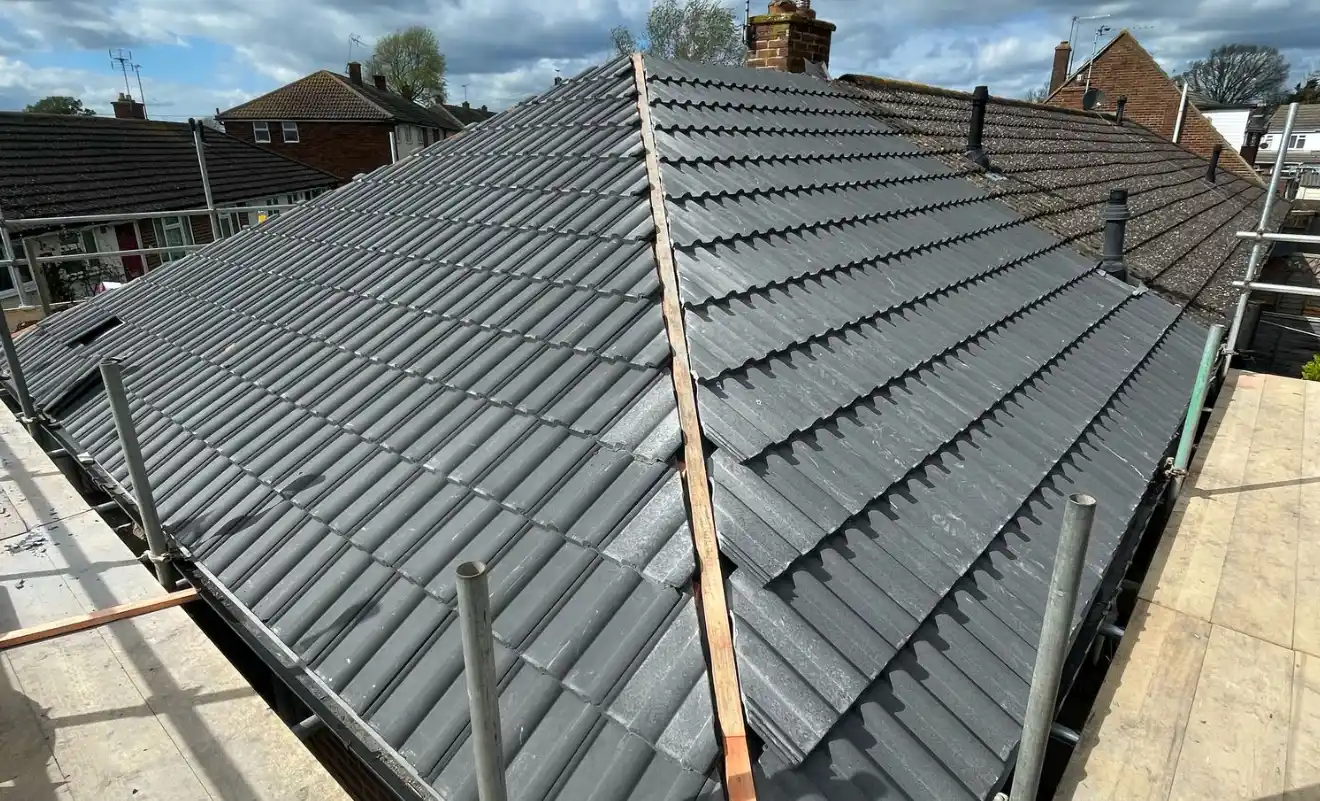
What a good pitched roofing job actually looks like
With the right contractor, the process runs in a predictable order:
- Survey and photos. They inspect from outside and often from inside the loft, then talk you through what they can see.
- Clear written quote. A detailed breakdown rather than a single number, with the options explained where there is more than one way to solve the problem.
- Scaffold and preparation. Proper access is set up and the site is kept tidy and safe.
- Strip and inspect. Old tiles and felt come off where needed, and any rotten battens or timber are replaced rather than covered up.
- New membrane, battens and tiles. Breathable membrane installed correctly, treated battens at the correct spacing, tiles fixed securely, ridges and hips finished to modern standards.
- Details and finishing. Chimney flashings checked or renewed, and valleys, verges, gutters and fascias handled where they are in the quote.
- Clean up, photos and guarantee. Rubbish removed, a walkthrough of the finished work, and a written guarantee.
That sequence is what you are paying for, not just new tiles on the roof.
Final thoughts
Choosing a roofing contractor should never come down to who shouted the loudest, who offered the fastest start, or who came in the cheapest.
It should come down to trust, clarity, experience, and whether the person quoting actually understands the work they are recommending.
A good roofer will inspect properly, explain the issue clearly, provide a written quote, carry the right insurance, use the right access equipment, and stand behind the work they do. That is the standard homeowners should be expecting.
If a contractor cannot give you that confidence before the job begins, they have not earned the job.
Need a roofer you can actually trust?
If you need roofing work carried out and want a clear, honest assessment before making any decisions, Alliance Roofing & Building can inspect the roof, explain what is needed, and provide a straightforward quote without the usual pressure or guesswork. That way, you know exactly where you stand before any work starts.