
If your roof only seems to leak when the weather turns cold, you’re not imagining it.
Winter and early spring are the toughest months for any roof in the UK. Heavy rain, freezing temperatures, snow, high winds and constant temperature changes all combine to expose weaknesses that may have gone unnoticed during summer. Once water finds a way in, our winter roof repair team can trace it and seal it before it spreads.
What starts as a small crack or loose tile in autumn can quickly turn into a serious leak by February. And by the time spring arrives, the damage is often already done.
Key takeaways
- The freeze-thaw cycle widens small cracks all winter, so a hairline gap can become a real leak by early spring.
- Ice dams, blocked gutters, storm-lifted tiles, snow load and loft condensation all add to winter roof problems.
- Leaks don't stop when winter ends. The weak point remains and spring rain keeps it going.
- Don't wait until summer. Delayed repairs lead to rot, damaged insulation, mould and bigger bills.
Here’s why roof leaks get worse in winter and early spring, what signs to look out for, and what you should do next.
Why Winter Is So Hard on Roofs
1. The Freeze–Thaw Cycle
During winter, temperatures often rise above zero in the day and drop below freezing at night.
Here’s what happens:
- Water seeps into small cracks in tiles, flashing or mortar.
- Overnight, that water freezes.
- When water freezes, it expands by around 9 percent.
- The crack widens.
- The next day, more water enters.
This repeated expansion gradually turns minor defects into major entry points for water. By early spring, what was once a hairline crack can become a visible gap.
2. Ice Dams and Blocked Drainage
Although less common than in colder climates, ice dams can still form in the UK during cold snaps.
Warm air escaping from your loft melts snow on the roof. That water runs down to the colder eaves, where it refreezes. Over time, this creates a barrier of ice.
When more snow melts, it has nowhere to go. Water backs up under tiles or shingles and forces its way into the roof structure.
Blocked gutters make this worse. If debris prevents water from draining properly, overflow can push moisture behind fascias and into roof timbers.
3. Heavy Rain and Storm Exposure
Winter storms are relentless.
High winds can:
- Lift tiles
- Crack ridge mortar
- Damage flashing around chimneys
- Dislodge felt or membrane
Even one displaced tile is enough to let water reach the underlay. If that underlay is already ageing, water can penetrate straight into your loft.
Early spring brings intense downpours. By this stage, winter damage has weakened the structure, and heavy rain exposes it.
4. Snow Load and Structural Movement
Snow might look harmless, but it’s heavy.
Accumulated snow adds weight to the roof structure. If the roof already has weakened battens or slight sagging, this additional load can create movement.
Movement opens joints and separates materials that were previously sealed.
When the snow melts, water follows those new gaps.
5. Condensation in the Loft
Not all winter “leaks” are external.
Cold weather creates a large temperature difference between your home and the outside air. If your loft is poorly insulated or ventilated, warm air rises and meets cold surfaces.
This causes condensation, frost buildup and eventually dripping water.
Many homeowners assume they have a roof leak when the real issue is trapped moisture in the loft space.
Either way, the damage is real.
Why Leaks Don’t Disappear in Spring
A common assumption is that once winter ends, the leak will stop.
It won’t.
If water got in during winter, the weak point still exists.
Spring often makes matters worse because:
- April showers are heavy and persistent
- Wind shifts loosened tiles further
- Moss growth holds moisture against the roof surface, which is why professional moss removal helps
- Gutters clogged with winter debris overflow
You might notice fewer dramatic drips, but water damage continues slowly in the background.
Signs Your Roof Is Still Leaking
Not all leaks are obvious.
Watch for:
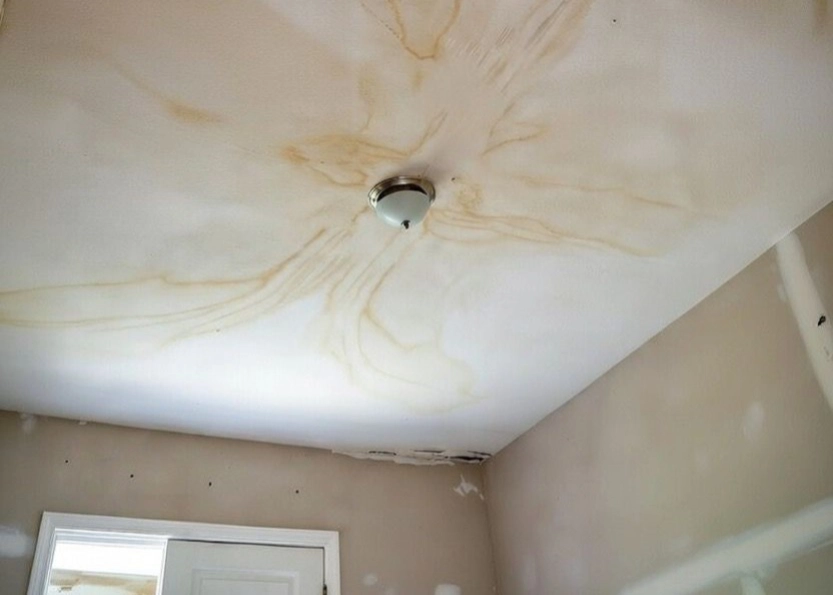
- Yellow or brown ceiling stains
- Peeling paint or bubbling plaster
- Musty smells in the loft
- Damp insulation
- Sagging ceilings
- Dark streaks along roof valleys
- Overflowing gutters during rainfall
Remember, water doesn’t always appear directly below the problem area. It can travel along rafters before showing itself.
What to Do If You Notice a Leak This Winter
1. Identify Roof Leaks Early
The sooner you act, the less damage you’ll face.
Check:
- Ceilings after heavy rain
- Loft spaces for damp timber
- Flashing around chimneys and skylights
- Gutters for blockages
- Roofline from ground level for missing tiles
Never climb onto a roof in icy or wet conditions.
2. Call a Qualified Roofer
Winter conditions make DIY roof repairs dangerous.
Slippery surfaces, unstable tiles and hidden ice patches increase the risk of injury.
A qualified roofer will:
- Trace the true source of the leak
- Check surrounding materials for hidden damage
- Apply secure temporary protection if needed
- Carry out safe permanent repairs
Quick patches without proper diagnosis often fail by the next storm.
3. Schedule a Spring Roof Inspection
Even if you’ve had repairs done in winter, book a follow-up inspection in spring.
This allows for:
- Full assessment in safer weather
- Checking for freeze–thaw expansion damage
- Clearing blocked gutters
- Inspecting insulation and ventilation
- Ensuring no hidden moisture remains
Spring is the best time to prepare for the rest of the year.
Can You Wait Until Summer to Fix It?
Short answer: no.
Delaying repairs can lead to:
- Rot in roof timbers
- Damaged insulation
- Mould growth
- Electrical hazards
- Plaster collapse
- Increased repair costs
What might be a minor repair now could become structural work by summer.
Roof leaks rarely improve on their own.
How to Prevent Winter Roof Leaks
Prevention always costs less than repair.
Here’s what makes a real difference:
- Clear gutters before winter
- Trim overhanging branches
- Inspect flashing and mortar in autumn
- Improve loft insulation and ventilation
- Book annual roof inspections
- Address minor issues immediately
A well-maintained roof handles winter far better than one left unchecked for years.
Final Thoughts
Winter and early spring are when roofs are pushed to their limits.
Freeze–thaw cycles widen cracks. Storms loosen tiles. Blocked gutters force water back under roofing materials. Snow and condensation create hidden moisture problems.
If your roof leaks during winter, it’s a sign of an existing weakness that needs proper attention.
Act early. Get it inspected. Fix it properly.
Because once water gets into your roof structure, it doesn’t just stay put. It spreads.
And the longer you wait, the more expensive it becomes.
If you’ve noticed stains, drips, or damp after winter weather, now is the right time to get it checked. We carry out winter and spring roof repairs across Buckinghamshire and the wider South East.