
If you are replacing a flat roof or having a new one installed, one of the first questions is always the same:
What is the best material to use?
The honest answer is that it depends on the roof.
Key takeaways
- There is no single best flat roof material. The right choice depends on the roof, budget and how long you want it to last.
- EPDM rubber is the durable, flexible, low-maintenance all-rounder. GRP fibreglass gives the cleanest finish on smaller visible roofs.
- Felt is the budget option but has the shortest lifespan. TPO is more of a commercial system in the UK.
- The installer matters as much as the material. Most flat roofs fail at joints, upstands and outlets, not the membrane itself.
A garage roof, an extension roof, a dormer, and a larger commercial flat roof do not all need the same system. Some homeowners want the longest lifespan possible. Others want the most cost-effective option. Some roofs need a material that can handle movement well, while others are more about appearance. Our flat roof installation and repair team can match the right system to your specific roof.
That is why the best flat roofing material is not just about what sounds most modern. It is about choosing a system that suits the structure underneath, the way the roof will be used, and the level of performance you actually need.
In this guide, we will break down the main flat roofing materials, where each one works best, and what to think about before making a decision.
What matters when choosing a flat roofing material?
Before comparing materials, it helps to understand what actually makes one flat roof system better than another.
The key things to look at are:
- lifespan
- waterproofing performance
- resistance to weather
- ease of repair
- appearance
- installation requirements
- overall cost, not just the upfront price
That last point matters. A cheaper roof is not always the better-value roof if it needs more maintenance or replacement much sooner.
In the UK, weather resistance is also a big factor. A flat roof needs to deal with regular rain, frost, changing temperatures, and in some cases standing water if drainage is not perfect. Some materials handle that better than others.
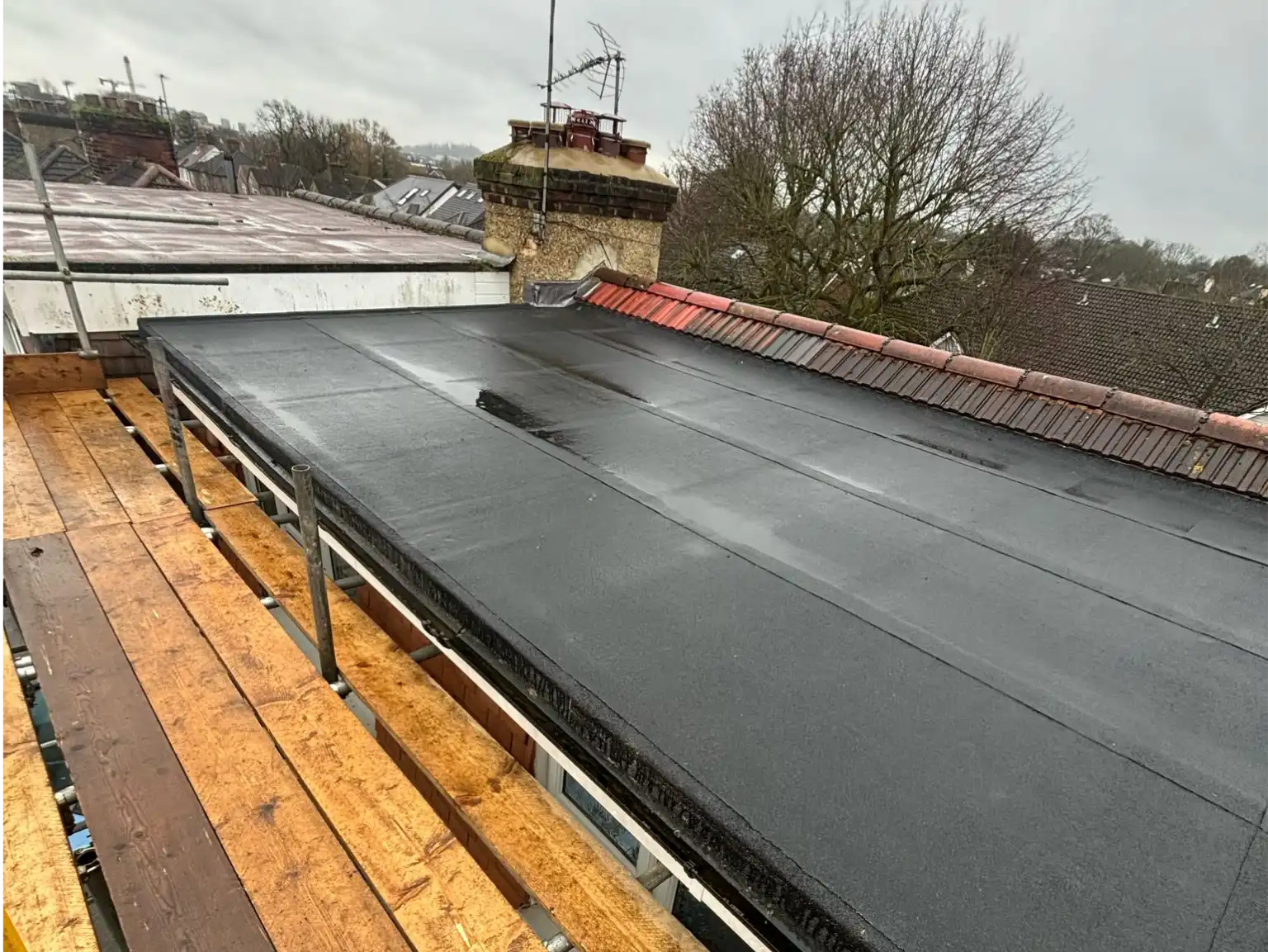
EPDM flat roofing
EPDM is one of the most popular flat roofing materials in the UK now, and for good reason.
It is a synthetic rubber membrane that is usually laid in large sheets. Because it can often cover a roof in one piece, there are fewer joints, and fewer joints usually means fewer places for leaks to develop.
One of the biggest advantages of EPDM is flexibility. It handles movement well, which matters on buildings that expand and contract with temperature changes. It also stands up well to UV, frost, and general weathering.
For many domestic roofs, EPDM is a strong all-round choice.
Pros of EPDM
EPDM has a lot going for it. It is flexible, durable, lightweight, and can last a long time when installed properly. It is also relatively low maintenance and usually easier to repair than more rigid systems. On many roofs, it offers very good value because the lifespan is strong without the price getting too far out of hand.
Cons of EPDM
The main drawback for some people is appearance. It is functional rather than decorative. From close up, it looks like rubber, because that is what it is. It can also be damaged by punctures if the roof sees a lot of foot traffic or if sharp objects are dropped on it.
Where EPDM works best
EPDM is often a great option for:
- extensions
- garages
- dormers
- workshops
- larger flat roof areas
If you want a practical, long-lasting material that performs well in UK weather, EPDM is usually near the top of the list.
GRP fibreglass roofing
GRP, or fibreglass roofing, is another very popular flat roof system.
Unlike EPDM, which is laid as a membrane, GRP is built up using resin and fibreglass matting, then finished with a topcoat. Once cured, it forms a hard, seamless waterproof surface.
One of the biggest selling points of GRP is the finish. It tends to look cleaner and more polished than many other flat roofing materials, which is why homeowners often like it on visible roofs such as extensions or dormers.
Pros of GRP
GRP is strong, seamless, and very waterproof. It looks smart, is resistant to weather and UV, and when installed well it can last for many years. It is also less likely than some materials to develop moss or surface deterioration in the same way older roof coverings can.
Cons of GRP
The main issue with GRP is that it is more rigid. If the structure underneath moves, cracks can develop. Installation also needs proper conditions. GRP should be laid in dry weather, and it is less forgiving of poor workmanship than some other systems. Repairs can be done, but they are not always as simple as patching a rubber membrane.
Where GRP works best
GRP is usually a strong choice for:
- smaller flat roofs
- extensions
- bay roofs
- porches
- dormers
- flat roofs where appearance matters more
If the roof is relatively compact and you want a clean, smart-looking finish, GRP is often one of the best options.
Felt roofing
Felt has been around for a long time, and there is a reason it still gets used. It works, it is affordable, and most roofers understand it well.
Modern felt systems are better than the old low-grade felt people often think of. That said, felt is still generally seen as more of a budget-friendly option compared to EPDM or GRP.
Pros of felt roofing
Felt is usually the most affordable of the common flat roofing systems. It is widely available, straightforward to install for experienced roofers, and relatively simple to patch with our flat roof repairs if small issues arise later.
Cons of felt roofing
The downside is lifespan. Felt does not usually last as long as EPDM or GRP. Over time, it is more prone to cracking, blistering, and wearing down, especially if it is exposed to strong sun, temperature changes, or regular foot traffic.
Where felt works best
Felt is often used on:
- garages
- sheds
- outbuildings
- lower-budget flat roof replacements
If cost is the main concern and the roof is not a high-priority part of the property, felt can still be a sensible choice. But if you are looking further ahead, the higher-performing systems often make more sense.
TPO flat roofing
TPO is less common on domestic flat roofs in the UK, but it is still worth mentioning.
It is a single-ply membrane system that offers strong weather resistance and good energy performance. It is more often seen on commercial buildings, though it can be used on domestic jobs too.
Pros of TPO
TPO is durable, resistant to UV, and has heat-welded seams that can create a very watertight finish. It also has reflective qualities, which can help on some buildings in warmer conditions.
Cons of TPO
The main issue is that it is less common in the UK domestic market, so there are fewer specialist installers compared to felt, EPDM, or GRP. That can affect both price and availability.
Where TPO works best
TPO is usually better suited to:
- larger flat roofs
- commercial properties
- projects where energy efficiency is a bigger consideration
For most standard domestic flat roof jobs, homeowners are usually comparing EPDM, GRP, and felt rather than TPO.
So which flat roofing material is best?
For most domestic flat roofs, the real comparison usually comes down to EPDM vs GRP, with felt as the lower-cost option.
If you want the short version:
EPDM is often best for flexibility, durability, and value. GRP is often best for appearance and smaller, well-defined roofs. Felt is often best where budget matters most.
That is the cleanest way to look at it.
But the real answer depends on what the roof needs.
Best flat roof material for a garage
For a garage, EPDM or felt are usually the most common choices.
If you want something affordable and functional, felt can do the job well. If you want a longer-lasting upgrade with less maintenance, EPDM is usually the better long-term option.
Best flat roof material for an extension
For extensions, EPDM and GRP are both strong choices.
If the roof is visible from upstairs windows or from the garden, some homeowners prefer the cleaner finish of GRP. If performance and flexibility matter more, EPDM is hard to ignore.
Best flat roof material for a dormer or small roof area
GRP is often very popular on smaller roofs like dormers because of the neat finish and seamless result. These roofs are also often more visible, so looks tend to matter more than on something like a garage roof.
Best flat roof material if you want lowest maintenance
EPDM is usually one of the safest answers here. It performs well, handles movement better than rigid systems, and does not usually need much attention if installed properly.
Best flat roof material if budget is tight
Felt still has a place for that. It is not the strongest long-term performer out of the main options, but on the right job it can still be a sensible, cost-effective choice.
What matters more than the material?
This is the bit people often miss.
A good material installed badly is still a bad roof.
You can pick a high-end system, but if the roof deck is poor, the falls are wrong, the detailing is sloppy, or the edges are not finished properly, problems will still come. Flat roofs often fail at joints, upstands, outlets, and trims long before the main material gives up.
That is why the installer matters just as much as the material.
The right roofer should explain:
- why they are recommending that system
- how it suits the roof
- how long it should last
- what maintenance, if any, is needed
- what kind of guarantee comes with it
If they cannot explain that clearly, they probably have not thought it through properly.
Final thoughts
There is no one flat roofing material that wins every time.
For many homes, EPDM is one of the best all-round choices because it is durable, flexible, and good value. GRP is excellent where appearance matters and the roof is smaller or more visible. Felt still works well on lower-budget projects or less critical structures, even if it does not usually last as long.
The best choice comes down to the type of roof, the budget, and how long you want the system to last without hassle.
Need advice on the right flat roofing system?
If you are replacing a flat roof and want clear advice on the best material for your property, Alliance Roofing & Building can inspect the roof, explain which systems make sense for the job, and give you a straightforward recommendation based on what the roof actually needs, not just what sounds best on paper. We work on flat roofs throughout Buckinghamshire and the surrounding South East.