
Picking the right flat roof material is not a “looks nice, job done” decision. The material you choose affects how long the roof lasts, how often it leaks, how much maintenance it needs, and what you really pay over 10–20 years, not just on day one.
We have rebuilt a lot of flat roofs that failed early because the wrong system was used or it was installed badly. In this guide, we will walk through the main flat roof options, what they are actually like in the real world, and who they suit best. If you would rather have it specified and fitted for you, our flat roof installation team works with every system covered here.
At the end, you will know which materials to avoid for your situation and which ones are worth talking about for your home or extension.
Key takeaways
- Torch-on felt is cheapest but shortest-lived (10 to 15 years), best for small garage and extension roofs.
- EPDM rubber and GRP fibreglass last far longer (25 years plus) and suit homeowners wanting low maintenance.
- Single-ply (PVC/TPO) and liquid systems suit larger or awkward roofs and need trained installers.
- Installation quality matters more than the material. Falls, detailing and the deck underneath decide how long a flat roof lasts.
Torch-On Felt (Modified Bitumen)
Torch-on felt is one of the most common flat roof systems on garages, extensions, and porches. It is made up of multiple layers of bitumen felt that are heated and bonded together with a gas torch.
Pros of torch-on felt
- Lower upfront cost compared to many modern systems
- Fast to install on simple shapes
- Works well on small roofs like garages and sheds
- Easy to patch repair in the short term
- Modern high-performance felts perform better than old 1960s–70s felt
Cons of torch-on felt
- Typical lifespan is 10–15 years for standard felt, longer for high-performance systems
- Can look tired and patchy after repeated repairs
- Does not like heavy foot traffic
- Poor detailing around edges and outlets is a common leak point
- Heat-based installation is not ideal in tight or sensitive areas
Best for
Homeowners who need a budget-friendly option on a simple, small flat roof and understand they are trading lower cost now for a shorter lifespan.
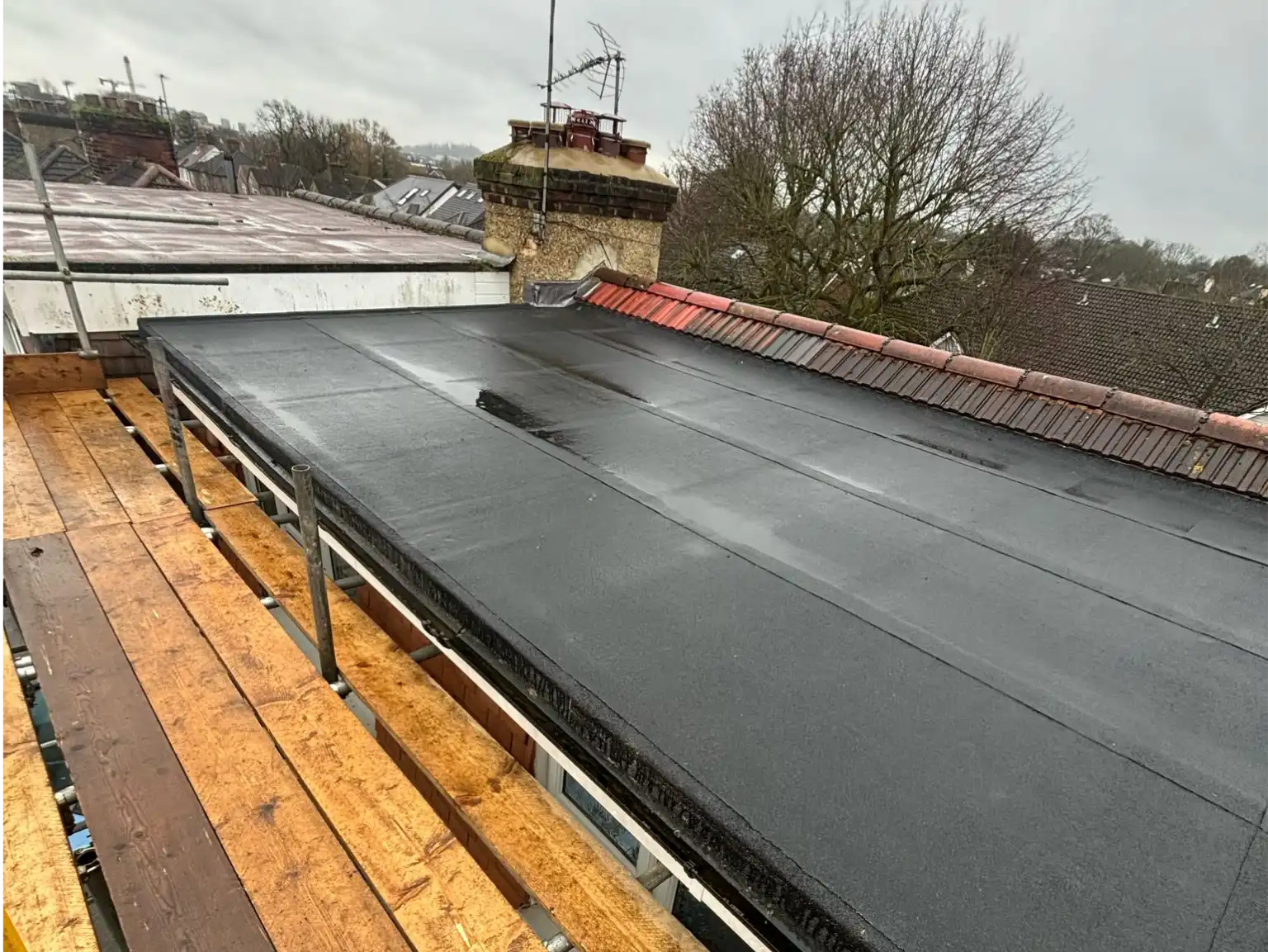
EPDM Rubber Roofing
EPDM is a single-ply rubber membrane that is rolled out over the roof in large sheets and glued down. It has become a very popular “next step up” from felt.
Pros of EPDM
- Long lifespan, often 25–30 years when installed properly
- Supplied in large sheets, so fewer seams and fewer weak points
- Handles movement and temperature changes well without cracking
- Low maintenance, only basic checks and cleaning needed
- Good for extensions, garages, small commercial roofs, and more
Cons of EPDM
- The look is not for everyone, it is basically a large black rubber sheet
- Can be pierced by sharp objects, tools, or broken branches if not thick enough
- Joints and edges still need careful detailing to avoid leaks
- Poor installation quickly leads to bubbling, loose edges, and ponding
Best for
Homeowners wanting a long-lasting, low-maintenance roof and who are not worried about seeing a black rubber surface from above.
GRP Fiberglass Roofing
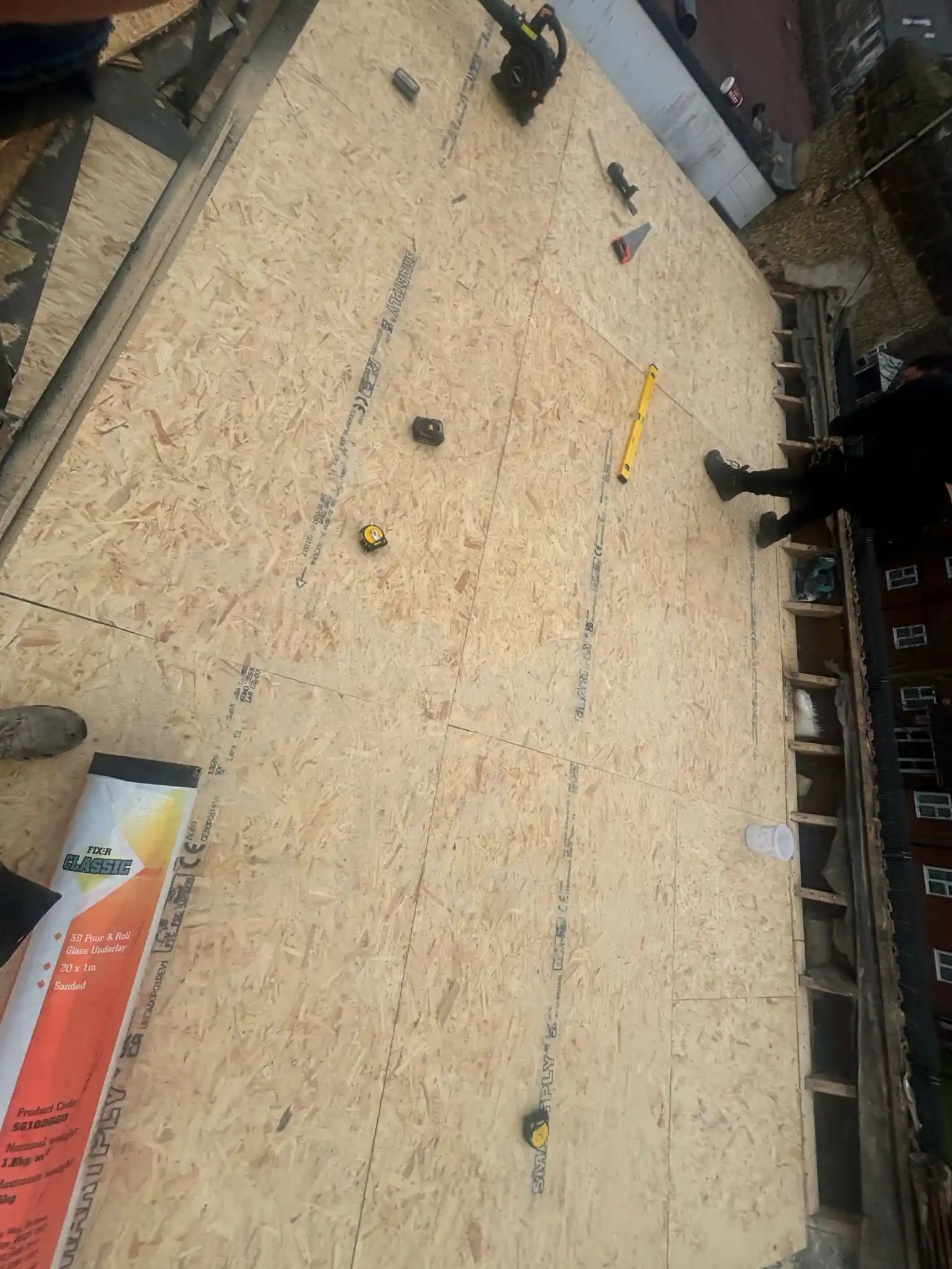
GRP (Glass Reinforced Plastic) is often called fiberglass roofing. It is built on site using resin and fiberglass matting to create a solid, seamless shell over the deck.
Pros of GRP
- Very strong and rigid, with a long expected life when done right
- Seamless finish, no joints across the main field of the roof
- Can be finished in different colors with a clean, modern look
- Small repairs can be blended in neatly when handled by a pro
- Good choice for balconies, terraces, and areas with light foot traffic
Cons of GRP
- Usually more expensive upfront than felt or basic EPDM
- Installation is sensitive to weather, it needs dry conditions and proper temperature
- Not ideal for very large roofs if the budget is tight
- Poor installation leads to cracking, pinholes, and early failure
Best for
Homeowners who want a smart, clean-looking flat roof with strong performance and are willing to invest a bit more for a long-term solution.
Single-Ply Membranes (PVC / TPO)
PVC and TPO are flexible plastic single-ply membranes widely used on commercial buildings and larger flat roofs, but they also appear on high-spec residential projects.
Pros of single-ply membranes
- Lightweight, ideal where extra weight is a concern
- Often supplied in wide sheets, meaning fewer seams
- Can be heat-welded at the joints for strong, consistent seams
- Good fire and UV resistance in many systems
- Available in light colors that reflect heat and help with energy performance
Cons of single-ply membranes
- Installation needs trained installers and proper welding equipment
- Some systems are less forgiving if the deck is not perfect
- Poor detailing around corners, vents, and upstands can undo the benefits
- Repairs often need matching materials and techniques, not DIY patches
Best for
Larger or more complex flat roofs where weight, energy performance, and professional installation are the priorities.
Liquid-Applied Flat Roof Systems
Liquid systems are applied like a thick paint and cure to form a seamless, waterproof layer. They can be used over certain existing roofs if the substrate is suitable.
Pros of liquid systems
- Great for awkward shapes, lots of penetrations, or complicated details
- Can often be installed over an existing roof, avoiding a full strip in some cases
- Creates a seamless membrane with no joints across the surface
- Ideal for local repairs or extending the life of a tired roof in the right conditions, much like our targeted flat roof repairs
- Some systems are reinforced with fabric for extra strength
Cons of liquid systems
- Performance depends heavily on surface preparation
- Not all products are equal, cheaper coatings can fail quickly
- Often not the best choice for totally failed roofs that need a full rebuild
- Weather and temperature still affect curing times
Best for
Roofs with complex details or for specialist overlays, where a full replacement is not yet needed but a quick “slap it on” coating is not good enough.
How to choose the right flat roof material for your home
The “best” flat roof system is not the same for every house. You need to look at the roof as a whole, not just the brochure.
Think about:
- Budget now vs total cost over time
Cheaper materials often mean more frequent repairs and earlier replacement.
- Size and shape of the roof
Simple, small roofs can work well with felt or EPDM. Bigger or more complex roofs often suit single-ply or GRP.
- How visible the roof is
If you look down on it from a bedroom window, appearance may matter more to you.
- Foot traffic
If the roof will be walked on for access, plant pots, or a small terrace, you need a system that can handle that safely, not just a basic cover.
- Insulation and energy performance
A proper flat roof should not just be waterproof, it should also be warm and efficient. The build-up under the waterproof layer matters as much as the top.
- Local weather and exposure
If your home is in a very exposed position, or surrounded by trees that drop debris, that will affect what we recommend. We see this a lot on roofs across Buckinghamshire and the wooded South East.
Installation quality matters more than the label on the tin
You can pick the “best” material on paper and still end up with problems if:
- The roof is not designed with the right fall for drainage
- Details around edges, outlets, skylights, and walls are rushed
- The deck or insulation under the roof is not fixed properly
- The roof is installed in bad weather or over a failing structure
In real life, the roofs that last are usually the ones where:
- The design, material, and installation all match the building
- The roof is built by people who do this work every week, not once in a while
- The owner is given simple guidance on basic checks and maintenance
Need help choosing the best flat roof material?
If you are not sure which flat roof system fits your home, you are not alone. Most homeowners only make this choice once or twice in their life, so it is normal for it to feel confusing.
At Alliance Roofing & Building we can:
- Inspect your existing flat roof
- Explain the pros and cons in plain language, not sales talk
- Show you the systems that fit your budget, plans, and property
- Give a clear quote for repair, overlay, or full replacement, so you can compare
Use the contact form below to tell us a bit about your roof, the age of the existing system, and any problems you have noticed. We will get in touch, take a proper look, and recommend the flat roof materials that make sense for your home, not just for one winter, but for the years ahead.