
A roof leak is one of those problems people try to “just get through the night”. Fair enough. But most “quick fixes” either do nothing, or they create a bigger repair bill because they trap water, damage materials, or turn a small issue into rot and mould.
This guide is about damage control. What you can do safely, what actually helps, what’s a waste of time, and what you should never do. A temporary fix only buys time, so line up our permanent roof leak repairs as soon as the weather allows.
Key takeaways
- Temporary fixes are damage limitation, not repairs. They buy 24 to 72 hours, no more.
- What works: a well-secured heavy-duty tarp, clearing gutters and outlets, roofing-grade tape on dry surfaces, and protecting the loft.
- What makes it worse: duct tape, bathroom silicone, expanding foam, random fixings through tiles, and walking on a wet roof.
- Call a roofer if the leak is near electrics, a ceiling is bulging, tiles are missing, or the leak keeps returning.
Why do roofs leak?
Most leaks come from boring, repeatable causes:
- Slipped, cracked, or missing tiles/slates after wind or frost
- Failed lead flashing around chimneys, valleys, abutments, or dormers
- Blocked gutters causing water to back up under the edge of the roof
- Old felt or membrane splits on flat roofs, especially around outlets and edges
- Mortar failure on ridges or verges letting water blow in sideways
- Nail sickness or fixings failing on older roofs
The trick is this: the drip you see inside is often not directly under the leak outside. Water tracks along timbers, membrane, and insulation before it shows itself.
Why roof leaks in heavy rain are so common
Heavy rain exposes weak points because:
- Wind-driven rain gets under laps and flashing edges
- Gutters overflow and force water back under the first row of tiles
- Flat roofs get overwhelmed by ponding if outlets are slow
- Small cracks that never show in light rain suddenly become a problem
If your roof “only leaks in heavy rain”, you likely have a detail issue (flashing, valley, gutter overflow) rather than a random hole.
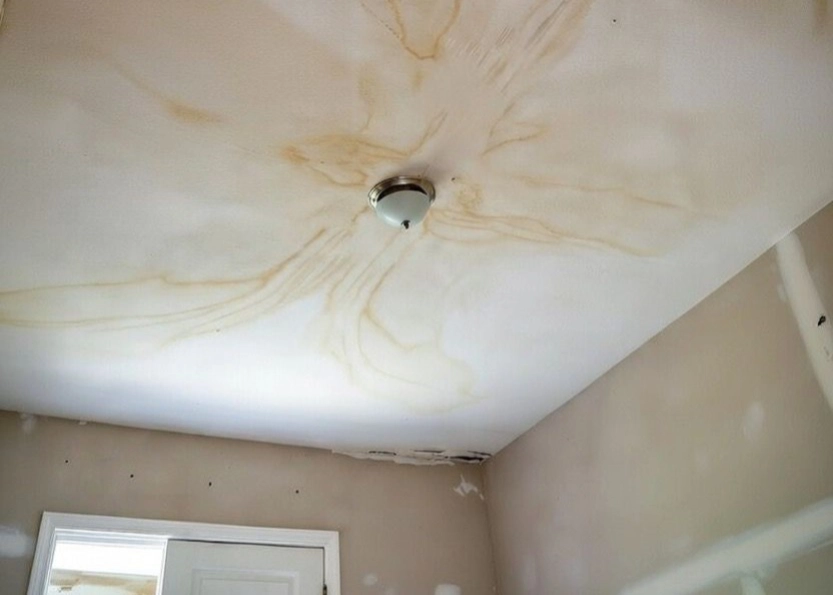
Signs you need roof leak repair
Don’t wait for water dripping through a light fitting. Look for:
- Brown staining on ceilings, usually after rainfall
- Damp patches that grow over days
- Bubbling paint or plaster
- A musty smell in the loft
- Wet insulation or dark timber marks
- Drips that stop and start with the weather
If you can safely access the loft, a torch and a quick look during or just after rain often tells you where the water is tracking.
Flat roof leak repair: why it’s different
Flat roofs leak differently because:
- Water sits longer, so tiny splits become leaks
- Joints and edges do most of the failing
- Outlets and upstands are the common weak points
- “Quick fixes” can react badly with certain membranes
Also, flat roofs are easy to damage when wet. One wrong step and you can crack a brittle felt edge, puncture an older membrane, or worsen a blister, which is why proper flat roof repairs are best left to a roofer.
Let’s be blunt: temporary fixes are damage limitation, not “repairs”. The goal is to keep water out until the roof can be fixed properly.
What to do first, before you touch anything
- Protect people and electrics
- If water is near a light fitting, switch off the circuit.
- Move valuables and furniture.
- Contain the water indoors
- Bucket under the drip.
- If the ceiling is bulging, do not ignore it. That can collapse.
- Put a container under the lowest point, not where you want it to drip.
- Reduce spread
- Use plastic sheeting to guide water into a bucket.
- Old towels are fine short-term, but they hide the problem.
- Take photos
- Inside damage, loft signs, and (if safe) anything visible outside.
- Useful for insurance and for explaining what happened.
Now the part everyone wants: what you can actually do.
1) A tarp cover (the most reliable temporary external fix)
Best for: missing tiles, storm damage, visible gaps, slipped tiles, damaged felt edges.
What makes it work:
- The tarp must cover well beyond the damaged area, not just the hole.
- It must be secured without creating new leak points.
How to do it properly:
- Use a proper heavy-duty tarp, not a thin sheet that tears.
- Pull it tight and slope it so water runs off.
- Secure with battens and weights where possible.
- If you must fix it, fix into solid timber and seal fixings. Random nails through a tarp is basically making new holes.
When it’s a bad idea:
- High winds, heavy rain, icy conditions
- Steep roofs where access is risky
If it’s not safe, don’t do it. A temporary roof fix is not worth a trip to A&E.
2) Clear blocked gutters and outlets
Best for: leaks that appear at the edge of the roof, water running down walls, overflow during heavy rain.
This one is underrated. A blocked gutter can push water back under tiles and soak fascia boards and rafters.
Do this:
- Clear debris from gutters if you can do it safely from a stable ladder.
- On flat roofs, check outlets are not blocked.
Don’t do this:
- Don’t lean, overreach, or climb with no proper footing.
3) Roofing tape or flashing tape (for small splits and seams)
Best for: small splits on felt, small breaches around flashing edges, short-term sealing on clean, dry surfaces.
Rules:
- The surface must be dry and clean.
- This is not magic tape. Prep is everything.
- Use roofing-grade tape, not duct tape.
Where it’s useful:
- A small tear in felt on a garage roof
- A seam lifting slightly at an edge
- A short-term seal around a detail until proper work is done
4) Roofing cement or cold-applied patch compound (small localised leaks)
Best for: cracks, pinholes, tiny gaps where water is definitely entering.
Rules:
- Must go on dry.
- Must be the right product for the roof type.
- It’s a temporary patch, not a replacement for proper detailing.
5) Internal protection in the loft (damage control only)
Best for: stopping ceilings and insulation getting wrecked while you wait for repairs.
What actually helps:
- Plastic sheeting under the leak path in the loft, guiding water into a bucket
- Moving insulation away from the wet area to prevent it holding moisture
What this does not do:
- It does not stop the leak. It just stops your house turning into a sponge.
These are the “quick fixes” that routinely turn a small job into a bigger one.
Walking on a wet roof
This is how people fall, and it’s how tiles crack and slip further. Don’t do it.
Duct tape
It fails fast. It lifts, it leaks, it leaves a horrible residue, and it gives people false confidence.
Silicone sealant from the DIY drawer
Bathroom silicone is not a roofing repair. It will not bond properly long-term, especially on dusty, wet, or cold surfaces.
Screwing, nailing, or drilling random fixings through tiles or felt
Congratulations, you’ve just created new leak points and possibly cracked tiles.
Expanding foam
Absolute nonsense for roof leaks. It traps moisture, damages materials, and makes proper repairs harder.
Smearing bitumen on everything
Bitumen products can react badly with some membranes. Also, people slap it on wet surfaces and it peels off.
Ignoring it because “it stopped dripping”
Leaks often stop when the water path shifts. The damage keeps happening in the loft.
If it’s pouring down and you need a calm checklist:
- Switch off electrics if water is near fittings
- Contain water with buckets and plastic sheeting
- Move valuables and furniture
- Take photos
- If safe, check gutters and obvious overflow points
- Do not climb onto a wet roof
- Arrange an inspection and proper repair
Call a roofer when:
- The leak is near electrics or a ceiling is bulging
- You can see missing tiles or storm damage
- The leak keeps returning
- It’s a flat roof and water is getting under the membrane
- You suspect flashing or valley failure (hard to DIY properly)
- You cannot safely access the roof
A professional repair should include:
- Finding the real entry point, not guessing
- Making the area watertight short-term if needed
- Permanent repair with correct materials and detailing
- Advice on preventing repeat issues (gutters, maintenance, weak points)
Temporary fixes are fine for 24 to 72 hours while you wait for proper work. After that, you’re gambling.
A proper repair usually means one or more of:
- Replacing slipped or broken tiles
- Rebuilding or re-securing ridge/verge details
- Repairing lead flashing properly
- Repairing or replacing felt/membrane sections on flat roofs
- Sorting drainage and outlets so water does not sit
You don’t need fancy stuff. You need consistency.
- Clear gutters twice a year
- Check roof after storms
- Watch for slipped tiles, especially after high winds
- Keep an eye on flashing around chimneys and abutments
- If you have a flat roof, check outlets and edge trims
Prevention is cheaper than emergency call-outs. Every time.
FAQs about roof leak repair
Q1: What’s the quickest way to fix a roof leak?
Indoors: contain the leak with buckets and plastic sheeting. Outdoors: a properly secured tarp is usually the best temporary option, but only if it’s safe.
Q2: Can I repair a leaking roof myself?
You can sometimes reduce damage, but most proper repairs need correct access, correct materials, and safe working. Bad DIY repairs often cost more to undo.
Q3: Why does my roof only leak in heavy rain?
Wind-driven rain, gutter overflow, or flashing details are common causes. Heavy rain exposes weak points that light rain does not.
Q4: Do you offer emergency roofing services locally?
Yes, Alliance Roofing can handle emergency leak call-outs and make the roof safe, then return for permanent repairs where needed, including right across Buckinghamshire and the wider South East.