
Why this topic is suddenly everywhere
If you’ve got spray foam in your loft, you’ve probably heard one of two things:
- “You must remove it or you won’t be able to sell.”
- “It’s totally fine, don’t touch it.”
Both can be true, depending on your situation.
Key takeaways
- Spray foam is not automatically a problem. Removal is sometimes needed, often not.
- The most common trigger for removal is the mortgage process, not damp, when a surveyor or lender wants clarity.
- Real risks to take seriously are trapped moisture, blocked ventilation and hidden timber decay.
- Get a proper roof and loft inspection before spending money on removal.
The problem is that a lot of homeowners get pressured into expensive removal without a real reason, while others ignore warning signs until the roof timbers are already damaged. The goal is to understand what matters so you can make a smart call. If removal does turn out to be the right move, our spray foam removal specialists can assess the loft first and tell you honestly whether it is needed.
What spray foam insulation is, and why it can become a problem
Spray foam is applied to the underside of the roof covering or between rafters. It expands and hardens, sealing gaps and reducing draughts.
The potential issues are not “spray foam is evil”. The issues are usually:
- Blocked ventilation in older roofs that were designed to breathe
- Moisture getting trapped against timber
- Roof inspections becoming harder because the foam covers the underside
- Missing paperwork that lenders and surveyors may ask for
- Poor workmanship (uneven application, gaps, incorrect foam type for the roof)
If it’s installed correctly, with the right checks and documentation, it may be completely fine. If it isn’t, it can cause real headaches.
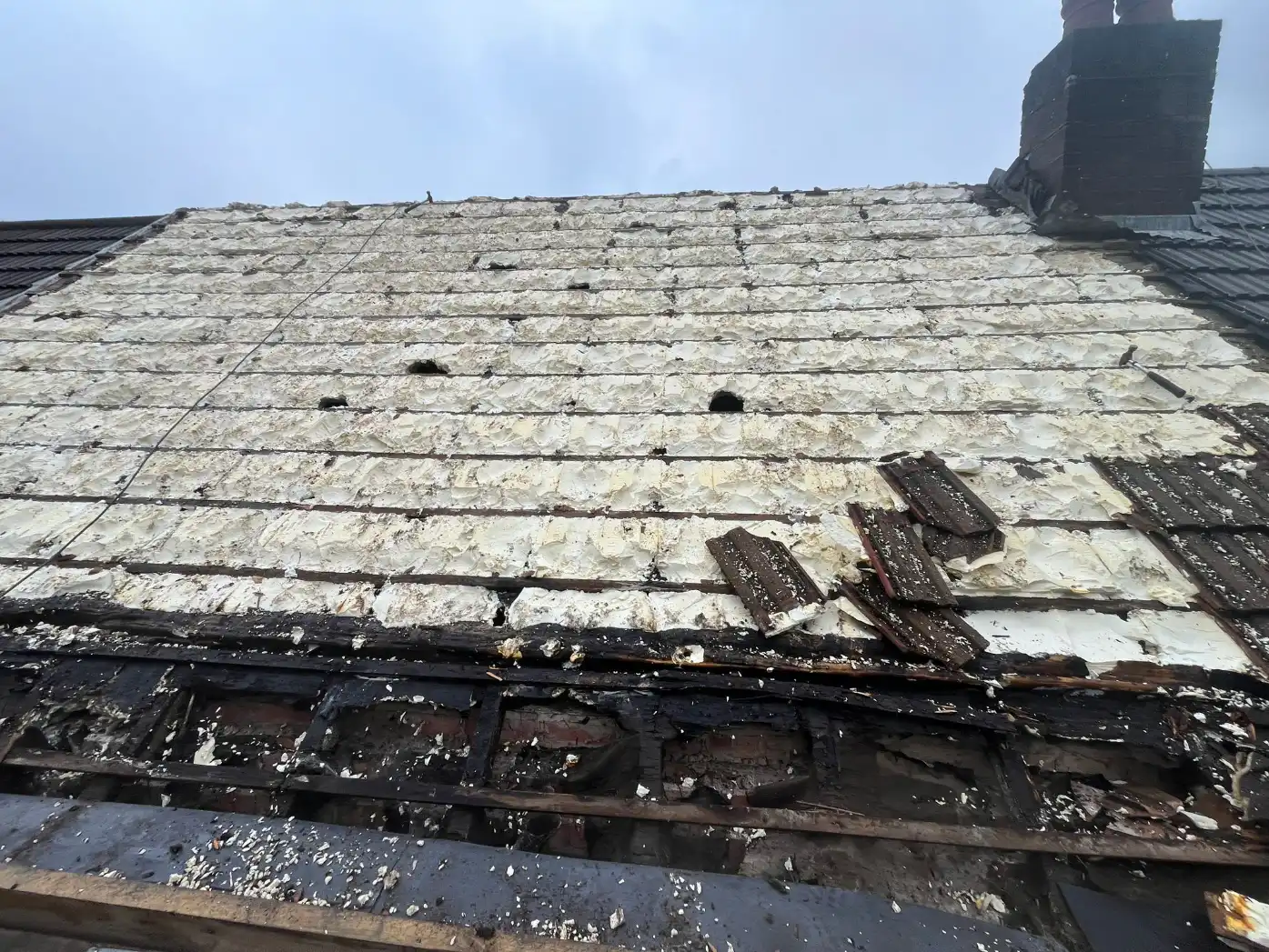
Do you need to remove spray foam insulation?
Here’s the blunt answer: sometimes yes, often no.
Removal is more likely to be needed if:
- You’re trying to sell or remortgage and the surveyor or lender flags it.
- There are signs of condensation, damp, or mould in the loft.
- Roof timbers show soft spots, staining, rot, or fungal growth.
- The foam has covered areas where you need to inspect or repair.
- The roof has had leaks and you cannot properly assess the damage.
- The foam installation looks inconsistent, messy, or has clearly blocked airflow.
- You have no installer paperwork and the lender is asking for evidence of a compliant install.
Removal may NOT be necessary if:
- The roof is dry, ventilated, and timbers are sound.
- The foam appears professionally installed.
- You have documentation showing the install was done properly.
- A qualified inspection confirms no moisture issues and access can still be managed.
The mistake people make is treating this like a one-size-fits-all rule. It isn’t.
The mortgage problem: what homeowners get wrong
The biggest trigger for removal is not damp. It’s the mortgage process.
Some lenders and surveyors are cautious because:
- They can’t easily inspect roof timbers if foam is covering everything.
- They’re worried about hidden decay.
- They want evidence the product and installation meet certain standards.
That does not automatically mean “you’re unmortgageable”. It usually means “we need more clarity”. Sometimes that clarity comes from paperwork and an inspection report. Sometimes it ends in removal. Either way, guessing is what costs you time and money.
The real risks people should take seriously
1) Hidden roof timber issues
If moisture is trapped, timber can deteriorate without you seeing it. That’s why inspection matters.
2) Condensation and airflow
Older roofs often rely on ventilation at the eaves and ridge. If foam blocks that airflow, you can end up with condensation that looks like “just a bit of damp” until it becomes a bigger job.
3) Repairs become harder
Even simple jobs like checking for nail fatigue, leaks, or slipped tiles can become awkward if the loft side is sealed up, which can delay any roof repairs you actually need.
How to spot warning signs without climbing on the roof
You don’t need to do anything risky to get early clues. Look for:
- A musty smell in the loft
- Damp patches on rafters or felt
- Mould spots on timbers
- Rusty nail heads
- Water staining after heavy rain
- Condensation on cold mornings
- Any visible gaps where airflow should be
If you’re seeing these, don’t wait. The longer moisture sits in a roof space, the more expensive it tends to get.
What a proper inspection should include
A proper inspection should cover:
- Roof condition and any signs of leaks
- Timber condition checks where accessible
- Ventilation assessment (what airflow exists, what’s blocked)
- Foam type and coverage (open cell vs closed cell matters)
- Photos of findings
- Clear next steps: monitor, improve ventilation, partial removal, or full removal depending on risk
When you should speak to a roofing specialist
If any of the below applies, stop Googling and get it checked:
- You’re selling, remortgaging, or doing equity release
- You’ve got damp, mould, or condensation in the loft
- You’ve had roof leaks
- You cannot access or inspect key areas due to foam
- You’re getting conflicting advice from different trades
Next step: get clarity before you spend money
If you’re in the South East of England or any area Alliance Roofing & Building covers, including across Buckinghamshire, the sensible approach is simple:
- Book a roof and loft inspection
- Get photos and a clear written summary of what’s going on
- Only choose removal if the evidence supports it
At the end of this page you’ll find a contact form. Send a few details and we’ll advise on the right next step based on your roof, not based on scare tactics.