
If you’re looking at a roof installation, you’re probably in one of these situations:
- You’ve had leaks after heavy rain, and patch repairs keep coming back
- A survey flagged the roof as “end of life”
- Tiles are slipping, ridge mortar is failing, or the underlay has had it
- You’re buying a house and want the roof sorted before moving in
Whatever brought you here, this guide is designed to answer the real questions. Not vague advice. The stuff that actually affects your decision. If you would rather talk it through, our new roof installation team can survey the property, and our roofers in Aylesbury handle jobs right across the town.
Key takeaways
- Roof installation cost is mostly driven by size, material, access, and roof complexity.
- The quote can jump fast if the roofer finds rotten battens, damaged underlay, or timber issues once stripped.
- The best quotes are itemised and include scaffolding, waste removal, and ventilation details.
- If you only compare bottom-line prices you won’t be comparing like for like.
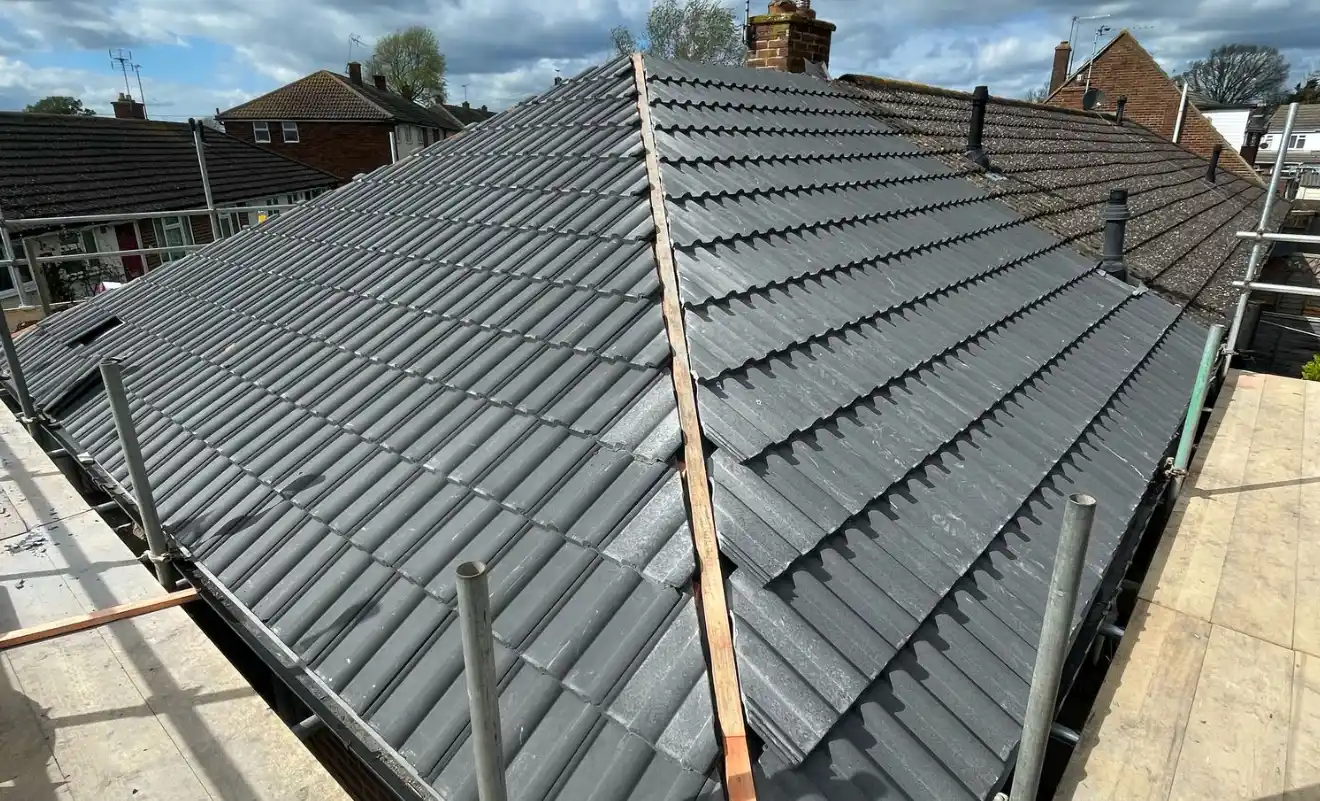
Average roof installation cost in Aylesbury (realistic ranges)
There’s no single price, but here are sensible ranges for typical UK homes. These are guides, not promises.
Typical price bands (installed)
- Small terraced roof (simple shape, concrete tile): £4,000 to £7,500
- Semi-detached roof (average size): £6,000 to £10,500
- Detached roof (larger footprint, more complexity): £9,000 to £16,000+
- Premium materials like natural slate: can push well beyond that depending on size and detailing
If someone tells you they can “do any roof” for a tiny number without seeing it, that quote is basically fiction.
Cost per m² (what most people want to benchmark)
A lot of roofers price in a rough cost-per-metre range, then adjust for complexity.
As a general benchmark:
- Pitched roof installs: often land around £90 to £170 per m² depending on materials and detailing
- Premium slate: can rise to £120 to £250+ per m²
- Flat roofs (extensions/garages): usually cheaper per m² than pitched work, but material choice matters
Cost per m² is useful for sanity-checking quotes, but it’s not the final story. Access and complexity can blow that number up.
What drives roof installation prices (the stuff that actually changes your quote)
1) Roof material choice
This is where prices swing hard.
2) Pitch and complexity
Steeper roofs, multiple valleys, dormers, hips, chimneys, and roof windows mean:
- more labour time
- more cutting and finishing
- more flashing and waterproofing points
- more risk, which increases costs
3) Labour costs
You’re not just paying for time, you’re paying for skill and risk.
A proper install means:
- safe working practices
- correct detailing around penetrations
- correct ventilation and weathering
- workmanship that holds up after the first rough winter
Cheap labour on roofing usually shows up later as leaks, slipped tiles, and stained ceilings.
If you’re dealing with leaks or damage rather than a full replacement, start with our roof repair service.
4) Access and scaffolding
Scaffolding is not optional for a proper job. If a quote tries to reduce scaffold, be careful.
Costs rise when:
- access is tight
- there’s no driveway
- the roofline needs full wrap-around scaffold
- extra lift or roof-edge protection is needed
5) Condition of what’s underneath
This is the “surprise cost” people hate.
Once the old covering comes off, the roofer can finally see:
- rotten battens
- torn, failing underlay
- soft decking
- water damage around valleys and chimneys
- timber issues near eaves where gutters overflowed
A good roofer doesn’t hide this. They show you and price it clearly.
Different roofing materials and their costs
Concrete tiles
- Usually the most cost-effective for pitched roofs
- Solid performance, good availability
- Lifespan often sits in the 30 to 50 year range depending on installation and exposure
Best for: homeowners who want durability without paying slate prices.
Clay tiles
- More expensive than concrete
- Classic look, good lifespan
- Often suits older properties better visually
Best for: period-style homes, or if you want a premium look without full slate costs.
Slate roofs (natural or man-made)
- Natural slate is premium pricing
- Excellent lifespan when installed properly
- Can require stronger structure due to weight
Best for: long-term homeowners, or houses where slate matches the style.
Flat roof materials (if you’re doing an extension or dormer)
- Torch-on felt: usually the budget option
- EPDM rubber: strong, clean, long-lasting if installed properly
- GRP fibreglass: hard finish, solid lifespan, more labour-intensive
Best advice: don’t cheap out on flat roofs. The failure rate on cheap installs is brutal.
Additional costs people forget to budget for
This is where “cheap quotes” turn into expensive jobs.
Old roof removal and waste disposal
Stripping generates a lot of waste:
- tiles/slates
- battens
- underlay
- flashing debris
- broken mortar
Ask: is skip hire and disposal included, and are they using a licensed waste carrier?
Insulation and ventilation upgrades
If the roof is open, it’s the best time to sort this.
Common upgrades:
- improved loft insulation
- better ventilation to reduce condensation
- replacement of damaged insulation from past leaks
Ignoring ventilation is one of the fastest ways to create future problems.
Structural repairs
If timber needs replacing, that can add time and cost. But it’s also non-negotiable.
Budget tip: allow a contingency if your roof has had ongoing leaks.
If you’re specifically dealing with a garage, dormer, or extension, it’s worth weighing up your flat roof options before committing to a material.
How long a roof installation usually takes
Typical timeframes:
- Simple terraced roof: 2 to 4 days
- Semi-detached: 3 to 6 days
- Detached or complex roofs: 5 days to 2 weeks depending on features and repairs
Weather delays are normal. Any roofer promising a perfect timeline regardless of conditions is either lying or cutting corners.
Ways to keep roof installation costs under control (without doing dumb stuff)
Choose materials based on your house, not trends
Don’t pay slate money for a house where it adds no value or makes no sense structurally.
Plan the job before it becomes urgent
Emergency jobs cost more because:
- you have less choice
- you accept faster quotes
- you can’t compare properly
Compare quotes properly
If you do one thing right, do this.
Ask each roofer to confirm, in writing:
- scaffolding included
- waste removal included
- underlay and battens included
- ventilation approach included
- flashing and ridge system included
- what happens if timber repairs are found
- timeline and payment schedule
If they can’t provide that, they’re not organized enough to run your job.
For an overview of how we work across the wider county, see our roofing services in Buckinghamshire.
FAQs
How much does a roof installation in Aylesbury usually cost?
Most homeowners land in the mid-thousands to low five figures depending on roof size, materials, complexity, and whether repairs are needed underneath.
Is it cheaper to repair or replace?
If it’s a small, isolated issue, repair it. If leaks keep returning or multiple sections are failing, replacement is usually cheaper long term.
Do I need planning permission?
If you’re doing like-for-like replacement, usually not. If you’re changing the roof shape, adding dormers, or the property has restrictions, you may need approval.
What’s the biggest hidden cost?
Timber repairs and structural fixes found after stripping. That’s why your quote needs a clear process for handling it.
Ready to get a quote that doesn’t fall apart halfway through the job?
If you’re planning a roof installation in Aylesbury and want a clear, itemized quote with no nonsense, use the contact form at the bottom of this page.
We’ll ask the right questions, inspect properly, and explain what you’re paying for and why, before anyone starts ripping tiles off your roof.