
Finding water coming through the ceiling is stressful, but if you act quickly you can usually stop a small problem turning into something expensive. Our roof repair team fixes leaks across Buckinghamshire and the South East.
Key takeaways
- Act fast: contain the water and move valuables to limit damage.
- Most ceiling leaks trace back to the roof, flashing or guttering, not plumbing.
- Temporary fixes buy time, but a proper roof repair is the only lasting solution.
- Call a professional roofer quickly if the leak is active or spreading.
This guide walks you through:
- What to do the moment you spot a leak
- How to work out where the water is coming from
- The most common causes of roof leaks in UK homes
- When it counts as an emergency, and what repairs typically cost
- When to call in a professional roofer
All written for normal homeowners, not roofers.
What causes a leaking roof?
Most roof leaks come down to one (or a mix) of these:
- Age and wear – tiles, felt and fixings reach the end of their life
- Storm damage – lifted tiles, slipped slates, cracked ridge or hip tiles
- Failed flashing – gaps around chimneys, skylights, valleys or where a conservatory joins the house
- Broken or missing tiles / slates – exposes the underlay underneath
- Flat roof problems – splits, blistering, ponding water or failed joints
- Blocked gutters and downpipes – water backs up under tiles or over fascias
- Poor installation – wrong materials for the roof pitch, bad detailing, lazy workmanship
- Condensation in the loft – looks like a leak but is actually moisture dripping from cold timbers
Whatever the cause, the rule is the same: water in the wrong place will only get worse if you leave it.
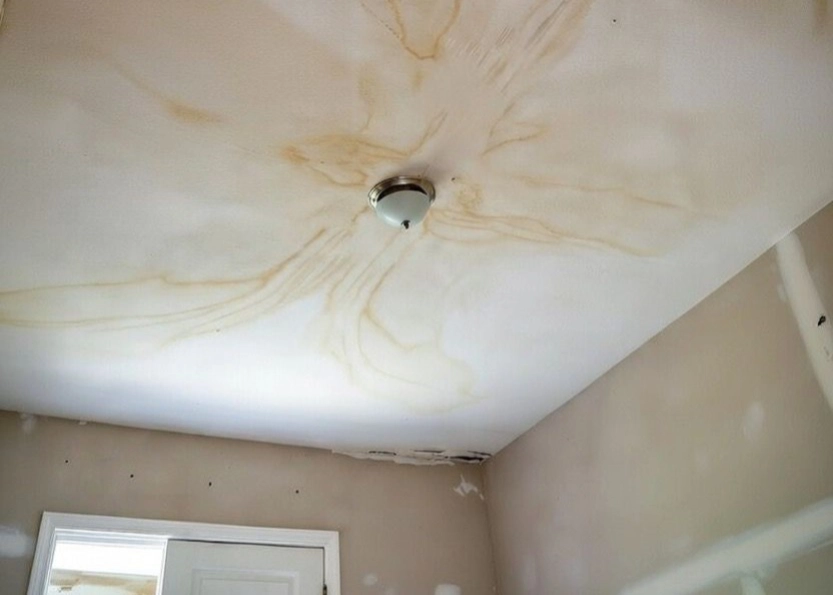
First steps: what to do when you find a leak
Before you worry about the roof itself, protect your home.
- Move furniture and electrics
- Shift anything valuable away from the drip
- Unplug lamps or extension leads near the wet area
- Catch and control the water
- Put a bucket or tub under the drip
- Lay an old towel in the bottom to stop the constant dripping sound
- If you can see a bulge in the ceiling, carefully make a small hole in the centre with a screwdriver so the water drains in a controlled way instead of spreading and bringing the whole sheet down
- Protect flooring
- Use towels or plastic sheeting over carpets
- Wipe hard floors so they do not become slippery
- Take photos and short videos
- Get clear photos of the stain, the drip, and any damage to belongings
- These help for insurance and for the roofer who comes out
- If the leak is heavy or the ceiling looks unsafe, get out of the room
- A saturated ceiling can fail suddenly. If in doubt, close the door and stay clear until a roofer has checked it.
Once things are under control inside, it is time to work out what is going on.
How to tell if your roof is leaking
You do not need to go up on the roof. In fact, you should not. Leave that to someone with the right kit.
Here are the main warning signs:
- Water stains on ceilings or walls
Brown or yellow marks, tide lines, bubbling paint or blown plaster.
- Active dripping, even if it only happens in certain weather
A leak that only shows in heavy rain or wind is still a leak.
- Damp patches on upstairs external walls
Often where the roof meets the wall, or around a chimney.
- Mould or mildew
Musty smells, black spotting or fuzzy growth on walls or ceilings.
- Peeling paint or swollen skirting boards
Classic signs of moisture sitting in the structure.
If you notice any of these, treat it as a roof issue until proven otherwise.
Checking safely inside your home
You can gather useful information for your roofer without climbing ladders.
1. Check ceilings and walls
- Note exactly which room is affected and where the stain is
- Check if the patch is directly under the roof, under a bathroom, or under a water tank
Sometimes what looks like a roof leak is actually a plumbing problem, so this helps narrow it down.
2. Look in the loft
If you can access your loft safely:
- Take a torch and wear a mask if the loft is dusty or has old insulation
- Look for damp or darkened timbers, shiny wet patches, or obvious drips
- Check around chimneys, valleys, skylights, vents and where the roof meets a wall
- If you find a wet area, mark it in pencil or chalk and take photos
This makes it easier for the roofer to match the inside damage to the outside roof.
Common causes of roof leaks in UK homes
You do not need to diagnose the exact fault yourself, but it helps to know the usual suspects.
1. Broken or missing tiles / slates
High winds can lift tiles or slates, or snap the fixing. Once there is a gap, rain can hammer straight onto the felt and decking underneath.
What you might see:
- Bits of tile or slate in the garden
- A visible gap in the roof line from the ground
- Leaks that show up fast in heavy rain
2. Failed flashing
Flashing is the metal or specialist tape that seals awkward areas such as:
- Chimneys
- Skylights and roof windows
- Valleys (where two roof slopes meet)
- Where a conservatory, extension or bay roof joins the main wall
If it cracks, lifts or splits, water gets straight behind it.
Typical signs:
- Damp staining down a chimney breast
- Leaks where a conservatory roof meets the house
- Stains that follow the line of a valley
3. Flat roof problems
On felt, GRP or rubber roofs, leaks usually come from:
- Blisters and splits
- Failed joints or trims
- Ponding water sitting for days after rain
Because water can travel between layers, the drip inside might not be directly under the hole.
4. Blocked or damaged gutters
If gutters are full of moss and leaves, water has nowhere to go and can:
- Back up under the first row of tiles
- Spill over the fascia and into the wall
- Soak the soffits and encourage rot
5. Condensation masquerading as a leak
Poor ventilation and insulation in the loft can cause warm, moist air from the house to condense on cold timbers and nails. It looks like a leak, but the water is forming inside the roof.
Clues it might be condensation:
- No obvious roof damage outside
- Dampness spread evenly, not just in one spot
- Worse after cold, clear nights rather than heavy rain
A good roofer will spot the difference and advise on extra ventilation or insulation.
6. Age and general fatigue
Even the best roof does not last forever. Mortar crumbles, tiles become brittle, felt dries out and cracks. At some point patch repairs stop being sensible and a larger section needs renewing.
Is a leaking roof an emergency?
Sometimes yes, sometimes no.
It is an emergency if:
- Water is pouring in rather than just staining
- The ceiling is bowing, bulging or looks close to failing
- Electrical fittings are wet or sparking
- Strong winds have ripped off tiles or ridge sections
- A tree or other impact has damaged the roof structure
In these situations, you need an emergency roofer to make things safe, often with a temporary cover or tarpaulin, then plan the full repair when the weather allows.
It is still urgent (but not 999-level) if:
- You only have a small stain or intermittent drip
- The damage is localised and the structure seems sound
Even then, you should not leave it. Small leaks slowly rot timbers, ruin insulation and create mould.
Is a leaking roof covered by insurance?
In simple terms:
- Often covered: sudden, one-off events such as storm damage or a fallen tree
- Usually not covered: general wear and tear, old age, lack of maintenance
Insurers expect you to keep your property in reasonable condition. If your roof is clearly past its best and has been ignored, they are unlikely to pay.
Good steps to take:
- Take clear photos of the damage and any storm conditions
- Keep receipts or records of roof maintenance where possible
- Call your insurer as soon as practical and follow their process
A roofer’s written report is often useful evidence.
Typical leaking roof repair costs in the UK
Every job needs a proper survey, but as a rough guide:
- Replacing a few broken tiles or slates: from around £150–£400
- Localised flashing repair (chimney, valley, roof window): £250–£800+
- Small flat roof patch repair: from £200–£600, depending on system and access
- Replacing a tired flat roof: usually priced per square metre rather than as a “leak job”
- Larger sections of pitched roof renewal: can run into several thousand pounds
Access, height, location, roof shape, and how much decking or structure is damaged all affect the final figure. A good contractor will explain the options and where it makes more sense to repair versus replace.
Why you should not wait to deal with a roof leak
Putting a bucket under the drip for a few months feels easy. The problems you cannot see are the real threat:
- Rotting timbers weaken the roof structure
- Wet insulation stops working and can encourage mould
- Electrical risks rise if cables and fittings get soaked
- Damp and mould can trigger health issues, especially for children and anyone with asthma
- Insurance issues if you are seen as having ignored a developing problem
A small, cheap repair now is almost always better than a major overhaul in a year’s time.
When to call Alliance Roofing & Building
You should get a professional roofer involved if:
- You have any active leak from the roof or loft
- Staining keeps coming back after you repaint
- You suspect damage after a storm, even if it is not leaking yet
- You can see slipped tiles, cracked ridge, sagging flat roof or rotten fascias from the ground
We can:
- Inspect the roof safely from outside and inside
- Pinpoint the real cause rather than just treating the symptom
- Give you clear options and honest advice on repair vs replacement
- Carry out temporary emergency work if needed, followed by a long-term fix
If you have spotted a leak, do not wait and hope it disappears. It will not.
Get in touch with Alliance Roofing & Building, and we will help you stop the water, protect your home, and get your roof back to doing its job properly.