
What are the most common causes of a leaking roof with no visible damage?
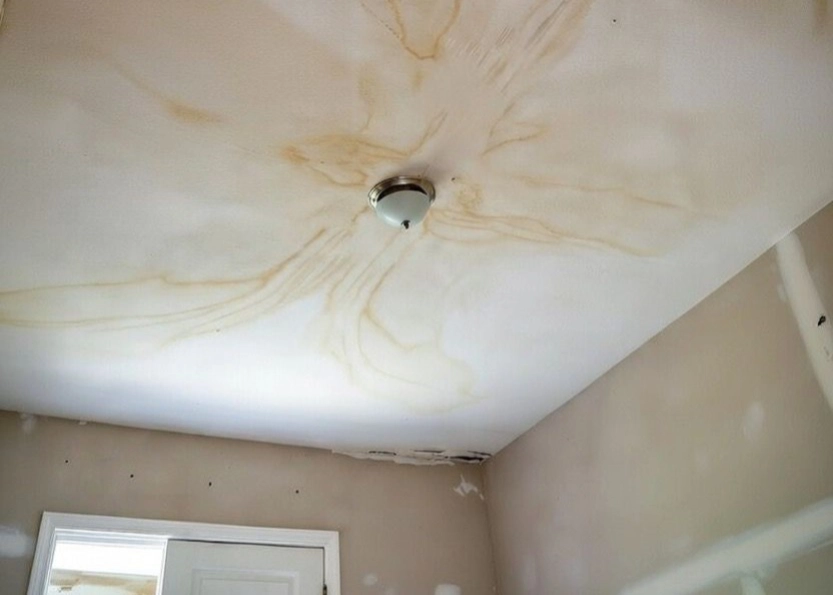
If your ceiling is staining but your roof looks “fine”, it usually means the fault is small, hidden, or not where the water appears inside. Tracing that kind of hidden leak is exactly what our roof leak repair team does day in, day out.
Key takeaways
- A roof can look fine from the ground and still leak, the fault is often a slipped tile, split flashing or failing underlay you cannot see.
- Water travels, so the internal stain can be metres from the actual entry point.
- You can check the loft during or after rain and use binoculars from the ground without ever climbing the roof.
- Condensation is often mistaken for a leak, suspect it if moisture is widespread in cold, dry weather.
Missing or slipped tiles (not always obvious from the ground)
One tile can lift slightly, crack, or slip by a few millimetres and still look “in place” from below. In wind-driven rain, that tiny gap is enough.
Failing underlay or felt (common on older roofs)
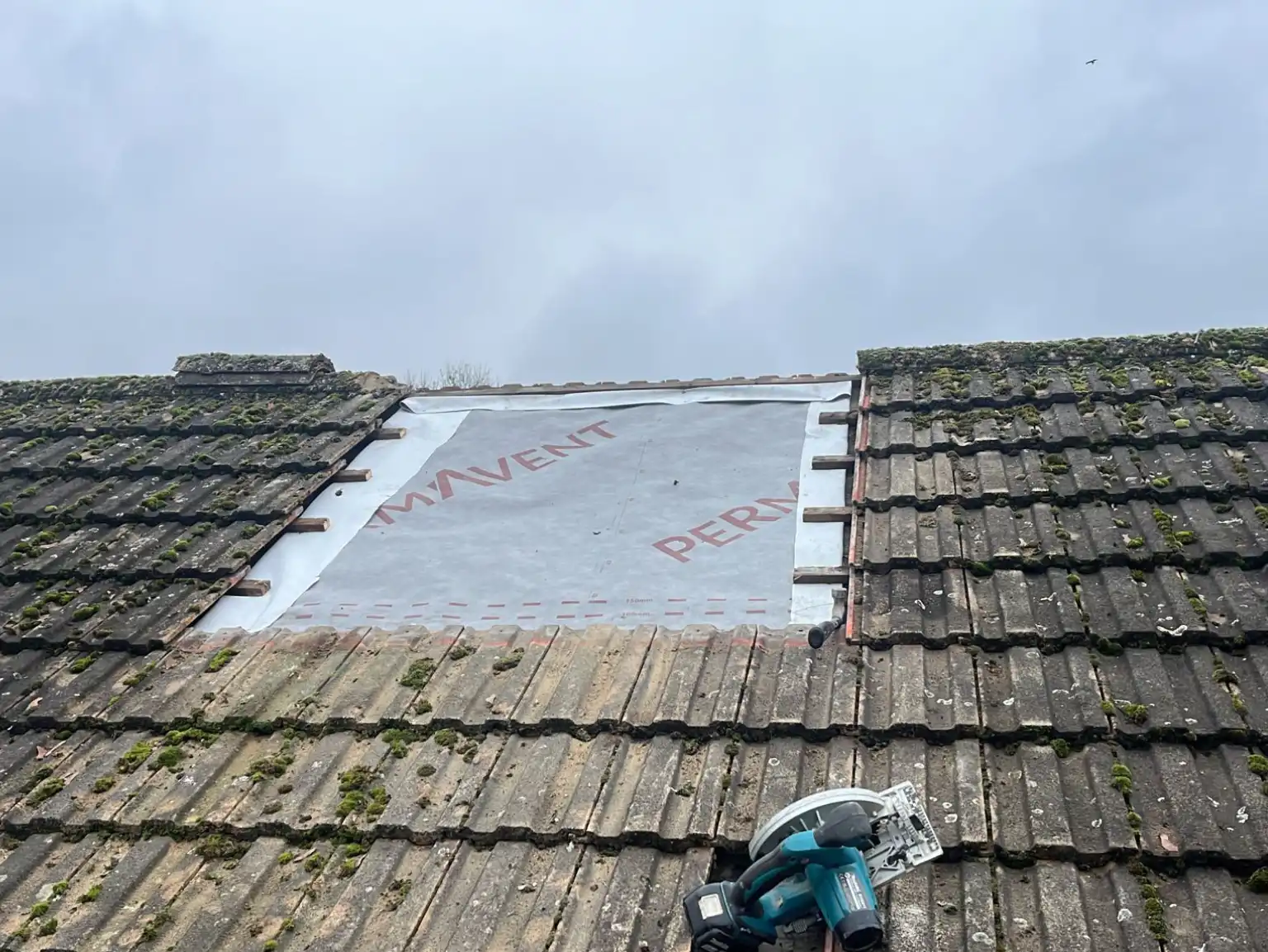
If your roof is 20+ years old, the underlay can turn brittle, tear, or sag. Water gets past the tiles, hits the damaged underlay, and then finds its way into the loft space.
Failed leadwork or flashing (chimneys, walls, dormers)
Flashings can split, lift, or come away from brickwork. The gap may be hidden behind the chimney or tucked into a junction you cannot see from the ground.
Blocked gutters, outlets, or valley gutters
This causes “leaks” that look like roof failure but are actually drainage failure. When water backs up, it can run under the eaves and soak the roofline and timbers.
Valley problems (small cracks, lifted lining, debris build-up)
Valleys take a huge amount of water. A small defect can cause a lot of ingress during heavy rain.
Ridge or hip tile failures (cracks, loose sections, mortar breakdown)
Water gets in high up, then travels along rafters, which is why the internal damp patch can show up far from the ridge line.
“Nail sickness” on older slate roofs
Old fixings corrode, slates loosen slightly, and you get tiny gaps that only show themselves in heavy rain or wind.
Condensation mistaken for a leak
If it’s dripping in cold weather when it hasn’t rained, or you’re seeing widespread moisture in the loft, it may be condensation rather than water ingress. This is common with poor loft ventilation and bathroom extractor issues.
Poor workmanship
Bad detailing around edges, penetrations, and junctions can hold up for a while, then fail when conditions get harsh.
Is a leaking roof an emergency?
Often, yes.
Treat it as urgent if:
- Water is actively dripping
- The stain is spreading quickly during rain
- Plasterboard is bulging or sagging
- The leak is near lights, sockets, or electrical fittings
- You can smell damp or see mould forming
A “small leak” can become rotten timbers and ruined insulation faster than most homeowners expect. If water is pouring through the ceiling right now, our emergency roof repair callout can get someone to you fast to make it safe and watertight.
Emergency steps you can take (safe temporary fixes)
These are damage-control steps, not repairs.
Move valuables and protect floors
Buckets, towels, plastic sheets. Catch and contain first.
Relieve ceiling pressure if it’s bulging
If a ceiling bubble is holding water, you may need to release it to avoid a collapse. Only do this if it’s safe, you can isolate electrics, and you’re confident it won’t cause harm.
Use a temporary cover if you can do it safely
If you can safely access a low-level section from a secure place, a waterproof tarp can buy time. Do not climb on a roof in bad weather.
A tarp only works if it covers well beyond the damaged area, not just the gap. Use a heavy-duty tarp rather than a thin sheet, pull it tight and slope it so water runs off, and hold it down with battens and weights where you can. If you have to fix it down, fix into solid timber and seal the fixings. Random nails through a tarp simply create new holes.
Use a tray in the loft to redirect drips
A simple tray can protect insulation and stop water falling onto ceilings in the worst spot. Plastic sheeting laid under the leak path works the same way, guiding water into a bucket, and moving insulation clear of the wet area stops it holding moisture.
Clear accessible guttering if safe
If you can reach a small section safely from a stable position, clearing a blockage can reduce water backing up into the roofline.
Roofing tape on small splits and seams
Roofing or flashing tape can hold a small split in felt, or a seam lifting slightly at an edge, but only on a clean, dry surface. Prep is everything, and it has to be roofing-grade tape, not duct tape.
Roofing cement or cold-applied patch compound
For cracks and pinholes where water is definitely getting in, a patch compound can buy time. It must go on dry, it must be the right product for the roof type, and it is a patch rather than proper detailing.
Treat all of these as 24 to 72 hours of breathing space while you wait for proper work. After that you are gambling.
Temporary fixes that make a hidden leak worse
These are the quick fixes that routinely turn a small job into a bigger one.
- Walking on a wet roof. This is how people fall, and it is how tiles crack and slip further.
- Duct tape. It lifts, it leaks, it leaves a residue, and it gives false confidence.
- Bathroom silicone. It is not a roofing repair and will not bond properly on dusty, wet or cold surfaces.
- Random screws or nails through tiles or felt. You have just created new leak points and possibly cracked tiles.
- Expanding foam. It traps moisture, damages materials, and makes a proper repair harder.
- Smearing bitumen over everything. Bitumen products can react badly with some membranes, and slapped onto a wet surface they simply peel off.
- Sealing the leak from inside. The water is still getting into the structure, you just cannot see it any more.
- Assuming it is sorted because it stopped dripping. Leaks often stop when the water path shifts. The damage carries on in the loft.
How to tell if the leak is roof ingress or condensation
This matters because people waste money chasing the wrong thing.
Likely a roof leak if:
- The damp gets worse during rainfall
- You see a distinct water trail on rafters
- There is one main “entry” area in the loft
- The stain expands after storms or wind-driven rain
Likely condensation if:
- It happens in cold weather even when it’s dry outside
- Moisture is widespread across felt or rafters
- The loft smells musty and feels humid
- Insulation is damp in patches without a clear water trail
- Extractor fans vent into the loft (common mistake)
If you’re unsure, the loft check during or right after rain usually makes it obvious.
Could it be plumbing rather than the roof?
Before you blame the roof, note exactly which room is affected and where the stain sits. Check whether the patch is directly under the roof, under a bathroom, or under a water tank. A stain below a bathroom or a tank is often a plumbing problem rather than water coming in from outside, and that is a different fix entirely. Narrowing this down early saves you paying a roofer to look at something that was never a roof fault.
How to find a hidden leak without doing anything risky
You don’t need to get on the roof to be useful.
1) Check the loft during or just after rain
Bring a torch and look for:
- The highest point of damp on rafters
- Water tracks on timbers
- Damp insulation directly below a junction
- Drips on nail heads (often points to underlay failure)
Water travels. The internal stain might be metres away from the entry point.
2) Use binoculars from the ground
Look for:
- Slightly lifted tiles
- Uneven tile lines
- Ridge mortar cracking
- Flashing lifting around chimneys or walls
- Sagging gutters or overflowing spots
3) Check gutters and downpipes in heavy rain
If water is spilling over the gutter edge, that can be your “roof leak”.
4) Mark and monitor the stain
Take a photo and date it. If it grows after rain, it’s telling you something.
Why do roofs leak in heavy rain even when they look fine?
Heavy rain exposes weaknesses that normal showers do not:
- Wind-driven rain gets forced under laps and junctions
- Valleys and gutters get overwhelmed
- Small gaps become bigger problems under pressure
- Saturated insulation can push moisture into ceilings
- Poor drainage on flat roofs causes pooling and ingress at edges
If the leak only appears during downpours, think valleys, flashings, ridge details, gutters, and underlay.
Why hidden leaks get worse in winter and early spring
If your roof only seems to leak when the weather turns cold, you are not imagining it. Winter and early spring are the hardest months for any UK roof, and they are when a defect you cannot see finally starts letting water through.
The freeze-thaw cycle
Temperatures rise above zero in the day and drop below freezing at night. Water seeps into small cracks in tiles, flashing or mortar, freezes overnight, and expands by around 9 percent as it does. The crack widens, more water gets in the next day, and the cycle repeats. By early spring, what was a hairline crack in autumn can be a visible gap.
Ice dams and blocked drainage
Warm air escaping from the loft melts snow on the roof. That water runs down to the colder eaves and refreezes, slowly building a barrier of ice. When more snow melts it has nowhere to go, so it backs up under the tiles and forces its way into the roof structure. Blocked gutters make it worse by pushing overflow behind fascias and into roof timbers.
Snow load and structural movement
Snow looks harmless but it is heavy. On a roof with weakened battens or slight sagging, that extra load can create movement, and movement opens joints that were previously sealed. When the snow melts, water follows the new gaps.
Why the leak does not stop when spring arrives
If water got in during winter, the weak point still exists. Spring often makes it worse: April showers are heavy and persistent, wind shifts loosened tiles further, gutters clog with winter debris, and moss growth holds moisture against the roof surface, which is why professional moss removal is worth doing. You may see fewer dramatic drips, but the damage carries on quietly in the background.
Hidden leaks on flat roofs, conservatories and spray-foamed roofs
Three roof types hide leaks better than the rest, and each one needs a different approach.
Flat roofs: the leak is rarely where you think
Water does not drop straight through a flat roof. It sits on the surface, travels between layers, and shows up metres from where it got in. The usual faults are ponding water that sits for days after rain, small splits or blisters in the membrane, weak joints around edges, outlets and skylights, and soft spots where the structure underneath has started to fail. Trying to seal the visible drip without understanding the full path of the water is why flat roof leaks keep coming back.
Conservatory roofs: joins, seals and flashing
Conservatory roofs are one of the most common leak points, especially on older builds. The weak spots are the join between the conservatory and the main house, the seals around the roof panels, and the flashing where it meets brickwork. Those areas take constant weather and temperature movement, which breaks the seals down over time. If your conservatory is leaking, check whether it is still under warranty before anyone touches it. Most cases come down to sealing or flashing rather than the whole roof failing.
Spray foam insulation hides the evidence
Spray foam can trap moisture inside the roof structure. If water gets in it cannot dry out properly, which leads to hidden rot, and because you cannot see what is happening underneath, the leak is far harder to trace. In many cases the foam has to come off before repairs can be done properly, which is exactly what our spray foam removal service is for.
How much does it cost to fix a leaking roof in the UK (2026)?
Typical ranges, final cost depends on access, height, scaffolding, and what’s found on inspection.
- Minor leak repair (slipped tile, small local fix): £95–£250
- Lead flashing repairs: £180–£450
- Flat roof patch repair: £150–£350
- Gutter or outlet repairs: £80–£220
- Larger flat roof repairs (section replacement): £350–£1,200
- Roof replacement: depends on roof size, complexity, and materials
If you keep paying for “quick fixes” and the leak returns, you’re not fixing the cause.
Should you fix a leaking roof yourself?
If you mean “limit damage tonight”, sometimes. If you mean “repair it properly”, no.
Safe to DIY (temporary only)
- Catching and containing water
- Protecting floors and belongings
- Clearing a reachable gutter safely
- Loft tray or redirecting drips
Not safe to DIY
- Walking on pitched roofs
- Working in wet or windy conditions
- Using sealant as a “repair”
- Leadwork repairs
- Flat roof patching without the right system
What happens if you leave a hidden leak
Putting a bucket under the drip for a few months feels like the easy option. The problems you cannot see are the real threat:
- Rotting timbers weaken the roof structure
- Wet insulation stops working and encourages mould
- Electrical risk rises as cables and fittings get soaked
- Damp and mould can trigger health issues, particularly for children and anyone with asthma
- Insurers may push back if you are seen to have ignored a developing problem
A small repair now is almost always cheaper than a major overhaul in a year’s time.
Does home insurance cover roof leaks in the UK?
Sometimes, but not how people hope.
Insurance may cover leaks caused by sudden events like:
- Storm damage
- Falling debris
- Sudden tile displacement
Insurance usually does not cover:
- Wear and tear
- Age-related deterioration
- Poor maintenance
- End-of-life flat roof membranes
If you’re considering a claim, a proper inspection report with photos helps. Take photos before any cleanup changes the scene, keep records of roof maintenance where you can, and speak to your insurer early rather than assuming you are covered.
How to stop hidden leaks coming back
Prevention costs less than emergency call-outs, every time. You don’t need anything clever, just consistency:
- Clear gutters twice a year, and always before winter
- Check the roof from the ground after every storm
- Watch for slipped tiles, especially after high winds
- Keep an eye on flashing around chimneys and abutments
- On a flat roof, check the outlets and edge trims
- Trim overhanging branches back
- Improve loft insulation and ventilation to keep condensation down
- Book an inspection once a year and deal with small issues straight away
When to call a professional roofer
Call a roofer if:
- Water is dripping inside the property
- A ceiling is bulging or sagging
- The stain is spreading fast
- The leak is near electrics
- You suspect valley, chimney, or flashing issues
- You’ve “fixed it” before and it came back
A good roofer locates the entry point, not just the symptom inside the house, then plans the right repair, whether the fault is on a flat section or your main pitched roof.
FAQs
Why is my roof leaking but there’s no visible damage?
Because the failure is often hidden, underlay, flashing splits, blocked valleys or gutters, or water travelling along rafters before it shows inside.
Can one slipped tile cause a leak?
Yes. One small gap can let in a lot of water in wind-driven rain.
Why does it only leak when it’s pouring down?
Heavy rain increases volume and pressure, and wind can push water into weak junctions. Valleys, gutters, flashings, and ridge details are common culprits.
How quickly should I deal with a roof leak?
Immediately. Even a small leak can soak insulation, rot timbers, and damage ceilings and electrics.
How do roofers find the source of a leak?
They check the loft for water tracks, inspect junctions, and assess drainage points like valleys and gutters. The best ones work from the inside out, not guess from the ground.
If your roof is leaking and you cannot see obvious damage, don’t guess and don’t wait for the next downpour to make it worse. Alliance Roofing & Building can inspect the roof, find the real entry point, and give you a clear repair plan and quote.