
Moss on a slate roof is common, especially on older properties, shaded roofs, and areas that stay damp for long periods. It might start as a green patch here and there, but over time it can spread, hold moisture against the slates, block gutters, and make existing roof problems worse.
Key takeaways
- Never pressure wash a slate roof. It can crack slates, loosen fixings, damage flashings and force water underneath.
- The safest method is gentle removal by hand from the top down, followed by a suitable biocide treatment to slow regrowth.
- Clear the gutters afterwards, as displaced moss ends up in the drainage and causes overflow and damp.
- Call a roofer if the roof is steep, the slates are old or fragile, or slates are already slipping or cracked.
The mistake a lot of people make is trying to get rid of it too aggressively. That is where damage happens. Slate roofs need a bit more care than people think, and using the wrong method can do more harm than the moss itself.
In this guide, we’ll explain how to remove moss from roof slates safely, what to avoid, and when it makes sense to get a roofer involved through our specialist roof moss removal service.
Why moss grows on slate roofs
Moss likes damp, shade, and rough surfaces it can cling to. Slate roofs often give it all three, especially if the roof is north-facing, surrounded by trees, or slow to dry out after rain.
Moss does not always mean the roof is failing, but it can create problems over time. It holds moisture on the surface, which keeps the roof wetter for longer. It can also build up between slates, around flashings, and in gutters. If it is left alone for too long, it can interfere with drainage and add unnecessary weight in certain areas.
On its own, a bit of moss is not always a roofing emergency. Heavy growth is where the trouble starts.
Why you should not pressure wash a slate roof
This is the big one.
If you want the quickest way to wreck a slate roof, pressure washing is up there.
Slate is durable, but it is not something you blast with high pressure and hope for the best. A pressure washer can:
- crack slates
- loosen fixings
- force water underneath the slates
- damage flashings
- strip away surface protection on surrounding materials
- create leaks where there were none before
We see this all the time. Someone tries to save money with a quick clean, and then ends up paying for broken slates, slipped slates, and water ingress into the roof space.
If the roof is slate, keep the pressure washer away from it.
Is roof moss always a problem?
Not always.
A light covering of moss on an older roof may be more of a maintenance issue than a serious fault. But it becomes a problem when:
- moss is thick and widespread
- gutters and downpipes are filling with it
- water is not draining off properly
- slates are starting to slip or lift
- the roof stays damp for long periods
- there are already weak points in the roof
The real issue is not just the moss itself. It is what the moss is doing to the roof over time.
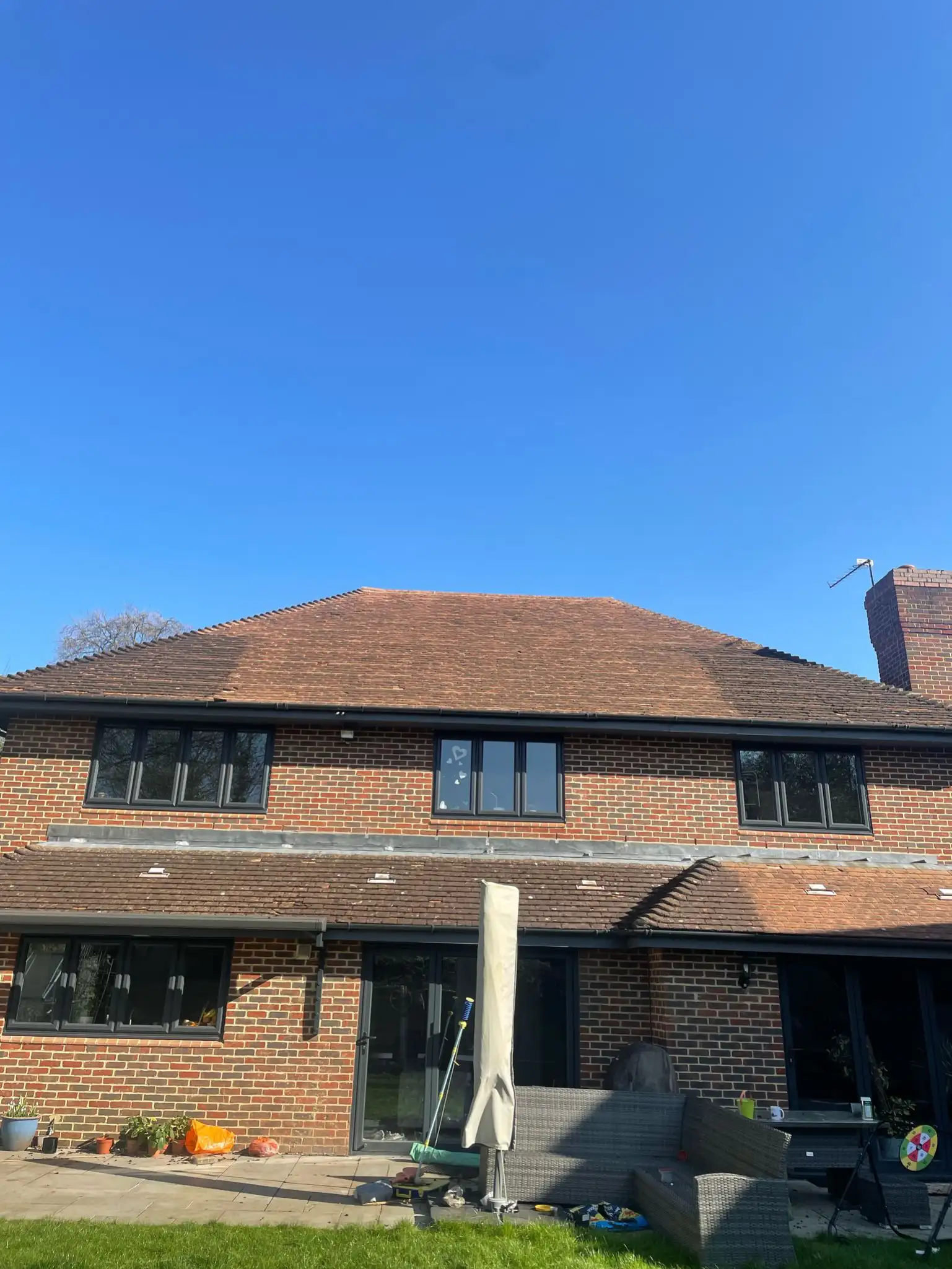
The safest way to remove moss from roof slates
The safest method is usually a combination of gentle manual removal and treatment afterwards.
Step 1, inspect the roof properly
Before removing anything, the roof needs checking. Not just for moss, but for cracked slates, slipped slates, weak spots, damaged leadwork, and blocked gutters.
There is no point cleaning a roof if the bigger issue is damaged slates or failing flashings, which usually need proper roof repairs rather than a clean.
Step 2, remove the heavy moss growth by hand
The thick top layer of moss is usually removed carefully by hand using the right tools. That might include a roof scraper, specialist brush, or hand tool suited to slate.
The key word here is carefully.
Slate roofs are not something to attack. The work needs to be controlled and done in a way that avoids lifting, cracking, or knocking the slates out of place. In most cases, the moss should be worked down the roof gently rather than scraped across it aggressively.
Step 3, clear the gutters and surrounding areas
Once the moss comes off the roof, it has to go somewhere. A lot of it ends up in the gutters. If you leave it there, you are just moving the problem from the roof to the drainage.
Blocked gutters can cause overflowing water, damp walls, and water running where it should not.
Step 4, apply a suitable treatment
Once the bulk of the moss is removed, a treatment can be applied to deal with the remaining spores. This helps slow regrowth and gives the roof a better chance of staying cleaner for longer.
This part matters because manual removal alone often leaves behind spores in small gaps and overlaps. That is why some roofs look better for a few weeks and then start going green again.
The treatment needs to be suitable for the roof and used properly. The wrong product, or the wrong strength, can create other problems.
Can you remove moss from a slate roof yourself?
Technically, yes. Realistically, not always.
If you are talking about a low-level section that is easy to access safely, some homeowners will try gentle manual removal. But most slate roof moss removal is better left to professionals for one simple reason.
Walking on a slate roof is risky.
It is risky for you, and risky for the roof. Slates can crack under foot, slip if disturbed, or break if weight is put in the wrong place. Even if you do not fall, you can still cause damage that costs more than the moss removal itself.
If access is awkward, the roof is steep, the moss is heavy, or the slates are older, get a roofer in.
What about moss-killing chemicals?
These can help, but they are not something to use blindly.
Used properly, a biocide or moss treatment can kill remaining spores and help keep the roof cleaner for longer. Used badly, chemicals can affect plants, patios, neighbouring areas, and drainage.
That is why roof treatments need a bit of judgement, not guesswork.
It is also why advice online can be messy. Some people swear by whatever they found in the shed. That is how you end up with stained masonry, damaged plants, and a roof that still needs doing again.
Do copper or zinc strips work?
They can help as a prevention method, but they are not magic.
Copper or zinc strips are fitted near the ridge, and when rainwater runs over them it carries small particles down the roof. Those particles make it harder for moss and algae to take hold.
That can help reduce regrowth, especially on roofs that are prone to repeated moss build-up. But they work best as part of a wider approach, not as a shortcut for a roof that is already covered in thick moss.
If a roof has heavy moss growth already, it still needs cleaning properly first.
How to stop moss coming back quickly
You are never going to make every roof permanently moss-free, especially in shaded or damp spots, but you can reduce how fast it returns.
A few things help:
- trimming back overhanging branches
- keeping gutters clear
- removing thick moss before it builds up again
- checking shaded roof sections more often
- dealing with minor roof issues before they trap more moisture
The aim is not perfection. It is stopping a manageable maintenance job from turning into a roofing problem.
Common mistakes people make
Using a pressure washer
Still the worst one.
Scraping too aggressively
If you get too heavy-handed, you can crack or dislodge slates.
Ignoring the gutters
A roof might look cleaner, but if the gutters are packed with moss afterwards, you have not finished the job.
Using random chemicals
Not every cleaner belongs on a roof, and not every roof should be treated the same way.
Walking on the roof without knowing what you are doing
This is how moss removal turns into slate replacement.
When to call a roofer
You should bring in a roofer if:
- the roof is steep or hard to access
- the slate is old or fragile
- the moss is thick across large sections
- slates are already slipping or cracked
- gutters are regularly blocking with moss
- you are seeing damp patches inside
- you want the roof checked properly while it is being cleaned
This is usually the smarter route. A professional moss removal team can remove the moss safely, clear the gutters, and spot any early damage before it becomes a bigger issue.
Final thoughts
Removing moss from roof slates is not about blasting the roof until it looks clean. It is about doing the job without damaging the slates, the flashings, or the roof underneath.
In most cases, the safest approach is gentle removal, proper treatment, and a check of the roof’s overall condition. Done properly, that gets rid of the moss and reduces the chances of it coming back quickly. Done badly, it can create leaks and broken slates that were not there to begin with.
If your slate roof is heavily covered in moss, or you want it checked before problems start, Alliance Roofing & Building can inspect it properly and advise on the safest next step. Fill out the contact form at the end of this page and we’ll take a look.