
Most damage comes from age and sun, standing water, and bad edges or old repairs. Your job is to spot early signs, not to become a roofer: look for stains inside, sagging, ponding, cracks, blisters and moss from the ground. You can safely keep gutters clear, keep the roof surface clean, and avoid walking on it. Anything involving heat, patching, ponding, lifted edges or new felt layers should be done by a roofer, not as a DIY fix. If the felt is old, leaking in multiple places, or the deck is soft or sagging, a proper refurbishment or replacement is usually cheaper than chasing leaks. That is where Alliance Roofing & Building step in, inspect the roof, and tell you straight whether a repair or a new felt system is the right move.
Key takeaways
- Age and UV, standing water and poor edge detailing are the three main causes of felt roof failure.
- Safe DIY is limited to clearing gutters, light cleaning and visual checks, never use a pressure washer on felt.
- Leave torch-on work, patching blisters, ponding fixes and flashings to a roofer.
- Multiple leaks, a soft or sagging deck and layered old repairs usually mean replacement is cheaper than chasing leaks.
How to Protect Your Felt Roof (And Avoid Expensive Leaks)
Felt roofs are common on garages, extensions and porches across the UK. When they are looked after, they quietly do their job for years. When they are ignored, you get leaks, damp ceilings and rotten timber.
This guide walks you through what actually damages a felt roof, what you can safely do yourself, and when you need a roofer in. It is written for homeowners, not roofers, so no nonsense and no jargon you do not need. When a felt roof is past patching, our flat and felt roof replacement service can fit a longer-lasting system.
At the end, if you are in our area and you want a felt roof checked, repaired or replaced, you can use the contact form to book a visit with Alliance Roofing & Building.
What is a felt roof and how does it work?
A felt roof is usually found on flat or low-slope roofs, like:
- Single storey extensions
- Garages and outbuildings
- Bay window roofs
- Porch roofs
- Some dormers
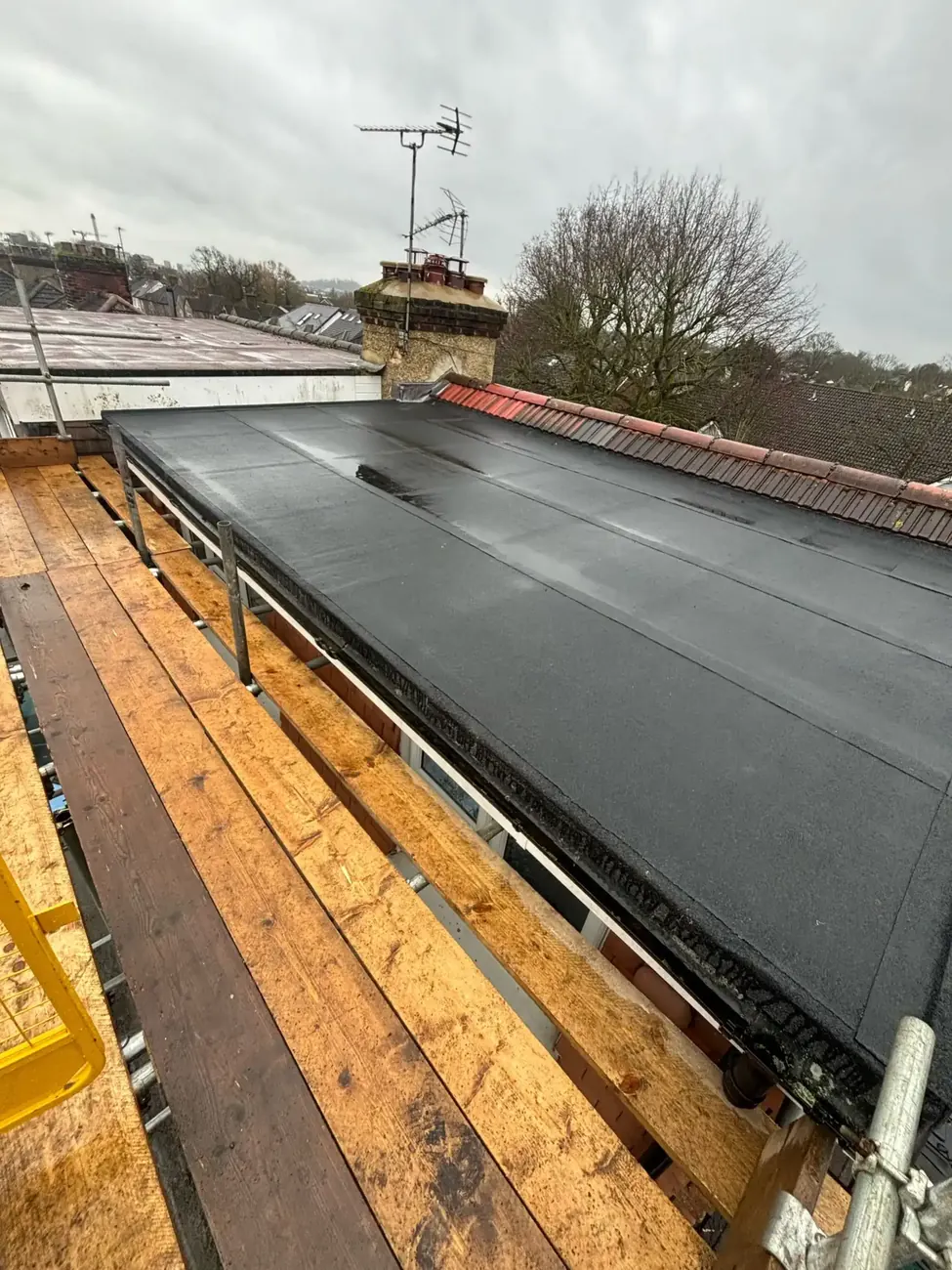
Traditional felt roofs are built in layers:
- Roof deck – usually timber boards
- Underlay layers – built-up bitumen felt
- Cap sheet – the top mineral felt that you can see
Those layers create a waterproof skin. When that skin cracks, lifts, or sits in water for too long, water starts to creep into the timber below. That is when you get trouble.
What actually damages a felt roof?
The three big killers of felt roofs are:
- Age and sunlight
- Bitumen dries out over time
- UV from the sun makes the felt brittle and cracked
- The top surface loses its mineral finish and wears thin
- Standing water
- Flat roofs should still have a slight fall so water can run away
- If there are dips, blocked outlets or bad design, water sits in a pond
- That “ponding” slowly eats into the felt and finds weak spots
- Movement and bad detailing
- Felt shrinks and expands with heat and cold
- Edges, corners, upstands and joins are under the most stress
- If they were not installed properly, they crack, split or lift first
On top of that, you have the usual suspects:
- Moss, algae and leaf build up around outlets
- Heavy foot traffic on the roof
- Poor previous repairs with cheap sealant slapped on top
Your job as the homeowner is not to become a roofer. Your job is to spot early warning signs and deal with them before you are paying for a full replacement.
Quick checks you can do yourself
You do not need to climb all over the roof to get a good idea of its condition. Start with the safe stuff.
Inside the house or garage
Look at the ceilings and upper walls below the felt roof:
- Any brown water stains?
- Peeling paint or blown plaster?
- A musty smell in the room or loft space?
If you can access the underside of the roof (in a loft or inside a garage):
- Check the timbers for dark patches or softness
- Look for nails with rust stains or drip marks around them
Anything like this means moisture is getting in somewhere, even if it is not yet dripping.
From the ground
From the garden, with both feet on the floor:
- Look for obvious sagging in the felt roof
- Check for blistering (raised bubbles under the felt)
- Look for cracks, splits or bare patches in the top surface
- See if water is sitting on the roof a day or two after rain
If you cannot see well enough, use binoculars or zoom in with your phone. What you are trying to spot is the difference between “old but sound” and “old and risky”.
Day-to-day things that protect a felt roof
You cannot stop the British weather, but you can stop your felt roof failing early.
1. Keep water moving
Water that moves away quickly is rarely a problem. Water that sits still is.
- Keep gutters and outlets clear of leaves and moss
- After heavy rain, check if there are areas where water is still sitting hours later
- If you see regular ponding, it needs sorting. Ignoring it is exactly how leaks start
You do not need to fix falls and outlets yourself, but you do need to notice when they are not doing their job.
2. Keep the surface clean
A dirty felt roof keeps hold of water and breaks down faster.
- Once or twice a year, have the roof brushed off to remove leaves, moss and debris
- Do not attack it with a pressure washer, that can damage the felt
- If moss is a big issue, ask a roofer about a suitable treatment and top coat, not household chemicals
Cleaning sounds basic, but it genuinely adds years to the life of a felt roof.
3. Stop walking over it for no reason
Felt roofs are not pavements.
- Avoid using the roof as a shortcut or storage area
- If trades need access (window cleaners, satellite installers, etc), make sure they use boards to spread their weight
- High heels, ladders and tools dropped onto the surface all cause damage
A lot of “mystery” leaks come from someone having walked on the roof months earlier.
Dealing with ponding water on a felt roof
If you regularly see pools of water after rain, your roof has a design or sagging issue.
Left alone, ponding:
- Speeds up wear on the felt
- Adds extra weight to the structure
- Makes blisters, cracks and joints fail faster
Typical fixes involve:
- Re-levelling the roof and adding a better fall towards outlets
- Adding tapered insulation to raise low spots
- Replacing the felt with a new flat roof system that is designed to drain correctly
That is not DIY territory. This is where someone like Alliance Roofing & Building comes in, surveys the roof, and gives you a straight choice between repair and refurbishment.
Small felt roof problems you might notice
Here are some common issues and what they usually mean:
- Blisters / bubbles in the felt
Trapped air or moisture under the surface. If they burst, water gets in.
Small ones can sometimes be cut, dried and patched. Widespread blistering is often a sign the roof is nearing the end of its life. - Cracked or crazed surface
The felt has dried out and gone brittle. This usually shows on older roofs that have had years of sun. It often needs more than a quick patch. - Lifting edges and corners
The felt has shrunk, or the original bonding has failed. These are prime spots for wind to get under the felt and for water to run inside. - Green, dirty or slimy areas
Moss and algae mean the roof stays damp. Over time that erodes the surface and holds water against weak spots.
You can see from that list why “a bit of cheap sealant” is not a real repair. It hides the problem, it does not fix it.
Can I protect my felt roof myself?
There are a few sensible DIY jobs, and there are things you should leave alone.
You can usually do:
- Clearing gutters and outlets
- Light cleaning of leaves and debris from the roof surface (if it is safe to reach)
- Visual checks after storms to see if anything has lifted or come loose
You should leave to a roofer:
- Torch-on felt work
- Cutting and patching blisters
- Fixing ponding problems
- Edge trims, upstands, flashings around walls, skylights and pipes
- Applying specialist coatings or overlays
Felt work often involves heat, working at height, and getting the details right. A messy DIY repair might look “sealed” for a few weeks, then fail and cost you far more later.
When it is time to replace rather than patch
A good roofer will not push you into a new roof if a sensible repair will do. But there are times when replacement is the smarter spend:
- The roof is near the end of its expected life and has multiple issues
- There are repeated leaks from different areas over a short period
- The deck below the felt is soft, rotten or visibly sagging
- Previous repairs are layered on top of each other and nothing is properly bonded
In those cases, a new felt system, or another flat roof system, gives you a fresh start and usually works out cheaper than chasing leaks for years.
How Alliance Roofing & Building can help protect your felt roof
If you have read this far, you are probably in one of three positions:
- You know your felt roof is old and tired and you want an honest opinion
- You have a leak or visible damage and need a proper roof repair sorted
- You are planning an extension or new flat roof and want it built right from day one
This is where we come in.
At Alliance Roofing & Building, we:
- Inspect felt roofs on homes, garages and extensions across our local areas
- Give clear advice on repair vs replacement, with photos so you can see what we see
- Use modern, high-performance felt systems and proper detailing around edges, walls and skylights
- Handle everything from small torch-on patches to full flat roof refurbishments
If you want a felt roof that is protected for the long term, not just bodged for another winter, let us take a look.
Use the contact form below to:
- Book a free felt roof inspection
- Ask about repair options for leaks, blisters or ponding
- Get a quote to refurbish or replace your flat roof
Send us a few details about your roof and we will get back to you to arrange a visit.