
Ponding water on a flat roof means water is not draining properly and is sitting for more than 48 hours after rain. While shallow puddles can be normal, ongoing ponding can lead to faster roof wear, leaks, and structural stress. Clearing drains, checking roof falls, and dealing with low spots early can prevent expensive repairs later. If ponding keeps returning, a professional inspection is the safest way to identify the real cause.
Key takeaways
- Ponding is water that sits on a flat roof for more than 48 hours after rain, a sign it is not draining as it should.
- A shallow film that dries within a day is usually cosmetic, but persistent puddles stress the covering and the structure beneath.
- Common causes include insufficient roof falls, sagging decking, blocked drainage and settlement in the deck.
- Clearing drains is the first check, but recurring ponding often needs the falls or covering corrected by a professional.
Ponding water is one of the most common problems with flat roofs, and one of the most misunderstood. A small puddle after heavy rain might not look serious, but if water is sitting on your roof for days at a time, it can shorten the roof’s lifespan and increase the risk of leaks.
This guide explains what ponding water is, why it happens, when it is a problem, and what can realistically be done to fix it. Where the falls are wrong or the covering has had its day, our flat roof repair and installation team can put it right properly.
What Is Ponding Water on a Flat Roof?
Ponding water is standing water that remains on a flat roof more than 48 hours after rainfall. While flat roofs are never perfectly flat, they should be built with a slight fall to allow water to drain away isn’t pooling.
When water fails to drain properly, it settles in low spots, forming puddles that can remain long after the rain has stopped.
Is Ponding Water Normal or a Problem?
A very shallow film of water that dries within a day is usually not an issue. However, ponding becomes a problem when:
- Water remains for several days
- The same puddles form after every rainfall
- The depth increases over time
- Debris, moss, or algae starts collecting in the pooled areas
Persistent ponding puts stress on the roof covering and the structure beneath it.
Common Causes of Ponding Water
Insufficient Roof Falls
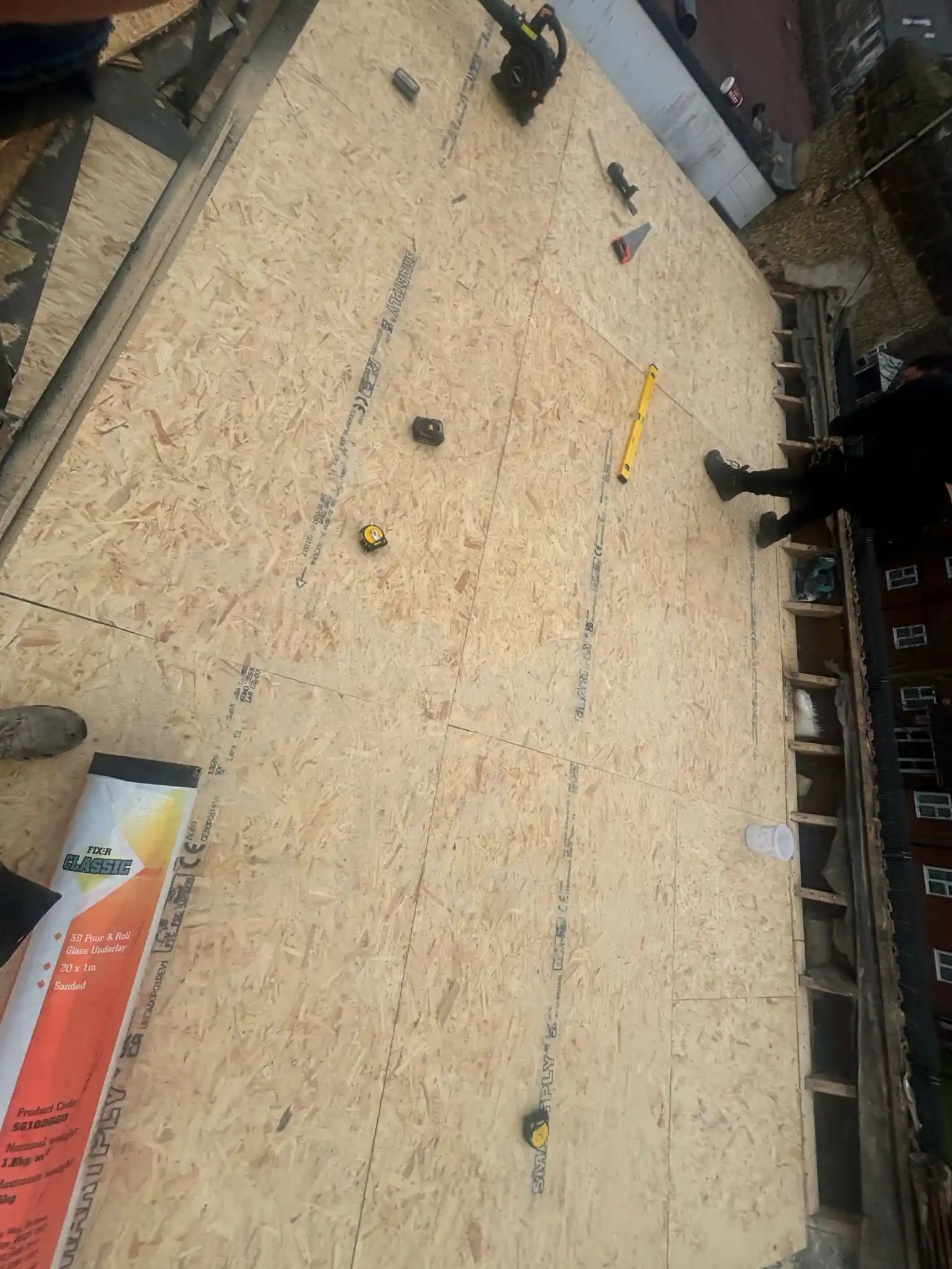
Flat roofs must be built with a slight slope. If the roof was poorly designed or installed, water has nowhere to go.
Structural Movement or Sagging
Over time, joists and decking can deflect under weight, creating dips where water naturally collects.
Blocked or Poor Drainage
Leaves, moss, and debris can block outlets, gutters, or internal drains, causing water to back up.
Settlement in the Roof Deck
Joins between boards or ageing materials can sink slightly, creating shallow troughs.
Why Ponding Water Shouldn’t Be Ignored
Accelerated Roof Wear
Standing water breaks down roofing membranes faster, especially around seams and overlaps.
Increased Leak Risk
Water sitting in one place increases the chance of it finding a weak point and tracking underneath the covering, the stage at which prompt roof repairs save you from a far bigger bill.
Structural Stress
Water is heavy. Over time, ponding adds unnecessary load to the roof structure.
Moss and Algae Growth
Stagnant water encourages growth, which traps even more moisture and slows drying.
Winter Damage
In colder months, ponding water can freeze and expand, putting extra strain on the roof surface.
Things to Check Before Considering Repairs
Before assuming the roof needs major work, there are a few basic checks worth doing.
Clear All Drains and Outlets
Many ponding issues are simply caused by blocked drainage. Clearing debris can sometimes solve the problem completely.
Check After 48 Hours
If the water has mostly evaporated within two days, the issue may be cosmetic rather than structural.
Look for Worsening Patterns
If puddles are getting deeper or spreading, it’s a sign the problem is progressing.
Can Ponding Water Be Fixed?
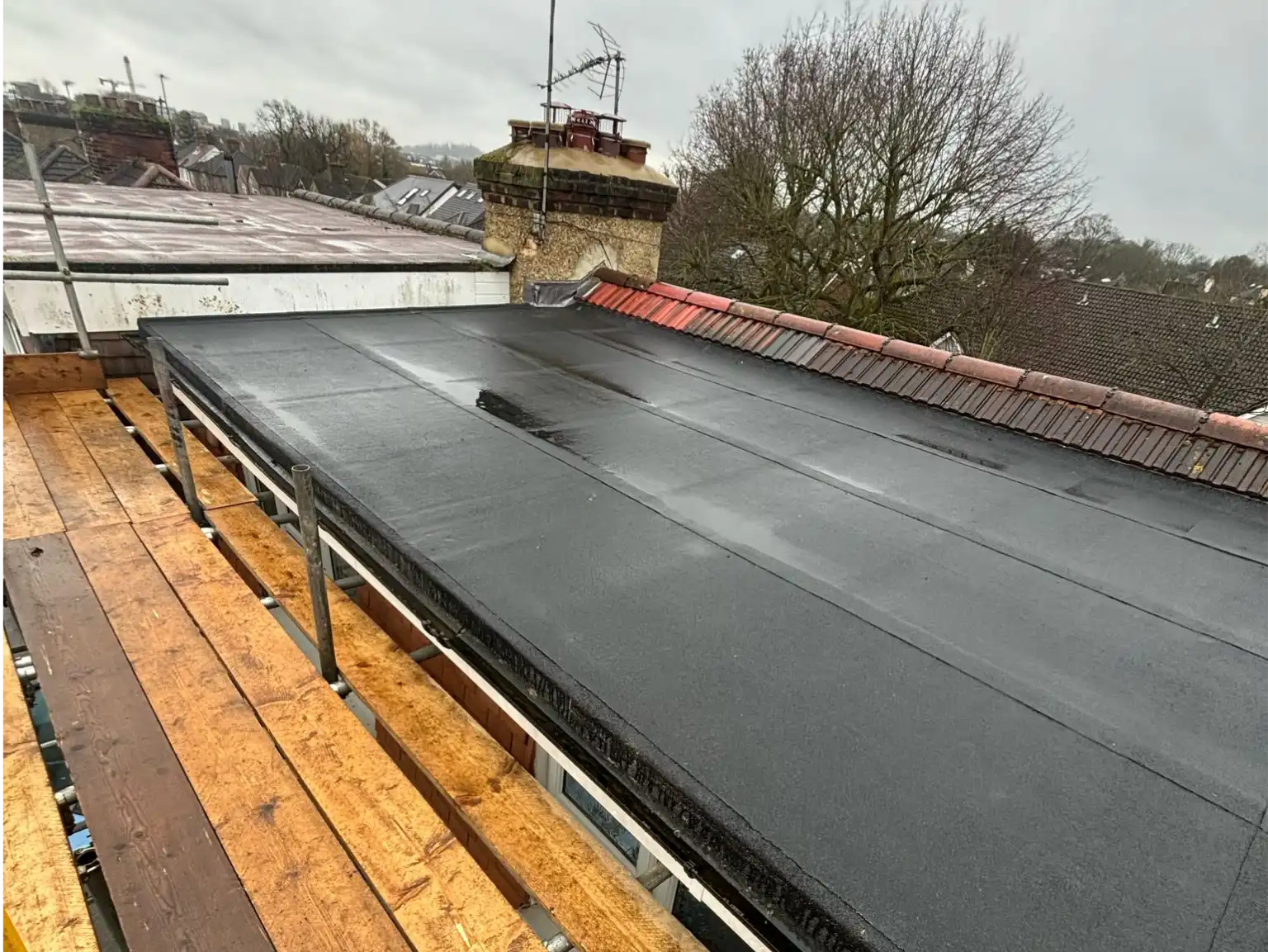
The right solution depends on the cause and severity of the issue.
Minor Ponding
For shallow, isolated dips, solutions may include:
- Improving drainage routes
- Minor levelling repairs
- Localised adjustments to encourage runoff
These are only suitable where the roof structure itself is sound.
Moderate Ponding
If water regularly sits in the same areas, professional intervention may be needed to:
- Correct falls
- Improve drainage design
- Address deck irregularities
Severe or Widespread Ponding
When large areas hold water or the roof is sagging, the fix may involve:
- Structural corrections
- Reworking roof falls
- Partial or full roof refurbishment
Quick fixes won’t last if the underlying issue is structural, which is where a full flat roof refurbishment is often the more cost-effective route.
What About Levelling Compounds?
Levelling compounds can work in very specific situations, but they are not a universal solution. Used incorrectly, they can simply move the problem elsewhere or add unnecessary weight.
This is why professional assessment matters. Not every flat roof is suitable for levelling repairs.
When Should You Call a Professional?
You should get the roof checked if:
- Ponding water is present after every rainfall
- Water remains longer than 48 hours
- The roof is ageing or nearing the end of its lifespan
- There are visible dips, cracks, or seam stress
- You are planning preventative maintenance
Catching ponding early is far cheaper than dealing with leaks later.
How Alliance Roofing & Building Can Help
At Alliance Roofing & Building, we don’t guess and we don’t apply blanket fixes. We inspect flat roofs properly, identify why ponding is happening, and advise on the safest long-term solution.
Where possible, we focus on practical repairs and drainage improvements, not unnecessary replacements. If the roof is performing as it should and ponding is minimal, we will tell you that too.
If water is sitting where it shouldn’t be, it’s worth getting it checked before it becomes a bigger issue.
Arrange a no-obligation flat roof inspection today