
Moss on your roof is more than an appearance issue. It traps moisture, lifts tiles, and can shorten the life of your roof if left untreated. The safest way to deal with it is gentle, manual removal followed by a treatment that kills remaining spores. Avoid pressure washing, act early, and keep gutters clear and trees trimmed to slow regrowth and prevent costly repairs later.
Key takeaways
- Moss traps moisture against tiles, which can crack them and lead to leaks if left untreated.
- Remove moss gently by scraping from the ridge downwards, then apply a roof-safe biocide to kill remaining spores.
- Never pressure wash a roof, it strips tile coatings and forces water under the covering.
- Clear gutters, trim overhanging branches and improve drainage to slow regrowth.
Moss on your roof might look harmless, but it is one of those problems that quietly gets expensive if you ignore it. Moss holds moisture like a sponge, creeps under tiles, and can mess with water run-off. In the worst cases, it contributes to cracked tiles, blocked gutters, damp in the loft, and leaks that show up right when the weather turns.
This guide covers what moss is, why it grows, what it can do to your roof, and the safest way to remove it without causing damage. You’ll also get a clear plan for preventing it coming back. If working at height is not for you, our professional roof cleaning and moss treatment takes care of it from start to finish.
Understanding Moss on a Roof
What is moss?
Moss is a small plant that thrives in damp, shaded areas. It spreads through spores and can take hold surprisingly fast, especially if your roof stays wet for long periods.
Why does moss grow on roofs?
Moss usually shows up when your roof has the perfect mix of moisture, shade, and time. Common causes include:
- Overhanging trees blocking sunlight
- North-facing roof slopes that dry slowly
- Blocked gutters causing water to back up
- Old or porous tiles that stay damp longer
- Poor ventilation in the loft creating lingering moisture
If your roof stays damp for longer than it should, moss gets comfortable.
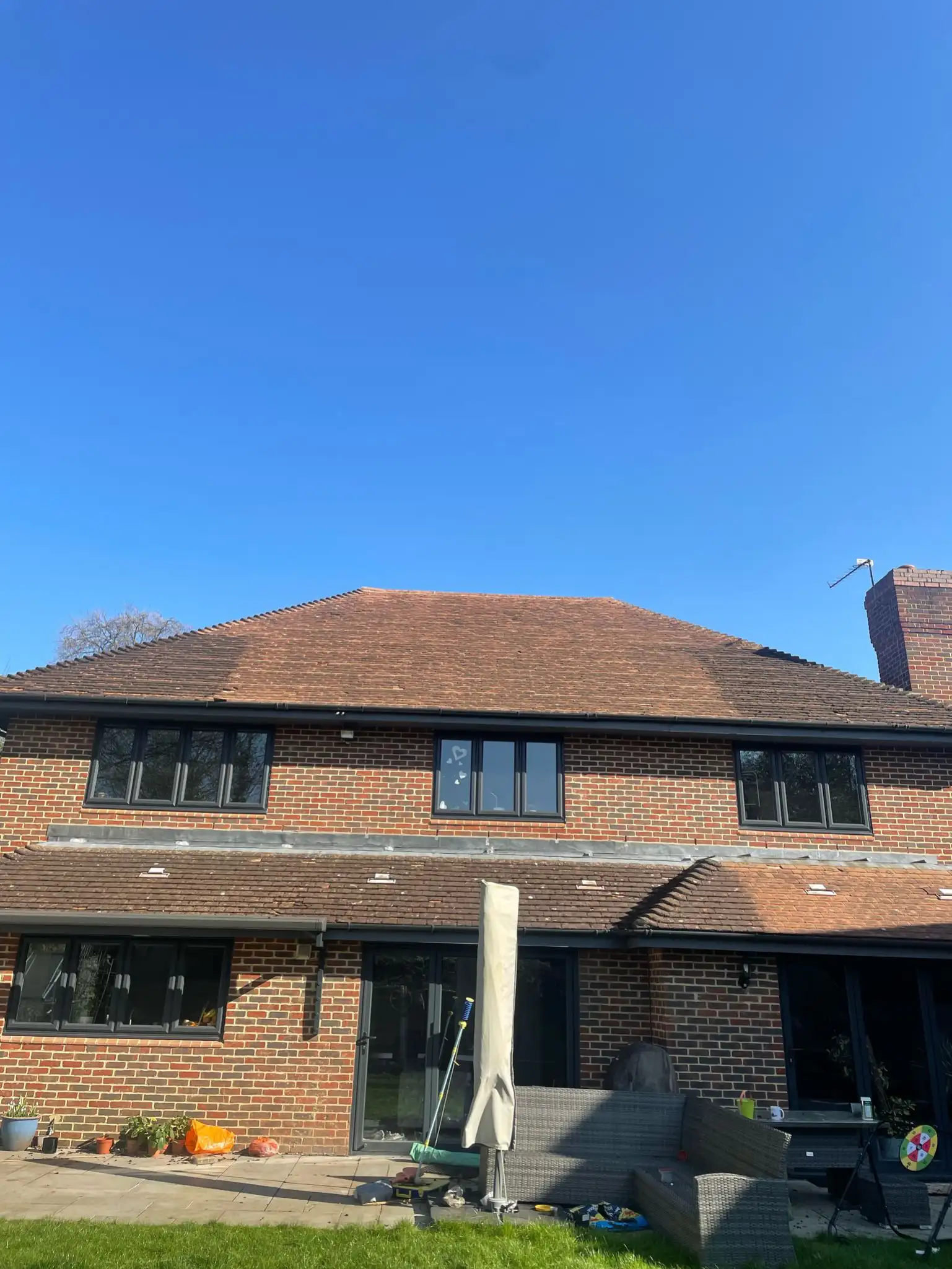
What is the Impact of Moss on a Roof?
Moisture retention
Moss holds water against tiles and slates. That moisture can seep into tiny gaps, then expand when it freezes, which can crack tiles and loosen fixings over time.
Decreased roof longevity
As moss thickens, it can lift tile edges. Once water is able to track beneath the tiles, you are no longer dealing with a “surface” issue. You’re risking the underlay, battens, and timber structure, the point at which moss becomes a job for our roof repair team rather than a clean.
Reduced energy efficiency
If moss contributes to moisture and damp in your loft space, insulation can become less effective. Wet insulation performs terribly, and that can show up as higher heating costs.
Step-by-Step Guide to Removing Moss from a Roof
Before we start: if your roof is steep, high, fragile, or you are not confident at height, don’t mess around. Moss removal is not worth a fall. There’s nothing “DIY hero” about a broken leg.
Step 1: Safety first
You need to take safety seriously. Roof work can go wrong fast.
Minimum safety basics:
- Non-slip footwear
- Sturdy ladder set on stable ground
- Ladder stabiliser or standoff (so you are not crushing gutters)
- Gloves and eye protection
- A helper on the ground if possible
If you cannot safely access the roof edge without leaning or stretching, stop. Use a professional.
Step 2: Pick the right day
Choose a dry, calm day. Avoid windy conditions. Avoid heavy sun if you are using any treatment that dries too quickly.
Ideally:
- Dry roof surface
- No rain forecast for several hours (or as your treatment instructions require)
- Mild temperature
Step 3: Clear gutters and check drainage first
Do this before you start removing moss. If gutters are blocked, you’ll just push more debris into the system and make the problem worse.
- Clear leaves and sludge
- Check downpipes are flowing
- Look for overflow marks on fascia boards (a sign water has been backing up)
Step 4: Remove the bulk of the moss gently
This is where people wreck their roofs by being aggressive.
Use a plastic scraper or a stiff brush, and work from the ridge downwards. Do not scrape upwards against tile edges, that’s how you lift and crack them.
Tips that matter:
- Use light pressure, let the tool do the work
- Work in small sections
- Don’t “dig” into tile surfaces
- Bag or collect what you can instead of letting it drop into gutters
If you have fragile slate, old tiles, or anything already cracked, be extra cautious. Aggressive scraping is how small damage becomes a leak later.
Step 5: Apply a proper roof-safe moss treatment (biocide)
Once the thick moss is off, you need to kill the spores and roots you can’t see. If you skip this part, it usually comes back quicker.
Look for a roof-safe biocide designed for moss and algae. Follow the instructions exactly. Don’t wing it. Overdoing chemicals can stain surfaces, damage plants, and create run-off problems.
Key points:
- Cover plants and ponds below, run-off can kill them
- Apply evenly using a low-pressure sprayer
- Leave it to work for the recommended time
- In many cases, you do not need to rinse hard, the weather gradually washes dead growth away
Step 6: Rinse gently (only if needed)
If the product requires rinsing, use low-pressure water, like a garden hose. Do not use a pressure washer. That is not “cleaning”, it’s stripping surfaces and forcing water under tiles.
If you are tempted to pressure wash, be honest with yourself. You’re chasing a quick before-and-after photo, not a long-term result.
Other Methods for Removing Moss from a Roof
Vinegar solution
A diluted vinegar mix is sometimes used as a DIY method, but it’s not always consistent, and it can still harm plants through run-off. If you use it, keep it controlled and avoid over-application.
Oxygen bleach
Oxygen bleach is generally safer than chlorine bleach and can be effective, but again, it needs careful handling and proper dilution. It’s not a magic fix, and it doesn’t replace using a roof-safe biocide if regrowth is a problem.
What You Should Avoid (This Is Where People Mess Up)
- Pressure washing: damages tile coatings, dislodges tiles, forces water under the roof covering
- Walking all over the roof without proper access: breaks tiles and creates hidden cracks
- Chlorine bleach heavy mixes: can cause staining, plant damage, and nasty run-off
- Ignoring the gutters: moss debris blocks drainage, then water backs up into places it shouldn’t
If you do one dumb thing, it’s usually the pressure washer. Don’t.
How to Prevent Moss from Coming Back
Moss comes back when the roof stays damp and shaded. Your job is to make the roof dry faster and stay cleaner.
Improve roof drainage
- Keep gutters clear
- Make sure downpipes flow properly
- Fix any areas where water spills over the edge
Trim overhanging branches
More sunlight and airflow makes a massive difference. If your roof is constantly shaded, moss will keep returning.
Fit zinc or copper strips
These strips sit near the ridge. When it rains, tiny traces of metal wash down the roof and make the surface less friendly to moss and algae.
This won’t fix a heavily mossed roof overnight, but it helps reduce regrowth.
Regular maintenance checks
Do quick checks a few times a year:
- After storms
- In late autumn (after leaves drop)
- In spring (moss starts growing again)
Spotting small build-up early is way easier than scraping a whole roof later.
Safety Considerations for Moss Removal
Be brutally honest about the risk. Roof work is one of the easiest ways to seriously injure yourself.
You should hire a professional if:
- The roof is steep or high
- You need scaffolding or roof ladders
- You have fragile slate or older tiles, where pitched roofing work may be needed
- You’ve had leaks already and suspect underlying damage
- You are not comfortable working at height
A proper team can remove moss safely, treat it properly, and spot early damage before it turns into a bigger job.
How to Remove Moss Effectively (Quick Checklist)
- Pick a dry, calm day
- Clear gutters first
- Scrape gently from ridge downwards
- Apply roof-safe biocide to kill spores
- Rinse only if the product requires it, and only with low pressure
- Reduce shade and improve drainage to prevent regrowth
Need Moss Removing Safely?
At Alliance Roofing & Building, we remove roof moss by hand, not with high-pressure washers that can damage tiles and force water under the roof.
Our team carefully clears moss, checks for early signs of damage, and leaves your roof clean without putting it at risk.
If your roof is starting to hold moss, or you’re not sure whether it’s already causing problems, get in touch and we’ll take a look.