
Choosing the right pitched roofing contractor is about more than just the cheapest quote. This guide explains how to check local reputation, read reviews properly, understand insurance and guarantees, compare written quotes like for like, and spot classic red flags such as pressure selling or vague pricing. It also walks you through what a good pitched roofer should do from survey to final clean-up, so you know what to expect and when to walk away. If you are in Berkshire or the surrounding areas, you can use this checklist to compare Alliance Roofing & Building against other contractors and decide who you trust with your roof.
Key takeaways
- Choose local, proven firms with a real address, landline and photos of recent pitched roofing work.
- Confirm public and employers' liability insurance, written guarantees and manufacturer warranties before booking.
- Compare quotes like for like on scope, materials, fixings, access, waste removal and timescales, not just price.
- Avoid doorstep callers, sign-today pressure, cash-only deals and large upfront payments.
Picking a pitched roofing contractor is not like choosing a takeaway. If you get it wrong, you could end up with leaks, loose tiles, damp in the loft and a second bill to fix someone else’s mistakes.
This guide walks you through how to choose a contractor who will actually do the job properly, protect your home and give you clear, honest pricing. It is written so a normal homeowner can follow it, not just people in the trade. For the work itself, our pitched roof installation and repair service is a useful benchmark for what good looks like.
If you are in Berkshire or the surrounding areas, you can use this as a checklist to judge Alliance Roofing & Building against anyone else you are considering.
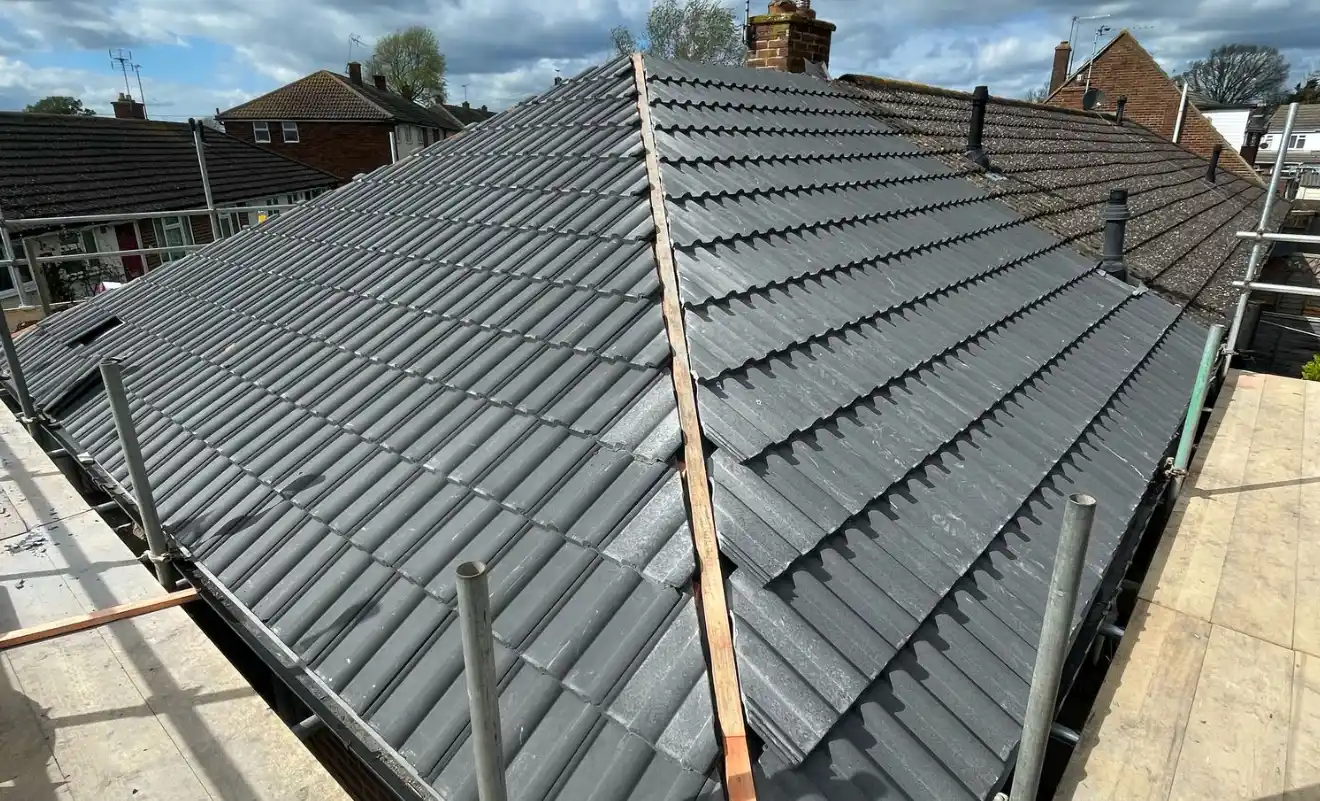
Why the right pitched roofer matters
A poor choice of contractor can lead to:
- Tiles slipping or blowing off in the first strong wind
- Water getting in around chimneys, valleys or ridges
- Rot in the battens and roof structure
- Voided insurance or guarantees
- You paying twice, once for the bad job and again for a proper repair
A good pitched roofing contractor will:
- Explain what is wrong in plain English
- Show you photos so you can see the problem yourself
- Give a written quote with clear prices
- Use suitable materials for your roof, not the cheapest thing they can buy
- Stand behind their work with a written guarantee
That is the standard you should expect.
1. Start with local, proven companies
You do not need a national chain. For pitched roofing, a strong local firm is usually a better choice.
Look for:
- A real address, not just a mobile number and a gmail account
- A landline and office hours you can call
- Photos of recent work on homes that look like yours
- Case studies or examples of pitched roofing, not just flat roofs
Local contractors know:
- Typical house types in your area
- What tiles are already on the street
- How wind, rain and moss affect roofs locally
If a roofer has clearly been working in the area for years, that is a good sign. If they appeared last week and have no local track record, be careful.
2. Check reviews and real customer feedback
Family and friends’ recommendations are still one of the best ways to find a roofer. If someone you trust has had a pitched roof replaced or repaired and is happy with it, that is worth a lot.
If you do not have a personal recommendation, look at:
- Google reviews
- Trusted trade platforms
- Testimonials on the contractor’s site
You are not looking for perfection. You are looking for:
- A decent number of reviews, not just one or two
- Consistent comments about tidy work, good communication and turning up on time
- How the company responds if a customer is unhappy
One or two negative reviews are normal. A pattern of the same complaint is not.
3. Check their experience with pitched roofing
Not every “roofer” is strong at pitched roofs. Some mainly do flat roofs, some mainly do roof repairs, some only fit one type of system.
For a pitched roof, ask:
- How many pitched roofs they do in a typical year
- Whether they regularly work with tiles, slates, hips, valleys and ridges
- If they handle chimney flashings, leadwork and Velux windows themselves or subcontract it
You want a contractor who does pitched roofs all the time, not one who is learning on your property.
If they can show you photos of similar roofs they have completed, that is even better.
4. Check insurance, guarantees and basic paperwork
If a roofer ducks these questions, walk away.
Ask for:
- Public liability insurance – covers damage to your property
- Employers’ liability insurance – if they have a team
- Written guarantee for workmanship
- Manufacturer warranties on tiles, membranes and fixings
You should also expect:
- A written quote, not a price scribbled on a scrap of paper
- Clear payment terms
- A simple work schedule explaining what will happen and when
Never pay everything upfront. A sensible structure is a deposit, a stage payment if it is a large job, and a final payment when the work is finished and you are satisfied.
5. Look at trade bodies and training
Accreditations are not everything, but they do tell you the contractor is serious about standards and safety.
You can ask:
- Are you a member of any recognised roofing trade bodies or quality schemes?
- What training or qualifications do your roofers hold?
- How do you handle health and safety on site?
Memberships, certificates and regular training suggest the company is invested in doing things properly and staying up to date, not just doing the bare minimum.
6. Compare like-for-like quotes, not just the cheapest number
Getting several quotes is sensible, but only if you compare them properly.
Each quote should clearly set out:
- The scope of work
- Full strip and re-tile, or patch repair?
- New breathable membrane and battens, or reusing old ones?
- The materials
- Tile type and brand
- Membrane type
- Batten size and treatment
- Fixings
- Are tiles nailed or clipped as per current standards?
- Access and safety
- Scaffolding included or not
- Waste removal
- Skip hire, disposal of old tiles and felt
- Timescales
- Start date and expected duration
Red flags when comparing quotes:
- One quote is much lower than the others with no good reason
- Vague descriptions like “new tiles” with no detail
- No mention of scaffolding or waste removal
- “Cash price only” without paperwork
A good contractor will happily explain their quote line by line.
7. Questions to ask before you say yes
Here are some simple questions that separate the good from the risky:
- Who will be on site each day, and who is in charge?
- What happens if you find rotten wood or other issues mid-job?
- How will you protect the inside of the house if it rains during the work?
- How do you keep neighbours safe and the site tidy?
- How will you match new tiles to the existing roof if it is a partial repair?
- Do you take photos before, during and after so I can see what has been done?
You are looking for calm, clear answers, not rushed promises.
8. Watch out for classic red flags
There are still plenty of “cowboy” operators in roofing. Avoid:
- People knocking on the door saying they “noticed a problem with your roof”
- Pressure to “sign today” to get a special price
- No written quote or contract
- No company address, only a mobile number
- Refusal to show insurance certificates
- Requests for a very large cash payment up front
If you feel pushed or rushed at any point, trust your gut and step back.
9. What a good pitched roofing contractor actually does
When you choose the right contractor, the process should look like this:
- Survey and photos
- They inspect the roof from outside, and often from inside the loft
- They take photos and talk you through what they can see
- Clear written quote
- You get a detailed breakdown, not just a single number
- Options are explained if there is more than one way to solve the problem
- Scaffold and preparation
- Proper access is set up
- The site is kept as tidy and safe as possible
- Strip and inspect
- Old tiles and felt are removed where needed
- Any rotten battens or timber are replaced
- New membrane, battens and tiles
- Breathable membrane installed correctly
- Treated battens fixed at correct spacing
- Tiles fixed securely, ridges and hips finished to modern standards
- Details and finishing
- Chimney flashings checked or renewed
- Valleys, verges, gutters and fascias sorted where included in the quote
- Clean up, photos and guarantee
- Rubbish removed and site left tidy
- Final photos and a walkthrough so you can see what was done
- Written guarantee provided
That is what you are paying for, not just “new tiles on the roof”.
10. How Alliance Roofing & Building can help
If you are in Berkshire or nearby and thinking about a new pitched roof, repairs or a survey, Alliance Roofing & Building can handle:
- Full pitched roof replacements
- Tile and slate repairs
- Leadwork and chimney repairs
- Emergency call-outs when you have a leak
You will get:
- A local team that actually answers the phone
- A clear written quote, not guesswork
- Photos before and after so you can see the difference
- Work carried out to current standards, not old habits
At the end of this blog on the website, there will be a simple contact form. If you want honest advice on your pitched roof, use that form to:
- Request an inspection
- Ask for a price guide
- Send photos if you already have them
A short conversation now can save you a lot of stress, money and damage later.