
Thinking about a new roof but not sure what it will cost? This guide explains real-world price ranges for different roof types, what actually pushes the cost up or down, and the hidden extras homeowners forget to budget for. It also shows when a repair is enough, when a full re-roof makes sense, and why getting a proper survey and fixed written quote from a professional roofer is the safest way to plan your spend.
Key takeaways
- Most full UK re-roofs fall between £4,000 and £20,000+, depending on size, shape and material.
- Roof size and shape, the covering you choose, scaffolding and the condition of the structure are the main cost drivers.
- Budget for hidden extras: old roof removal, skips, fascias and guttering, chimney and lead work.
- A proper survey and fixed written quote beats online averages, and sometimes a targeted repair is enough.
If you are trying to work out how much a new roof will cost, you are not alone. It is one of the biggest home maintenance jobs you will ever pay for, and the prices you see online can be all over the place.
This guide breaks it down in clear English. We will look at typical price ranges, what actually pushes the cost up or down, and how to budget in a way that avoids nasty surprises. If you have already decided a full re-roof is on the cards, our pitched roofing and new roof installation team can survey the property and price it properly.
At the end, if you want a fixed written quote for your property, you can send us a few details and we will do the numbers properly.
Typical Cost Of A New Roof In 2025
Every house is different, but most full roof replacements for a standard UK home fall into these rough ranges:
- Small terraced or bungalow roof: from around £4,000 – £7,000
- Average 3–4 bed semi or detached: roughly £6,000 – £12,000
- Larger, complex or slate roofs: from £12,000 – £20,000+
Those figures are for a full strip and re-roof with scaffolding, new breathable felt, battens and tiles, not just patch repairs.
Price is usually worked out per square metre. As a guide:
- Pitched roofs: roughly £120 – £275 per m², depending on tile type and complexity
- Flat roofs: roughly £45 – £120 per m², depending on system used and insulation
They are ballpark figures, not a quote. The real number comes from the details below.
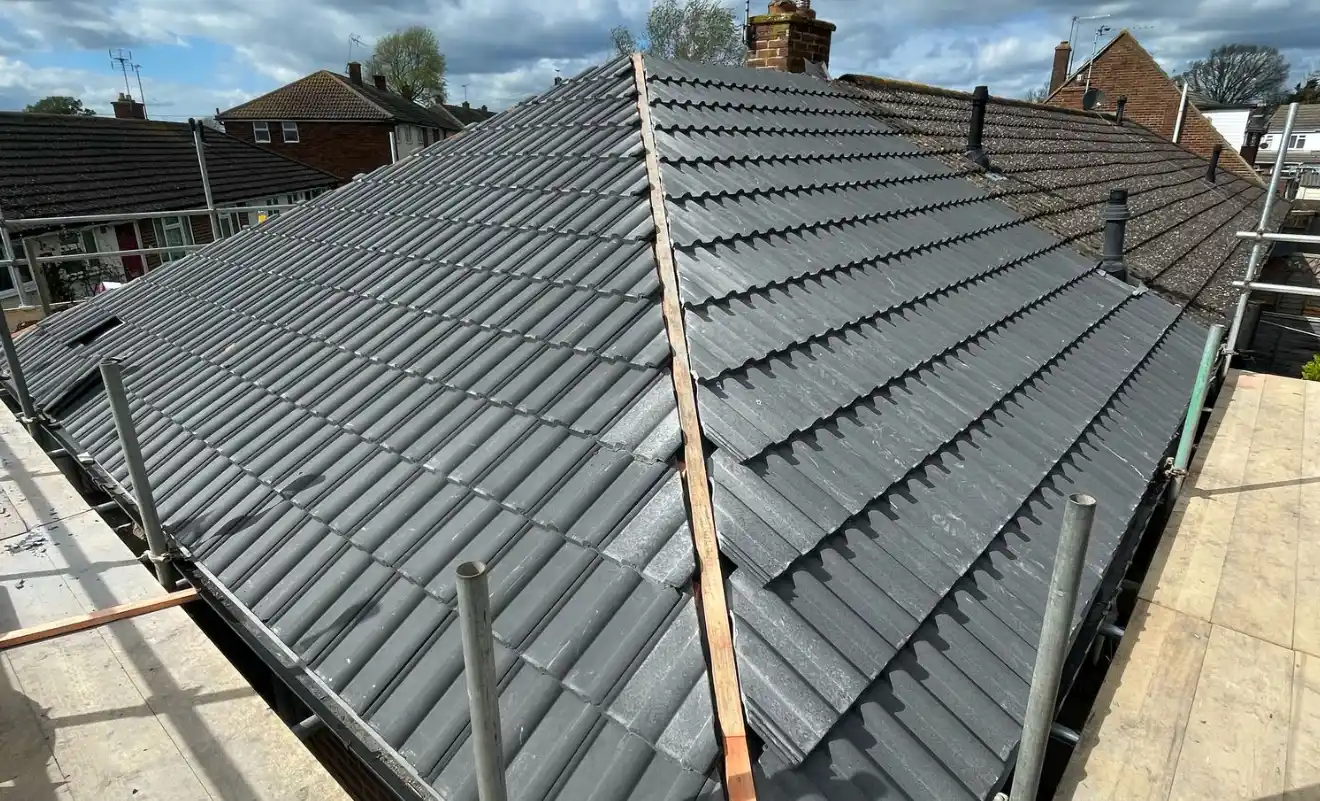
Key Factors That Affect The Cost Of A New Roof
1. Size and shape of the roof
This is the big one.
- A simple gable roof on a straight house is the cheapest shape to work on.
- A hipped roof with multiple faces, valleys and ridges takes more labour and more materials.
- Extra details like dormers, hips, valleys and different levels all add time and cost.
Two houses can have the same floor area but very different roof costs, just because of the design.
2. Roofing material
The covering you choose has a big impact on price and lifespan.
Common options:
- Concrete tiles – usually the lowest cost option. Heavy, reliable and widely used.
- Clay tiles – more expensive than concrete but hold colour better and can last longer.
- Man-made slate – mid range option that gives a slate look without natural slate prices.
- Natural slate – premium option, higher material cost, long lifespan when fitted properly.
- Flat roof systems – felt, GRP fibreglass, or EPDM rubber, all with different price points.
You are not just paying for the tile. Each material has different labour time, fixings and detailing, so the full system price can vary a lot.
3. Access and scaffolding
You cannot safely re-roof without proper access.
Scaffolding costs change based on:
- How many elevations of the house need scaffolding
- Height of the property
- Whether you need a scaffold bridge over a conservatory, extension or lower roof
- How long the scaffold has to stay up
On many full re-roofs, scaffolding alone can be in the region of £700 – £1,500+, sometimes more on large properties or tricky sites.
4. Condition of the structure
If the roof structure is in good condition, we strip, check, re-felt, re-batten and retile.
Costs rise when we find:
- Rotten rafters or trusses
- Sagging or damaged roof deck on flat roofs
- Poor historic alterations that need correcting
- Damaged or missing structural bracing
These are the jobs that only become clear once tiles and felt are off. A proper survey and honest discussion upfront helps you build in a sensible contingency.
5. Insulation and ventilation
Modern re-roofing is not just about keeping rain out. Building Regulations expect the roof to be upgraded where practical.
That can include:
- Top-up loft insulation to the correct depth
- Ventilation at eaves and ridge to prevent condensation
- Vent tiles for bathrooms, kitchens and extractor fans
Insulation and venting add to the cost, but they also protect your roof structure and can cut heating bills.
6. Location and labour rates
Roofing prices are not the same in every part of the country.
- Busy areas and parts of the South and South East often have higher labour rates.
- Rural and lower cost areas can be cheaper, but travel and access can offset this at times.
This is why an online “average” is useful as a guide only. Local quotes from roofers who actually come and look at your property are what you should base your budget on.
Hidden Costs Homeowners Forget To Budget For
Plenty of people focus on tiles and forget the rest. The real-world bill often includes:
- Existing roof removal – labour and waste disposal for taking off old tiles, felt and battens
- Skips – multiple skips on larger jobs
- Fascias, soffits and guttering – makes sense to replace tired plastic while scaffold is up
- Chimney work – repointing, new lead flashing, capping unused chimneys
- Roof windows – replacing old Velux units while the roof is open
- Dry ridge and verge systems – to replace old mortar beds that are failing
Done properly, a re-roof is a full system upgrade from rafters outwards, not just new tiles on top.
Do You Actually Need A New Roof?
Before you throw five figures at a new roof, it is worth checking whether you really need one, or if a targeted roof repair or partial renewal is enough.
Signs you may need a full replacement:
- Large areas of slipped, broken or missing tiles
- Felt perished behind tiles, with visible sagging between rafters
- Repeated leaks in different parts of the roof
- Rotten or damaged underlay and battens across big sections
- Roof is 20–30 years old or more and has had multiple patch repairs
Sometimes we can strip and re-cover just one elevation or one section. Other times, the best long-term option is to strip the whole lot and start clean.
A decent roofer will tell you the truth here. A full re-roof you do once, correctly, is usually cheaper than paying for drip-feed repairs every winter.
Is A New Roof Worth The Money?
It is not a small spend, so it needs to work hard for you. A well planned re-roof should give you:
- Better protection – no more guessing where that leak is coming from every time it rains
- Improved energy efficiency – topped-up insulation and a tighter roof build help keep heat in
- A cleaner look from the street – tired roofs drag the whole house down
- Higher sale appeal – buyers notice new roofs and lenders like recent paperwork
- Peace of mind – you stop worrying every time you see black clouds
The key is to treat it as a 20+ year investment, not just a quick fix.
How To Budget Sensibly For A New Roof
If you want to keep control of the spend, do this in order:
- Get a proper survey
Ask a roofer to inspect the inside of the loft as well as the outside. Photos of the roof structure are useful. - Request a detailed written quote
It should list:- Strip and dispose of old roof covering
- New felt and battens
- Tile type and quantity
- Fixings and dry systems
- Insulation upgrades
- Fascia, soffit, guttering if needed
- Scaffolding details
- Any allowances for chimney or lead work
- VAT and payment terms
- Ask about guarantees and paperwork
You should know:- What guarantee sits on materials
- What guarantee sits on workmanship
- Who handles Building Control notification if required
- Keep a contingency
Roofs often hide surprises. Keeping 10–15% aside for timber repairs or extra work is sensible.
When To Call A Professional Straight Away
Some jobs you can watch for a while. Roof problems are not usually in that category.
Get someone out promptly if you notice:
- Water marks on ceilings
- Damp smells in the loft
- Tiles on the ground after wind
- Pieces of mortar, slate or ridge tiles in your garden
- Sagging lines in the roof when viewed from the street
Leaving it does not save money. Water will always find the cheapest path, and that is usually through your insulation, plasterboard and wiring.
Need A Clear Price For Your Roof?
If you are trying to work out what a new roof will really cost on your house, guesswork and online averages will only get you so far.
At Alliance Roofing & Building, we:
- Carry out a full visual inspection inside and out
- Talk through repair vs full replacement in plain English
- Set out a fixed written quote with everything included, so you know exactly what you are paying for
- Use systems and materials that match your property and budget, not a one-size-fits-all package
Use the contact form below to tell us:
- Your postcode
- Type of property (terraced, semi, detached, bungalow)
- Any photos you have of the roof or leaks
We will come back to you with honest advice and a clear plan for putting a safe, long-lasting roof over your home.