
Most flat roofs in the UK last 20–40 years if they’re installed properly by a flat roofing team and drain well. Lifespan depends far more on workmanship, drainage, and maintenance than the material alone. Felt roofs usually last 15–25 years, GRP and liquid systems 20–30+ years, and single-ply membranes up to 40 years. Persistent leaks, pooling water, cracking, or repeated repairs are signs replacement may be more cost-effective than patching. If you’re unsure how much life is left, a proper inspection beats guessing.
Key takeaways
- Most UK flat roofs last 20 to 40 years, with workmanship and drainage mattering more than the material.
- Felt lasts 15-25 years, GRP and liquid systems 20-30+, and single-ply membranes up to 40 years.
- Flat roofs punish bad workmanship, a small detailing mistake can sit hidden for months then leak.
- Persistent leaks, pooling, cracking or repeated repairs suggest replacement may beat patching.
Flat roofs get a bad reputation because people remember the old felt jobs that failed early. Modern flat roofing systems are a different game, but only if they’re installed properly and water can actually drain.
If you’re trying to decide whether to repair, refurbish, or replace, the only question that matters is this: how much life is realistically left in your roof, and what’s likely to fail next?
This guide breaks down typical UK lifespans by material, what shortens that lifespan, the warning signs people miss, and what you can do to make a flat roof last longer.
How durable are flat roofs?
A well-built flat roof is durable, waterproof, and totally suitable for UK weather. The problem is not that flat roofs “do not work”. The problem is that flat roofs punish bad workmanship.
On a pitched roof, gravity helps you out. On a flat roof, a small mistake in detailing, falls, seams, or outlets can sit there quietly for months, then show up as a leak at the worst possible time.
Done right, flat roofs are strong and long-lasting. Done cheaply, they become a repeat repair bill.
How many years does a flat roof last in the UK?
Most modern flat roofs in the UK typically last 20 to 40 years, depending on:
- the material
- the quality of installation
- how well water drains off the roof
- whether it gets maintained
Some systems can last longer, but only when the roof design and build quality are on point.
If you want a simple rule: the better the drainage and detailing, the longer the roof lasts.
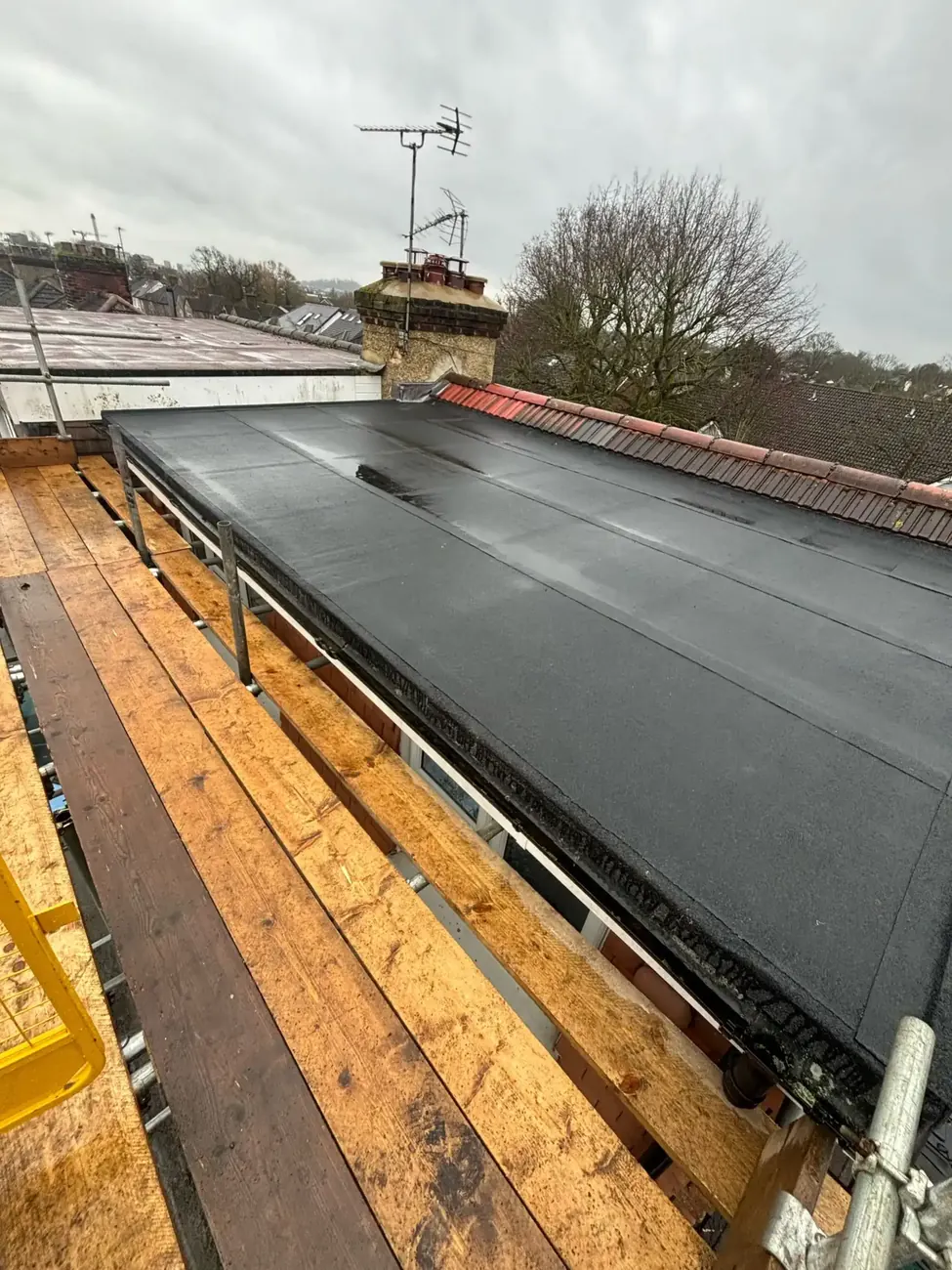
Factors that affect the lifespan of a flat roof
Materials used
Different systems fail in different ways, and some are more forgiving than others.
A cheap, thin system installed badly will not suddenly become a 30-year roof because the brochure says so. Lifespan is always a mix of material + build quality + drainage.
Location
Where the roof sits matters more than people think.
- Roofs under trees get debris, blocked outlets, and standing water.
- Roofs near chimneys or parapet walls have more joints and edge details, which are common failure points.
- Roofs that people walk on a lot (access to skylights, plant equipment, terrace areas) wear faster unless they’re designed for it.
Weather conditions
UK weather does not need extreme heat to wreck a flat roof. What kills roofs here is:
- constant wetting and drying
- freeze and thaw cycles in winter
- wind-driven rain finding weak joints
- UV exposure over time, especially on older surfaces
A roof can look “fine” and still be degrading underneath.
Nature
Leaves, moss, and even small bits of grit build up over time. That turns into blocked outlets and pooling. Pooling leads to premature surface wear. And once water sits, it finds a way in.
If you have trees anywhere near the building, your roof needs more attention. No debate.
Ventilation
A lot of “roof leaks” are actually moisture problems caused by ventilation and insulation issues.
Warm, humid air from the house rises, hits a cold deck, and condenses. That moisture can mimic a leak and rot timbers over time.
If you’ve got recurring damp without a clear entry point, you need someone who knows the difference between water ingress and condensation.
Age
A flat roof does not suddenly fail on its 20th birthday, but materials do age.
- adhesives weaken
- joints become brittle
- small cracks open and close with temperature changes
- previous patch repairs start to fail around the edges
The older the roof, the more likely you’re dealing with multiple problems, not one.
Lack of maintenance
This is the boring answer, but it’s the real one.
A roof with clear outlets, clean gutters, and regular checks can last years longer than the same roof left to rot quietly.
If your roof is never inspected, you are basically choosing surprise leaks.
How Long Each Flat Roof Material Typically Lasts
These are realistic UK averages when installed properly:
Felt
Around 15–25 years.
Modern multi-layer felt systems are miles better than older felt roofs, but they still rely heavily on good detailing and drainage. Great option when done properly, not when rushed.
Liquid applied roofing
Around 20–30+ years.
Liquid systems are useful where the roof has awkward shapes, lots of upstands, or tricky details. The quality of preparation matters a lot here. If the substrate is poor, the system will fail early.
Single-ply membranes
Around 25–40 years.
These can last a long time, especially on larger roofs, but only if seams and terminations are done correctly. Cut corners here and you’ll pay for it later.
GRP fibreglass
Around 20–30+ years.
GRP is strong and clean-looking, often used on garages and extensions. It can crack if the deck moves, so the build-up underneath matters.
What makes a flat roof last longer?
1. Quality of installation
This is the big one.
The best materials in the world will fail if:
- the falls are wrong
- outlets are poorly placed
- edges are bodged
- seams are rushed
- flashing details are sloppy
If you want lifespan, you pay for workmanship, not just materials.
2. Drainage and outlets
Standing water is your roof’s enemy.
You want:
- proper falls
- clear outlets
- no dips or low spots
- gutters that can handle heavy rain
If water pools, the roof surface ages faster, and seams get stressed.
3. Regular maintenance
You do not need to obsess over it, but you do need basic checks:
- clear leaves and debris
- keep gutters flowing
- check for splits around edges and upstands
- deal with small problems before they become big ones
4. Foot traffic
If people walk on the roof, it needs protection.
Without it, you’ll get punctures and surface wear. This is common on roofs that have satellite dishes, solar access, roof hatches, or plant equipment.
5. Local environment
A flat roof in an open spot with clean drainage will age slower than a roof under trees with constant debris. Simple as that.
Signs your flat roof is nearing the end of its lifespan
If you’re seeing one of these once, it might be a repair. If you’re seeing them repeatedly, you’re probably past the point where patching makes sense.
- recurring leaks in different areas
- blistering, cracking, or splitting of the surface
- sagging or soft spots underfoot
- ongoing pooling that never clears
- flashing pulling away at edges, walls, or upstands
- internal staining that returns after “repairs”
Here’s the harsh truth: if your roof needs regular patching, it’s already costing you more than you think.
How often does a flat roof need to be replaced?
A lot of flat roofs get replaced around the 15–25 year mark, not because the material is useless, but because:
- drainage has been poor for years
- maintenance has been ignored
- the original install was weak
- repairs have built up until it’s a patchwork roof
If the roof structure is sound, refurbishment is sometimes possible. If the deck is damaged or rotten, replacement is usually the smarter move.
Common reasons people replace a flat roof
Leakages
Leaks can come from:
- seams
- cracked surfaces
- failed outlets
- edge details
- splits around roof lights or vents
The leak you see inside is rarely directly below the entry point. Water travels.
Punctures, splitting, cracking, blistering, stretching
These are classic ageing signs, especially when the roof has been exposed to standing water, heavy UV, or movement in the deck.
Once the surface starts failing in multiple places, you’re not fixing a “small issue”, you’re fighting the whole system.
Flooding, pooling, sagging
Pooling is not always a disaster, but persistent pooling usually means poor falls or blocked outlets. Sagging often suggests deck problems, and that can turn serious fast.
Can a flat roof last longer with refurbishment?
Yes, sometimes. But don’t get excited too early.
Refurbishment can work if:
- the deck is still solid
- the existing roof build-up is stable
- the issues are surface-level and localised
- drainage can be improved
A proper inspection will tell you whether you’re buying extra years, or throwing good money after bad.
Do I need a roof survey to check my roof’s remaining lifespan?
If your roof is older, has recurring issues, or you’re budgeting for works, a survey is worth it.
You want to know:
- what system you actually have
- whether the deck is sound
- where water is sitting
- what’s failing first and why
Guessing costs more than inspections.
What this means for your roof
If your flat roof was installed properly, drains well, and gets basic maintenance, it can last decades in the UK. If it was rushed, poorly detailed, or left to pool water, it will fail early, no matter what material it is.
If you’re dealing with leaks, persistent ponding, or you’re not sure how much life is left, get it checked properly and make a decision based on facts, not hope.
How we can help?
If you want a straight answer on whether your flat roof needs a repair, refurbishment, or replacement, get in touch with Alliance Roofing & Building. Our flat roofing specialists work across Buckinghamshire and the surrounding counties, and we’ll assess the roof properly, show you what’s going on, and give you clear options with no nonsense.