
If you have a roofing emergency in Buckinghamshire, the first priority is safety. Stay off the roof, contain any water coming into the property, move valuables out of the way, and take photos of the damage if it is safe to do so. If water is near electrics, turn off the power to that area. Once the immediate risk is under control, arrange emergency roof repairs as soon as possible so the damage does not spread. Our roofers across Buckinghamshire cover call-outs throughout the county.
Key takeaways
- Stay off the roof, a wet or storm-damaged roof is dangerous even when the damage looks minor from the ground.
- Contain the water inside and move valuables, electronics and furniture out of the affected area.
- Be careful near electrics and turn off power to that part of the property if water is reaching it.
- Once the immediate risk is controlled, arrange professional emergency roof repairs before the damage spreads.
A roofing emergency can go from minor to serious very quickly.
One missing tile in heavy rain can turn into a ceiling leak. A fallen branch can expose part of the roof. Strong winds can loosen ridge tiles or flashing without much warning. When that happens, most homeowners ask the same thing:
What should I do first?
The answer is simple. Focus on safety first, then limit the damage inside the house, and then get a roofer involved as soon as possible.
If you are dealing with storm damage, an active leak, or sudden roof failure in Buckinghamshire, this guide explains the first steps to take and what not to do while waiting for help.
Step 1: Stay Off the Roof
The first thing to do is also the hardest for some homeowners to accept.
Do not climb onto the roof.
Even if the damage looks small from the ground, a wet or storm-damaged roof is dangerous. Tiles can be loose, the surface can be slippery, and the structure underneath may not be stable.
This is especially important after:
- high winds
- heavy rain
- fallen branches
- impact damage
- visible sagging
Trying to inspect or patch the roof yourself can make the situation worse and puts you at real risk of injury.
If the damage is serious enough to let water into the house, it is serious enough to leave to a professional.
Step 2: Contain Water Inside the Property
Once you know the roof is compromised, your next job is to stop as much internal damage as possible.
If water is coming in:
- place buckets, bowls, or containers under the leak
- use towels to soak up water spreading across the floor
- move furniture, electronics, and valuables away from the area
- protect flooring with old sheets or waterproof covers if possible
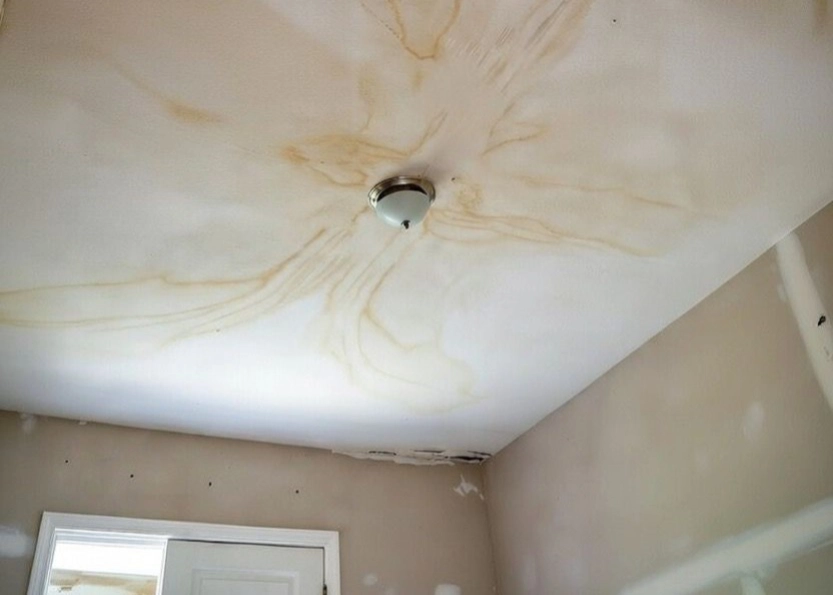
If the leak is spreading across a ceiling rather than dripping from one point, do not ignore it. Water often travels before it shows.
A leak in one room may be coming from damage somewhere else on the roof.
The aim at this stage is not to fix the roof. It is to stop the rest of the house from taking unnecessary damage.
Step 3: Be Careful Around Electrics
This is the part many people overlook.
If water is coming through the ceiling near:
- light fittings
- sockets
- switches
- appliances
- fuse boards
you need to take it seriously.
If it is safe to do so, turn off the electricity to the affected area at the consumer unit. Water and electrics are a bad combination, and taking chances here is stupid.
If you are unsure, do not touch anything wet. Stay clear of the area and wait for professional help.
Step 4: Take Photos of the Damage
If it is safe, document everything.
Take photos or short videos of:
- water coming in
- stains on ceilings or walls
- damaged plaster
- missing tiles visible from the ground
- debris from the roof
- affected belongings inside the house
This helps for two reasons.
First, it creates a clear record of what happened and when. Second, it can help support an insurance claim if the damage was caused by a storm or another sudden event.
Do this from a safe position. There is no point risking injury for the sake of one extra photo.
Step 5: Call a Roofer Quickly
Once the immediate risk is under control, get a roofer involved.
Emergency roof problems rarely improve by themselves. A small opening in the roof can let in more water with every hour that passes. That can lead to:
- damaged ceilings
- soaked insulation
- timber rot
- mould growth
- ruined plasterwork
- higher repair costs
Fast action matters.
A proper emergency roofer should be able to inspect the problem, make the area safe, and if needed carry out a temporary repair to stop further water getting in until a full repair is completed.
What Counts as a Roofing Emergency?
Not every roof issue is an emergency, but some definitely are.
Common examples include:
Active Roof Leaks
If water is getting into the property during rain, it needs urgent attention.
Storm Damage
Strong winds can lift tiles, damage flashing, or expose roof sections without warning.
Fallen Branch or Impact Damage
A branch through the roof or a visible hole is a clear emergency.
Loose Ridge Tiles
These can become dangerous if they fall and may signal wider movement on the roof.
Sagging or Bulging Areas
This can point to trapped water or structural weakness and should not be ignored.
Fire Damage
Any roof affected by fire needs professional inspection before anyone assumes it is safe.
What Not To Do While Waiting for Emergency Roof Repairs
A lot of homeowners make the same mistakes in the middle of a roofing emergency.
Do Not Try a DIY Roof Repair
A tarp, sealant, or a few nails might feel like action, but bad temporary repairs often trap water, damage materials further, or make the eventual repair harder.
Do Not Ignore the Leak
Even a small leak can spread through insulation, timbers, and plaster. Waiting until tomorrow can make the bill much worse.
Do Not Panic and Hire the First Person Available
Roofing emergencies attract cowboys. If someone turns up promising a miracle fix without proper details, that is a red flag.
Do Not Leave Children or Pets Near the Affected Area
If plaster is sagging, water is dripping, or parts of the ceiling feel unsafe, keep people away.
Do Not Poke a Bulging Ceiling
If water has collected above plasterboard, the area may collapse. Stay clear and let a professional assess it.
Can You Do Anything Temporary Yourself?
Inside the house, yes.
You can:
- catch leaking water
- move belongings
- protect furniture
- isolate electrics if safe
- document damage
Outside the house, leave it alone unless it can be done entirely from the ground without risk.
A lot of online advice makes emergency tarp fixes sound easy. They are not. Trying to do that on a wet roof in bad weather is how people get hurt.
Temporary protection should be handled by someone with the right equipment and experience.
Common Causes of Emergency Roof Repairs in Buckinghamshire
Buckinghamshire homes see a mix of roofing problems depending on the season, the age of the property, and the type of roof.
Common emergency callout causes include:
- slipped or broken tiles after high winds
- leaking flat roofs during heavy rain
- failed lead flashing around chimneys
- blocked gutters causing water to back up
- storm damage to ridge tiles
- branch damage after bad weather
- old roof coverings finally giving way under pressure
Older homes can be more vulnerable if the roof has already been patched several times or if the underlay has started to fail.
That is why emergency roof repairs are often not just about the obvious problem you can see from inside. The visible leak is usually just the symptom.
Will Home Insurance Cover Emergency Roof Damage?
Sometimes yes, sometimes no.
Insurance is more likely to help if the damage was caused by a sudden event, such as:
- storm damage
- impact from a fallen branch
- another unexpected incident
It is less likely to cover damage caused by long-term neglect or general wear and tear.
That is one reason why taking photos early matters. If the leak appeared suddenly after a storm, that evidence helps show the problem was not just an old issue left too long.
If you plan to make a claim, keep records of:
- photos and videos
- the date the damage happened
- any emergency repair invoices
- communication with your roofer
How Fast Should an Emergency Roofer Attend?
The honest answer is, as fast as possible.
If water is actively entering the property, every delay increases the risk of:
- ceiling damage
- soaked insulation
- damaged electrics
- internal decorating costs
- timber deterioration
A good emergency roofer should not just patch the visible leak and disappear. They should inspect properly, explain what caused the issue, and make clear whether the immediate fix is temporary or permanent.
That matters because homeowners need to know where they stand, not just hear what sounds reassuring in the moment.
When a Temporary Repair Is Enough, and When It Isn’t
Temporary repairs have their place.
If the weather is still poor or materials need ordering, a roofer may use a temporary measure to stop further water ingress and protect the house. That can be the right call in an emergency.
But temporary repairs are not meant to become long-term solutions.
If the roof has:
- widespread storm damage
- failed flashing
- aging underlay
- structural movement
- repeated leaks in the same area
then the problem usually needs a full repair, not just another patch.
A good roofer should tell you that honestly.
Final Thoughts
When a roofing emergency happens, the first priority is keeping people safe and limiting the damage inside the property.
That means:
- stay off the roof
- contain leaks indoors
- move valuables out of the way
- be careful around electrics
- take photos if safe
- call a roofer quickly
The faster the problem is dealt with, the better the chance of avoiding bigger internal damage and higher repair costs.
If you are dealing with emergency roof damage in Buckinghamshire and need clear advice on what to do next, Alliance Roofing & Building can inspect the issue, make the area safe, and help you understand whether you need a temporary fix or a full repair.